If you’ve spent more than 20 minutes researching alternative ways to build a home, you’ve run into a problem: everyone uses these terms differently. One website calls modular homes ‘prefab.’ Another calls kit homes ‘modular.’ A third uses ‘prefab’ to mean something else entirely. By the time you’ve read a few articles, you’re more confused than when you started.
Here’s the thing: these terms describe genuinely different products with different construction methods, different cost structures, different financing rules, and different assembly processes. Getting them confused doesn’t just create an information problem. It can lead you to budget incorrectly, choose the wrong builder, or pursue a path that doesn’t actually match what you’re trying to accomplish.
This article gives you a clear, accurate breakdown of how each type actually works, how they compare across the decisions that matter most, and which one makes sense for different situations. If you want the full definition of kit homes specifically, that’s covered in our guide What Is a Kit Home? This article is the comparison.
Why These Terms Get Mixed Up
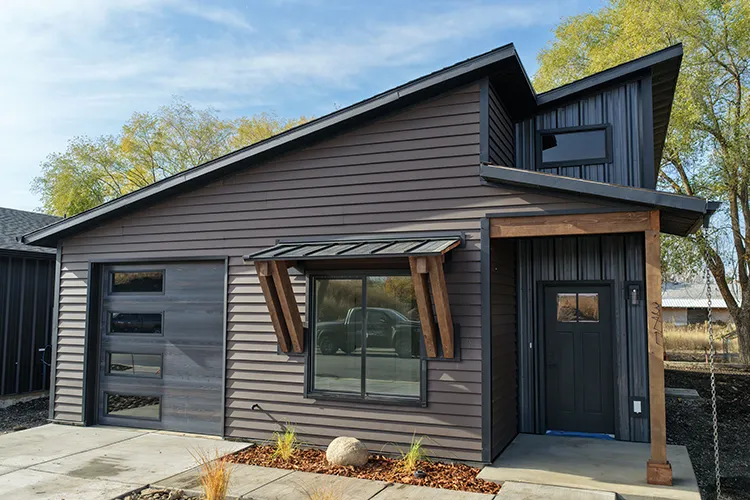
The word ‘prefab’ is technically a category, not a product type. Prefabricated means that major components of the home are built off-site in a factory before being delivered to your land. That covers a wide range of products: kit homes, modular homes, manufactured homes, panelized homes, and structural insulated panel systems are all technically prefab.
The problem is that ‘prefab’ gets used in everyday conversation as if it means one specific thing. Home improvement websites use it interchangeably with ‘modular.’ Contractors use it to mean ‘anything not stick-built.’ Manufacturers use it to describe their own product, whatever that happens to be.
So let’s set the record straight with precise definitions, and then get into the comparisons that actually affect your project.
What Each Term Actually Means
Prefab (Prefabricated)
Prefab is the umbrella term. It means components or sections of the home are manufactured in a controlled factory environment before being shipped to your site. Kit homes, modular homes, and manufactured homes are all types of prefab construction. When someone uses ‘prefab’ without specifying which type, ask them to be more specific, because the differences between the subtypes are significant.
Kit Home
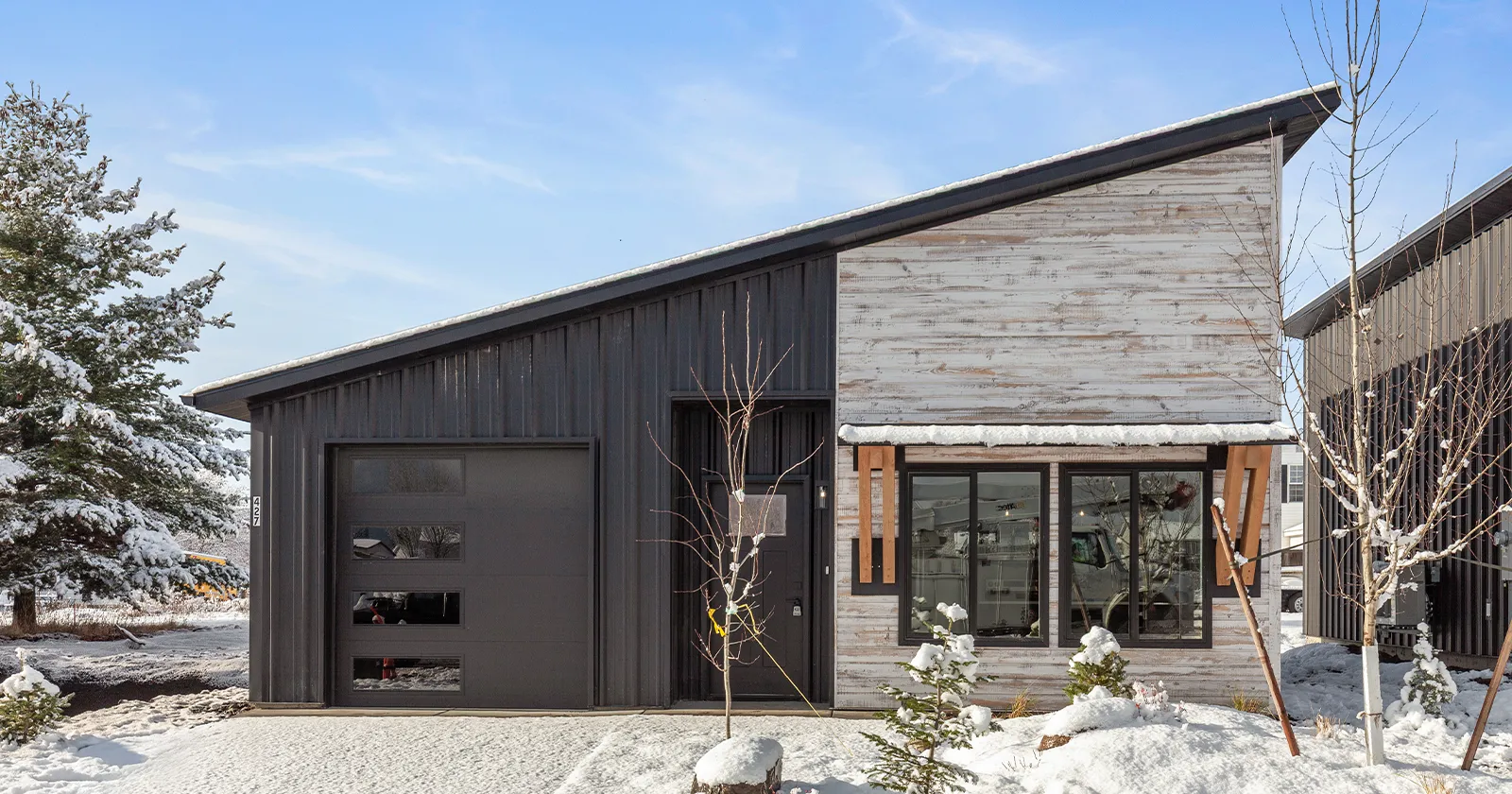
A kit home is a prefabricated home where precision-cut components, including framing, exterior panels, roofing, windows, and in the best versions all interior finishes, are packaged and shipped to your property for assembly. The components arrive flat or pre-cut and are built up from the foundation on your lot. Assembly happens entirely on site. The home is built to standard local and state building codes, identical to any stick-built home.
Kit Culture’s homes are a complete kit home system: every component ships on one truck, permit-ready, with pre-cut framing, metal roof and siding panels, Milgard windows, LG appliances, quartz countertops, a five-zone heat pump, LVP flooring, and stamped engineering drawings. One package. No material sourcing. No allowance games.
Modular Home
A modular home is built in large, three-dimensional room-sized sections in a factory, typically to 80 to 90 percent completion. The sections are trucked to your property, lifted by crane onto a permanent foundation, bolted together, and finished on site. A modular home is not a trailer or a manufactured home. It’s built to the same local and state building codes as a stick-built house and sits on a permanent foundation.
The key distinction from a kit home: the factory does significantly more of the work before delivery. Interior walls, electrical, plumbing, insulation, and sometimes cabinetry and flooring are installed in the factory. When the modules arrive at your site, crews join them together rather than building from the frame up.
Manufactured Home
A manufactured home is built entirely in a factory to federal HUD standards (not local building codes) and transported to your site on a permanent steel chassis, often as a complete or near-complete unit. Manufactured homes are sometimes called mobile homes, though that term technically applies only to factory-built homes constructed before 1976. They’re a different regulatory category from modular and kit homes, with different financing rules, different appraisal standards, and different long-term value profiles.
| Manufactured Home vs. Modular Home: The Financing Difference Is Significant
Manufactured homes built on a permanent chassis are classified as personal property, not real property, in many situations. This limits your financing options and often means higher interest rates (chattel loans vs. conventional mortgages). Modular and kit homes are classified as real property on permanent foundations and qualify for conventional mortgages, FHA loans, VA loans, and construction-to-permanent financing at standard rates. This distinction has real dollar consequences over the life of a loan. |
The Full Comparison
Here’s how kit homes, modular homes, manufactured homes, and stick-built homes stack up across the factors that matter most to buyers and builders.
| Factor | Kit Home | Modular Home | Manufactured Home |
| Where is it built? | Components built in factory; assembled from the ground up on your lot | 80-90% complete sections built in factory; crane-set onto your foundation | Entirely built in factory on a steel chassis; trucked to site as a finished or near-finished unit |
| What arrives on site? | Pre-cut parts, panels, and components packaged for assembly | Complete room-sized modules, nearly finished, ready to join together | A complete or near-complete home, usually in one or two large sections |
| Building code | Local and state codes, same as stick-built | Local and state codes, same as stick-built | Federal HUD standards, separate from local building codes |
| Foundation required? | Yes, permanent foundation | Yes, permanent foundation | Varies; often on piers or a permanent foundation for real property classification |
| Crane required? | No; standard construction equipment | Yes; crane is required to set modules | No; towed or transported by truck |
| On-site labor | Higher; full assembly from the frame up | Lower; modules are joined and finished | Minimal; dealer and installer handle setup |
| DIY-friendly? | Most DIY-friendly option; instructions designed for assembly | No; requires crane, professional assembly | No; installer and dealer driven |
| Financing | Construction loans, construction-to-permanent, HELOC; same as stick-built | Construction loans, conventional mortgage, FHA, VA; same as stick-built | Chattel loan (if personal property) or conventional mortgage (if real property on land you own) |
| Typical total cost (all-in) | Varies widely; Kit Culture from under $100K complete | $180K to $360K for a finished home, average around $270K | Generally lowest all-in cost; average new manufactured home under $90K |
| Appreciation | Same as stick-built; appraised on permanent foundation to local codes | Same as stick-built; appraised on permanent foundation to local codes | Varies; permanent-foundation units on owned land appreciate more similarly to stick-built |
| Timeline (delivery to move-in) | 60 to 90 days after delivery | Days to set modules; 30 to 90 days to finish | 1 to 2 days to set; finishing varies by model |
| Customization | Model-based; options vary by manufacturer | Flexible floor plan options within module constraints | Limited to manufacturer’s floor plans and upgrade packages |
How They Compare on the Decisions That Matter
Cost
Raw price comparisons between these types are tricky because they often don’t include the same things. A modular home quote might mean the modules only, not delivery, crane, site work, or finishing. A kit home quote might be for the structural package only, not windows or interior finishes. Always compare total project cost, not sticker price.
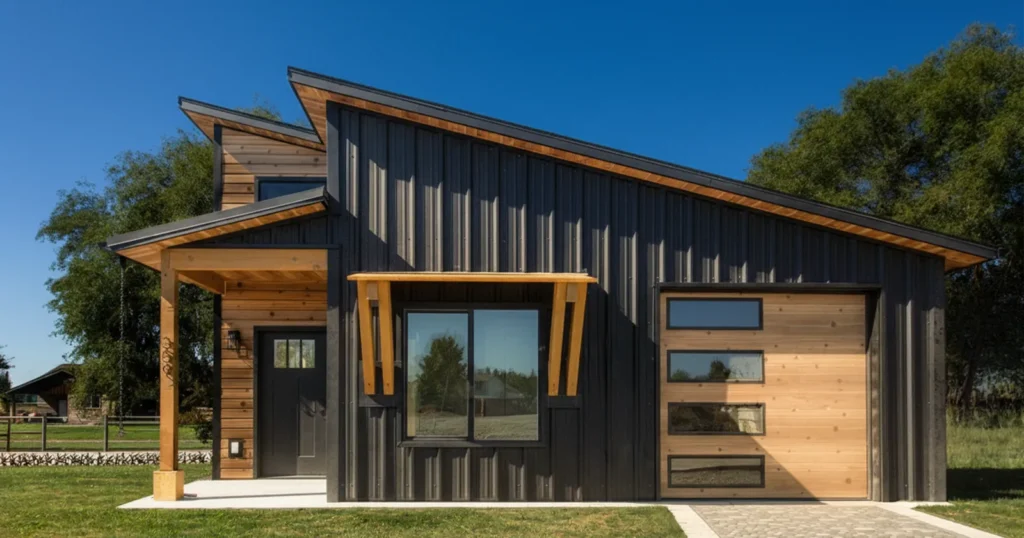
With that caveat: manufactured homes have the lowest all-in cost in most markets. Kit homes can be competitive with or significantly less expensive than modular homes, especially when the kit includes all finishes and eliminates the cost of a crane. Modular homes generally cost 10 to 20 percent less than comparable stick-built homes but are often more expensive than complete kit home systems.
In the Idaho and eastern Washington market, custom stick-built construction runs $200 to $300 per square foot or more. Kit Culture’s complete package delivers a finished home for significantly less. Modular homes in the region typically run $150 to $260 per square foot all-in, still well above what a complete kit system costs.
Timeline
All three types are faster than stick-built construction. Manufactured homes set the fastest record: a few days from delivery to occupancy once the site is prepared. Modular homes are close: modules arrive nearly complete and are finished on site within weeks. Kit homes take longer on site but are still dramatically faster than custom construction, with most Kit Culture homes moving from delivery to Certificate of Occupancy in 60 to 90 days.
The timeline comparison that matters most is total time from order to move-in. Modular homes require factory build time (typically 6 to 12 weeks) plus shipping plus on-site finishing. Kit homes require factory build time (4 to 6 weeks for Kit Culture) plus delivery plus on-site assembly. In practice the timelines are comparable at 3 to 5 months, versus 9 to 18 months for custom stick-built.
We explore this in depth in our article on how long it takes to build a kit home.
Financing
This is where the manufactured home category diverges significantly from kit and modular. Manufactured homes classified as personal property, meaning the home is on land you don’t own or is on a chassis not permanently affixed to a foundation, are typically financed through chattel loans. These are personal property loans, not real estate mortgages. Rates are higher, terms are shorter, and the same government-backed loan programs (FHA, VA, conventional) are not available on the same terms.
Kit homes and modular homes on permanent foundations are classified as real property and qualify for the same financing options as stick-built homes: conventional mortgages, FHA loans, VA loans, and USDA loans at standard rates. During construction, a construction-to-permanent loan is typically used, which converts to a standard mortgage once the home is complete. This is a meaningful difference if you’re comparing financing options across home types.
| Always Ask a Lender Early
Financing options for new construction vary by lender and loan type. If you’re comparing kit, modular, and manufactured options, have a lender review your specific situation early in the process. Don’t assume. The difference between a chattel loan rate and a conventional mortgage rate on a $150,000 home can be thousands of dollars per year. |
Assembly and DIY Potential
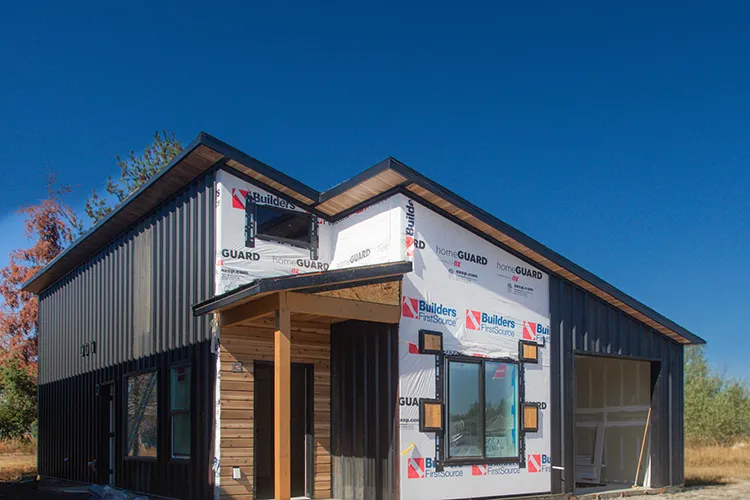
Kit homes are the most accessible option for owner-builders. Because the components arrive pre-cut and labeled for a specific assembly sequence, a skilled crew without modular home experience can build a kit home following the manufacturer’s instructions. You don’t need a crane. You don’t need a specialized installer.
Modular homes require professional assembly. Setting modules requires a crane operator, a crew experienced in modular home installation, and careful site coordination. If a module arrives damaged or a join doesn’t align correctly, fixing it is significantly more complex than adjusting framing during site assembly.
Manufactured homes require minimal on-site work but are typically handled by the dealer and installer, not the homeowner.
Customization
Stick-built homes offer the most customization since you’re starting from scratch with any design you and your architect can produce. Modular homes offer meaningful customization through flexible floor plan combinations, though designs are constrained by what can be built as a transportable module and set by crane. Kit homes are model-based: you choose from available designs and select options within each model, which is less flexibility than modular but plenty for most buyers.
Manufactured homes offer the least customization, typically limited to upgrade packages within the manufacturer’s standard floor plans.
Appraisal and Long-Term Value
Kit homes and modular homes on permanent foundations are appraised by the same method as stick-built homes. The appraiser looks at square footage, finish quality, location, and comparable sales. The factory origin of the home doesn’t get a separate line on the appraisal form. They appreciate like any other home in the same neighborhood.
Manufactured homes have a more complicated appraisal story. Units on permanent foundations that you own the land for are typically appraised as real property, and in those cases appreciation can be comparable to stick-built. Units in mobile home parks on leased land are classified as personal property and tend to appreciate more slowly or depreciate, depending on the market.
Which Type Makes Sense for Your Situation?
Rather than declaring one option universally better, here’s a practical scenario guide.
| Your Situation | Likely Best Fit | Why |
| You own land and want to build a primary home with a fast, predictable process at roughly half the cost of custom construction | Kit home | Complete package, faster timeline, significantly lower cost than modular or stick-built in most markets |
| You want maximum design flexibility and can manage a more complex construction process | Modular or stick-built | More floor plan options and customization than kit homes, at a higher cost and longer timeline |
| You’re a contractor building homes for clients and want a repeatable, margin-friendly system | Kit home | Predictable costs, fast build cycle, and contractor pricing programs like Kit Culture’s make this efficient at scale |
| You want the absolute lowest all-in cost and are comfortable with more limited design options and different financing | Manufactured home | Lowest cost per square foot, though financing, appraisal, and appreciation dynamics are different |
| You’re adding an ADU to an existing property | Kit home | Size, cost, and speed all align well; Kit Culture’s ADU models are specifically designed for this use case |
| You’re a DIY owner-builder with construction skills | Kit home | Most DIY-accessible option; no crane required, detailed assembly instructions, pre-cut components |
| You want a completed home as quickly as possible and have a prepared site | Manufactured or modular | Manufactured homes set in days; modular homes finish faster on site than kit home assembly |
Where Kit Culture Fits In This Landscape
Kit Culture is a complete kit home system built in Post Falls, Idaho. If you’ve read this far, you already know the category. Here’s what makes Kit Culture specifically worth looking at within that category.
Everything in One Package
Most kit home companies sell you a structural package and let you source the rest. Kit Culture ships everything on one truck: pre-cut Ready Frame framing, Metal America metal roof and siding panels, Milgard windows, LG appliances, quartz countertops, a five-zone ductless heat pump, LVP flooring, and Idaho and Washington permit-stamped engineering drawings. One price. No allowances. No sourcing surprises halfway through the build.
Roughly Half the Cost of Custom Construction
In the Idaho and eastern Washington market, custom stick-built construction typically runs $200 to $300 per square foot or more. Kit Culture’s complete homes deliver premium finishes for significantly less, typically coming in at roughly half the cost of a comparable custom build. The savings come from manufacturing efficiency, not from lower-quality materials.
Faster Than Modular in This Market
Modular home manufacturers serving Idaho often have longer lead times and higher freight costs than a locally built kit system. Kit Culture manufactures in Post Falls and ships directly to Idaho and eastern Washington properties. The result is a 4 to 6 week manufacturing window instead of the 2 to 3 months you might wait for modules from a distant manufacturer.
Built to Idaho and Washington Codes From Day One
Every Kit Culture home ships with engineering drawings stamped for Idaho and Washington. You’re not starting the permit process from scratch or paying separately for local code engineering review. That saves time, money, and one of the most common sources of permit delay.
| Kit Culture Models at a Glance
Compact: 799 sq ft, starting at $99,500. Modern: 994 sq ft, starting at $115,000. Family: 1,360 sq ft, starting at $145,000. ADU-specific models in development for 2026, priced from $75,000 to $200,000. All models include the full package of premium finishes. All ship permit-ready with stamped engineering for Idaho and Washington. |
| Want to Compare Models and See What Fits Your Project?
Visit kitculturehomes.com to explore Kit Culture’s current models and get on the waitlist for the 2026 ADU lineup. If you’d rather talk it through, give us a call. We’re based in Post Falls and know the Idaho and eastern Washington market inside and out. |
Frequently Asked Questions
Is a kit home the same as a prefab home?
A kit home is a type of prefab home, but prefab is a broad category that includes modular homes, manufactured homes, and other factory-built products. Prefab just means components or sections are built off-site before being delivered to your property. Kit homes, modular homes, and manufactured homes are all prefab, but they work very differently from each other.
What’s the main difference between a kit home and a modular home?
The biggest difference is what arrives at your site and how it’s assembled. A modular home arrives as large, room-sized sections that are 80 to 90 percent complete and requires a crane to set them on your foundation. A kit home arrives as pre-cut components that are assembled from the ground up on site. Kit homes are more DIY-friendly and don’t require a crane. Modular homes include more factory finish work but require professional installation.
Which is cheaper: a kit home or a modular home?
Complete kit home systems are generally less expensive than comparable modular homes, though this depends heavily on what’s included in each quote. Always compare total project cost, not just the base package price. Modular homes typically run $80 to $160 per square foot all-in. A complete kit home from Kit Culture, with all finishes included, comes in at significantly less per square foot in the Idaho and eastern Washington market.
Can I get a conventional mortgage for a kit home?
Yes. Kit homes are built to standard local and state building codes and sit on permanent foundations, which classifies them as real property. That means they qualify for the same financing options as stick-built homes: conventional mortgages, FHA loans, VA loans, and USDA loans. During construction, most buyers use a construction-to-permanent loan. This is the same financing path as any new home build.
Can I get a mortgage for a modular home?
Yes. Modular homes are also built to local building codes and sit on permanent foundations, so they qualify for conventional mortgages, FHA loans, VA loans, and construction-to-permanent financing at standard rates. Appraisers treat completed modular homes the same way they treat stick-built homes.
What about manufactured homes and financing?
Manufactured homes have more complicated financing. If the home is on a permanent foundation on land you own, it can qualify as real property and be financed with a conventional mortgage. If it’s on leased land or not permanently affixed, it’s typically classified as personal property and financed through a chattel loan. Chattel loans have higher interest rates and shorter terms. This difference has significant long-term financial implications.
Are kit homes and modular homes built to the same building codes as regular homes?
Yes. Both kit homes and modular homes are built to standard local and state building codes, the same codes that apply to stick-built homes. Manufactured homes are different: they’re built to federal HUD standards instead of local codes. This is one of the key distinctions between manufactured homes and the other types.
Do kit homes appreciate in value?
Yes. Kit homes built to local codes on permanent foundations are appraised and appreciated the same way as comparable stick-built homes. The factory origin doesn’t affect how appraisers evaluate the home. What matters is the quality of construction, the finish level, the foundation, and comparable sales in the area.
Can I build a kit home myself?
Kit homes are the most DIY-accessible type of prefab home. Because components arrive pre-cut and labeled, and assembly follows a step-by-step instruction sequence, owner-builders with solid construction skills can complete a kit home. Modular homes require crane equipment and professional installation, making DIY assembly impractical.
Which type of home is fastest to build?
Manufactured homes are set the fastest, sometimes within days once the site is prepared. Modular homes are set quickly as well since modules arrive nearly complete. Kit homes take longer on site since they’re assembled from components, but Kit Culture homes typically move from delivery to move-in ready in 60 to 90 days. All three are dramatically faster than custom stick-built construction, which typically takes 9 to 18 months.