Kit home insulation and window quality is one of the more specific questions buyers ask, and it deserves a specific answer. The general claim that a kit home is “built to code” is true but not always satisfying on its own. What you probably want to know is whether your home will actually feel comfortable in January, whether your heating bills will be in the same range as a comparable new house down the street, and whether the windows are decent quality or a spec you will regret in three years.
Here is a plain-English breakdown of exactly what Kit Culture includes, how it is matched to your location, and how it compares to what a local builder would put in a conventional new home.
Why Local Code Is the Right Benchmark
Before getting into the specifics, it helps to understand why building code is the right standard for this comparison.
Building codes set minimum energy performance requirements for new homes based on where they are built. Those requirements are climate-specific. A home in northern Idaho has to meet different insulation and window standards than a home in a milder climate, because the winters are colder and heating loads are higher. The code accounts for that.
When a local builder constructs a new home in your area, they are building to that same code. They are not free to put in whatever insulation happens to be cheapest or windows that underperform. They have to meet the standard, or the home fails inspection.
Kit Culture works the same way. The difference is that we match the insulation and window spec to your delivery address before the kit ships, rather than having a contractor make those decisions on site. The result is a kit that is already configured to pass inspection in your specific location, using materials that meet the same performance requirements a local builder would use.
Insulation: What Is Included and How It Is Specified
The Insulation Package
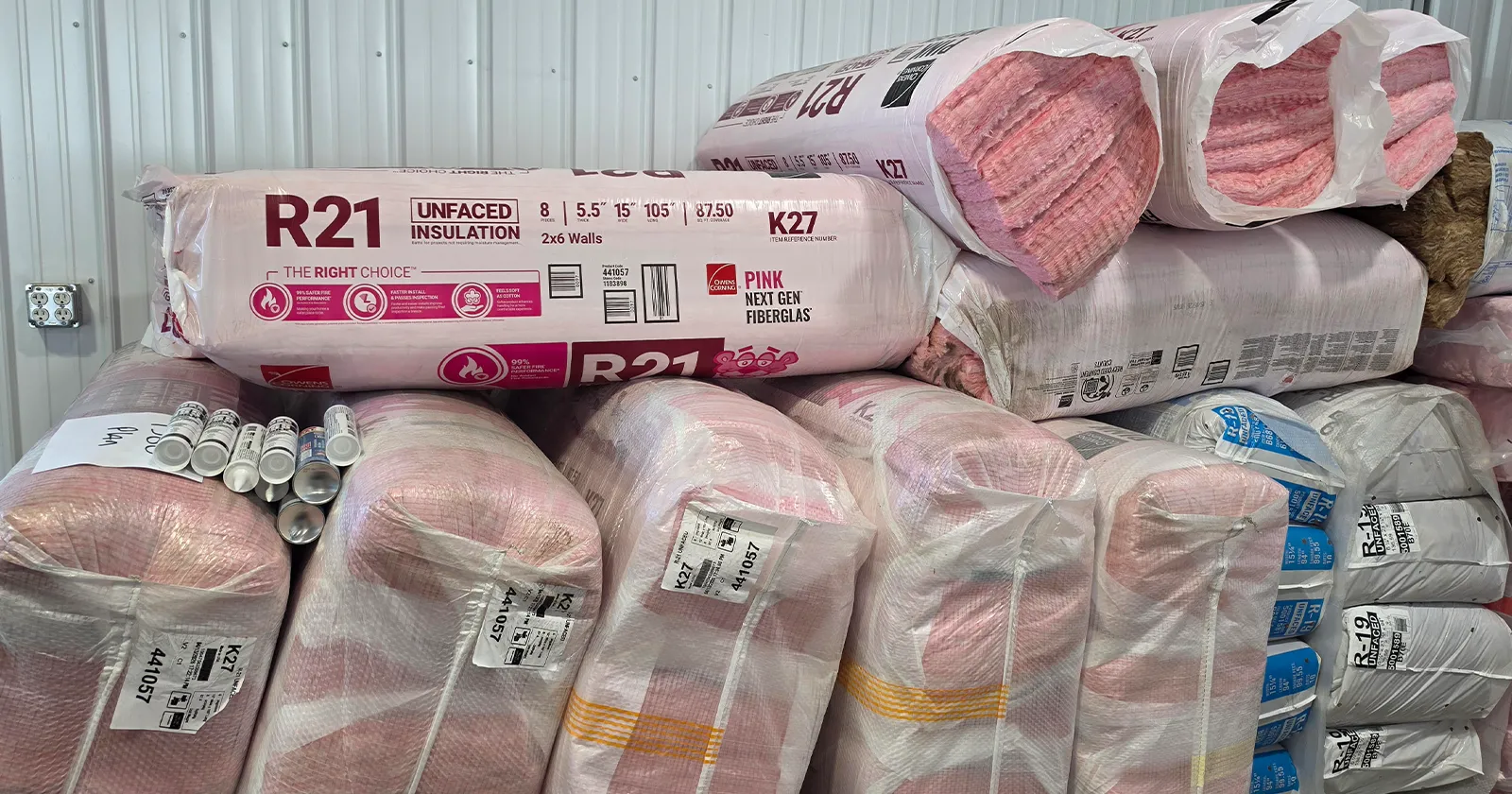
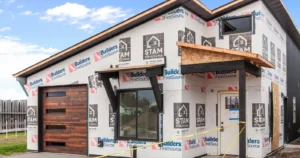
Kit Culture homes use batt insulation as the primary insulation product. Batt insulation is the standard insulation approach used in the vast majority of new residential construction across Idaho and Washington, and it performs well in both climates when installed at the right R-value for the location.
The R-value included in your kit is not a single fixed number applied to every home regardless of location. It is matched to the building code requirements for your specific delivery address. If you are building somewhere with a higher R-value requirement due to climate zone, your kit is configured for that. If your address requires more insulation than our baseline specification, we use more insulation.
In practice, this means the insulation in your Kit Culture home is specified to the same standard a local builder would use for a new home on the same street. You are not getting a lesser product because you bought a kit.
What R-Value Means in Plain English
R-value is a measure of how well insulation resists heat flow. Higher R-value means better insulating performance. The specific requirements vary by location and by which part of the home is being insulated. Walls, floors, and ceilings all have separate code requirements.
If you want to know the specific R-value included in the kit for your address, give us a call and we can tell you exactly what your location requires and what your kit will include.
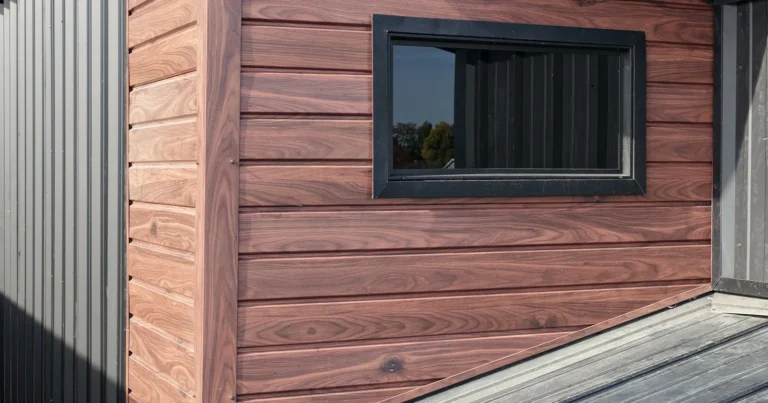
Windows: Milgard Low-E with a U-Value of U-0.29
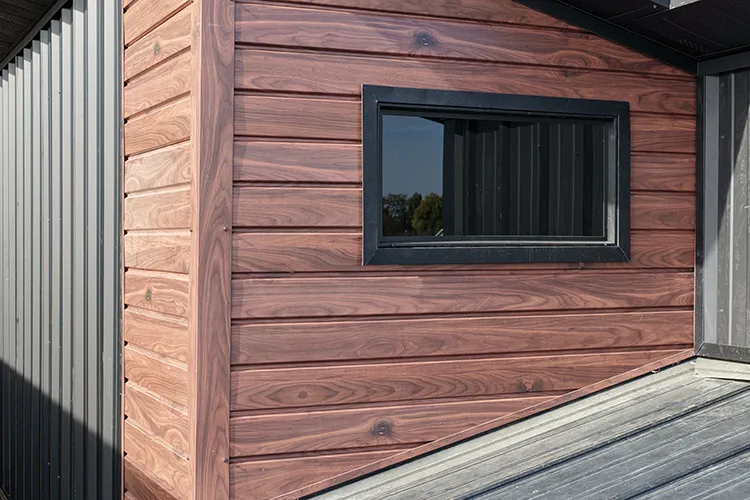
Kit Culture homes include Milgard Low-E windows with a U-value of U-0.29 as the standard specification. Here is what that means and why it matters.
What Low-E Glass Does
Low-E stands for low emissivity. It refers to a microscopic coating applied to the glass that reflects heat back toward its source. In winter, that means radiant heat from inside your home is reflected back in rather than escaping through the glass. In summer, solar heat from outside is reflected away rather than warming the interior.
The practical result is a window that helps your home stay warmer in cold weather and cooler in warm weather without requiring your heating and cooling system to work as hard. Low-E glass is standard in new residential construction across the Pacific Northwest and has been for years. If a local builder is putting windows in a new home in Idaho or Washington, Low-E is almost certainly what they are installing.
Understanding U-Value
U-value measures how quickly heat passes through a window. Unlike R-value, where higher is better, U-value works in reverse: lower is better. A U-value of 0.29 is a solid mid-range performance rating for a residential window in a cold climate.
For context, Idaho and Washington building codes in colder climate zones typically require windows in the range of U-0.30 or better. A U-0.29 window meets or exceeds that threshold. You are not getting a window that just barely squeaks through code, you are getting a window that performs well within the required range.
| U-Value Range | Performance Level | Typical Use |
| U-0.20 to U-0.25 | High performance | Passive house / premium builds |
| U-0.26 to U-0.30 | Strong mid-range | Standard new construction in cold climates |
| U-0.31 to U-0.35 | Code minimum | Milder climate zones |
| Above U-0.35 | Below modern code | Older homes / replacement windows |
What Milgard Is and Why It Matters
Milgard is a well-established window manufacturer based in the Pacific Northwest, and their products are widely used in new residential construction across Idaho and Washington. They are not a budget brand or a kit-specific brand. Milgard windows show up in new homes built by local contractors throughout the region.
Choosing Milgard for Kit Culture homes was deliberate. It is a product that local contractors are familiar with, that performs reliably in the climate, and that buyers in this region will recognize as a quality standard.
What Happens If Your Local Code Requires Better Windows
Most locations in Idaho and Washington are well served by the standard U-0.29 Low-E specification. However, if your specific build address requires a higher-performance window to meet local code, Kit Culture will upgrade the window specification in your kit at no additional charge.
You do not have to worry about discovering a code compliance issue after your kit arrives. The window spec is reviewed against your local requirements before the kit ships, and if an upgrade is needed, we handle it.
Heating and Cooling: The Mini-Split System
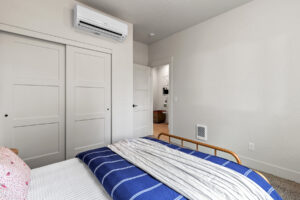
Kit Culture homes include a multi-zone mini-split heat pump system as part of the standard kit. The brand is either Mitsubishi or Hitachi depending on availability at the time your kit is assembled. Both are well-regarded manufacturers with strong track records in residential mini-split applications.
Why Mini-Splits Are a Good Choice for This Climate
Mini-split heat pumps are one of the most efficient heating and cooling systems available for residential use. They work by moving heat rather than generating it, which makes them significantly more efficient than electric resistance heating and competitive with or better than gas forced-air systems in most conditions.
In Idaho and Washington, where winters can be cold but are generally within the effective operating range of modern heat pumps, a well-sized mini-split system handles both heating and cooling from a single system. The multi-zone configuration means you can control the temperature in different areas of the home independently, which adds both comfort and efficiency.
Energy Star Rated Components
The mini-split systems included in Kit Culture homes are Energy Star rated, as are the appliances and other energy-consuming components in the kit. Energy Star is a federal program that certifies products meeting specific energy efficiency standards above the minimum code requirement.
One practical benefit of using Energy Star rated components throughout the home is that they contribute toward energy code compliance credits during the permitting process. Many local building codes use a point-based or credit-based compliance pathway for energy efficiency, and using rated products helps your home satisfy those requirements efficiently.
How It All Compares to a Local New Build
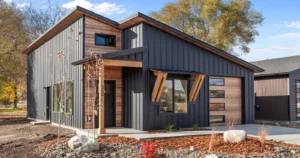
The question this article is really answering is whether the insulation and windows in a Kit Culture home are on par with what you would get from a local builder. Here is the direct comparison.
| Feature | Kit Culture | Typical Local New Build |
| Insulation type | Batt insulation | Batt insulation (most common) |
| Insulation R-value | Matched to local code for your address | Matched to local code by contractor |
| Windows | Milgard Low-E, U-0.29 | Varies by builder; Low-E standard in region |
| Window upgrades | Included at no charge if code requires it | Included in build cost |
| Heating / cooling | multi-zone mini-split (Mitsubishi or Hitachi) | Varies: forced air, heat pump, or mini-split |
| Energy Star components | Yes, throughout | Varies by builder |
| Code compliance | Verified before kit ships | Verified by contractor during build |
The honest summary is that on insulation and windows, a Kit Culture home is configured to the same standard a local builder would use for a new home at your address. The materials are not exotic or premium, but they are not a downgrade either. They are the products used in quality new residential construction in this region, specified to your location.
The mini-split system is arguably an upgrade over what many local builders include as a standard, since forced-air gas systems are still common in Idaho and Washington and mini-splits outperform them on efficiency.
The Short Answer
Kit home insulation and window quality is the same as what you would get in a new stick-built home in your area. The insulation meets the R-value requirements for your specific location. The windows are Milgard Low-E at U-0.29, which meets or exceeds code requirements across Idaho and Washington. If your address requires a better-performing window, we upgrade it at no charge.
The heating and cooling system is a multi-zone Energy Star rated mini-split from Mitsubishi or Hitachi, which is an efficient and well-regarded system for this climate.
If you have specific questions about the specs for your location or want to confirm what your build address requires, give us a call. We can tell you exactly what your kit will include before you place your order.