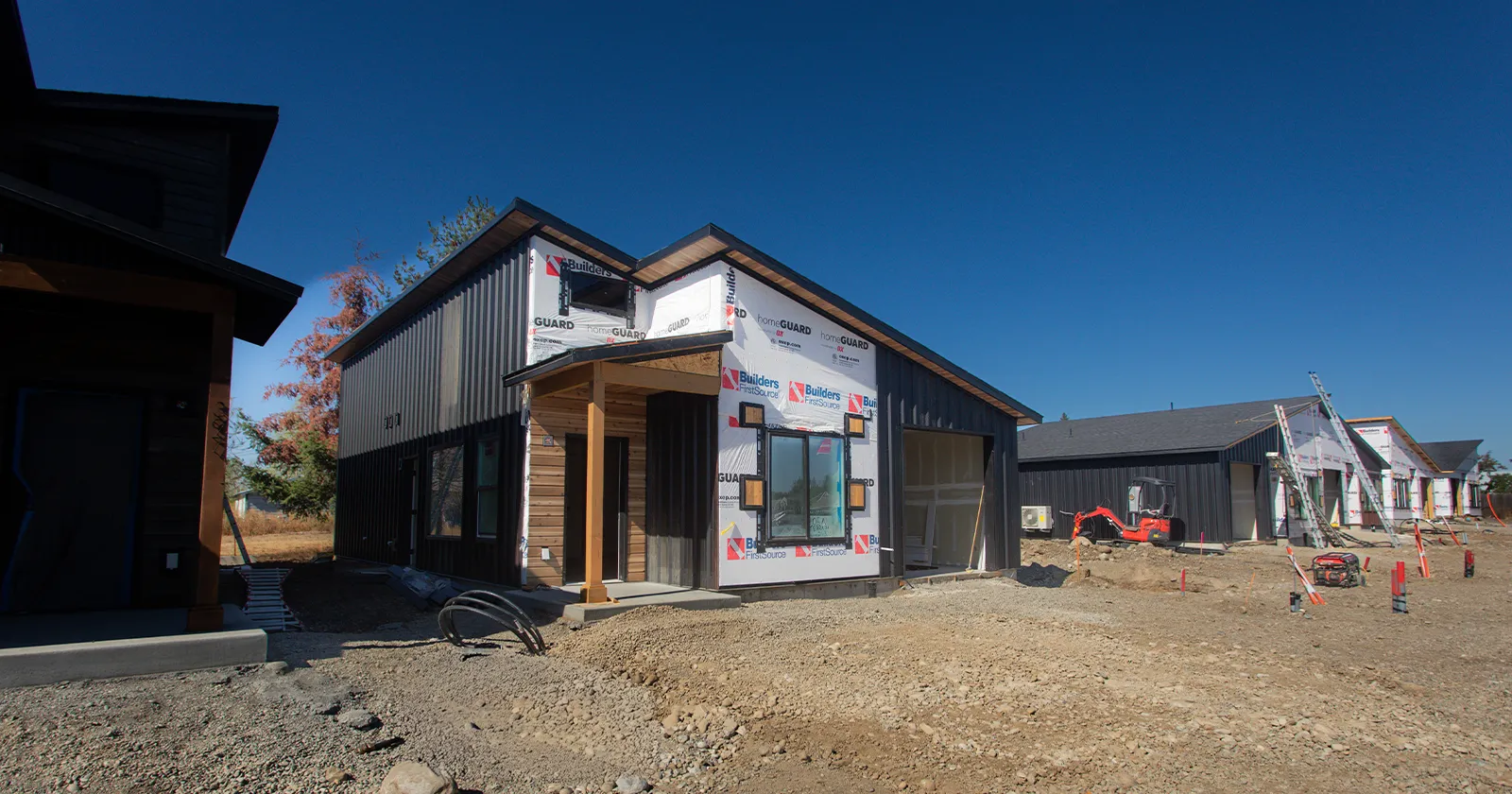
The short answer: a Kit Culture home is typically weather-tight within days of delivery and move-in ready in under 90 days of on-site work. Total time from placing your order to getting your Certificate of Occupancy runs 12 to 16 weeks in most cases. That’s 3 to 5 months, start to finish.
Compare that to a custom stick-built home. In Idaho and eastern Washington, a comparable custom build takes 9 to 18 months from breaking ground to occupancy, and that assumes no significant delays. Weather, material lead times, subcontractor availability, and permit review can all push that timeline further.
This article walks through every phase of the Kit Culture build timeline, what happens in each one, what you need to have ready, and what can slow things down. Timeline is one of the most compelling reasons people choose a kit home. But the advantage only holds if you plan the process well.
The Full Timeline at a Glance
Here’s how a Kit Culture build breaks down from order to move-in.
| Phase | Duration | What You’re Doing |
| Order and design confirmation | 1 to 2 weeks | Choose your model, finalize options, sign off on plans and engineering |
| Permitting | 2 to 8 weeks | Submit application to your local building department; timeline varies by city |
| Site preparation and foundation | 2 to 6 weeks | Clear and grade your site, pour foundation, stub utilities |
| Manufacturing | 4 to 6 weeks | Kit Culture produces your home components at the Post Falls facility |
| Delivery | 1 to 5 days | Single flatbed truck delivers all components to your property |
| Framing and exterior | 1 to 2 weeks | Ready Frame components assembled, metal panels installed, home becomes weather-tight |
| Rough mechanicals | 1 to 2 weeks | Electrical, plumbing, and HVAC rough-in before walls are closed |
| Insulation and drywall | 1 to 2 weeks | Insulation inspection, drywall hung and finished |
| Interior finish work | 2 to 4 weeks | Flooring, cabinetry, countertops, fixtures, appliances, trim installed |
| Final inspections and CO | 1 to 2 weeks | Final inspection passes, Certificate of Occupancy issued, keys in hand |
| Total: 12 to 16 Weeks in Most Cases
Manufacturing and site prep happen in parallel, so the total calendar time is shorter than the sum of the phases. While Kit Culture is manufacturing your components over 4 to 6 weeks, you’re simultaneously preparing your site and working through permitting. A well-coordinated project compresses the overall timeline significantly. |
Phase by Phase: What Actually Happens
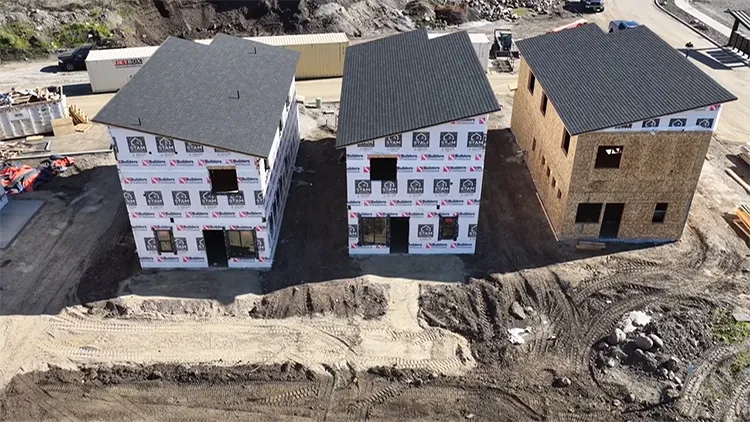
Phase 1: Order, Model Selection, and Design Confirmation (1 to 2 Weeks)
The process starts with selecting your Kit Culture model and confirming your configuration. Kit Culture offers three current models: the Compact at 799 square feet, the Modern at 994 square feet, and the Family at 1,360 square feet, with ADU-specific models in development for 2026. Each model has options you’ll finalize before the order is locked in.
Once your order is placed and your configuration is confirmed, Kit Culture provides the stamped engineering drawings and foundation plan you’ll need for your building permit application. The engineering is already done. You’re not waiting on a third-party engineer to produce plans from scratch, which is one of the ways Kit Culture compresses the early stages of the process.
Use this phase to line up your contractor if you’re not self-building. Getting a GC engaged before manufacturing starts means they can schedule their crew for the right window, which prevents a gap between delivery and the start of site work.
Phase 2: Permitting (2 to 8 Weeks)
Permitting is the phase with the most variability in the timeline and the least direct control. Some cities move faster than others, and the same city can be faster or slower depending on staff workload and application completeness.
In Post Falls, where Kit Culture is based, the permit process for a new residential structure runs 2 to 4 weeks for a complete, accurate submittal. In Coeur d’Alene and Boise, timelines can run 4 to 8 weeks or more depending on review volume. In rural Kootenai or Bonner County, it may be faster.
The most important thing you can do to keep this phase on schedule is submit a complete application the first time. Missing documents, incorrect site plans, or mismatched information between the permit application and the engineering drawings are the most common causes of permit delays. Kit Culture provides permit-ready plans, which eliminates the most common engineering-related submission errors.
| Start Your Permit Application as Soon as You Have Your Plans
Don’t wait for your foundation to be poured before you apply for your building permit. Permit review and site prep can happen at the same time. Submitting your permit application in the same week you receive your stamped plans is the right move. Delays in permitting are one of the most common reasons an otherwise well-planned build runs long. |
Phase 3: Site Preparation and Foundation (2 to 6 Weeks)
Site preparation and foundation work is the phase that varies most with your specific property. A flat, already-cleared lot with good soil and easy utility access compresses this phase. A sloped lot, significant tree clearing, poor drainage, or a long utility trench can stretch it.
Site prep typically involves clearing and grubbing (removing vegetation and debris), rough grading to establish a level building pad, installing any required drainage, and stubbing water, sewer or septic, and electrical to the building footprint. Once the site is ready, the foundation is poured.
Kit Culture homes are most commonly built on a concrete slab foundation. A slab pour for a Kit Culture home can happen quickly once the site is prepared, typically 1 to 3 days for the pour itself, plus curing time of 7 to 14 days before framing begins. Crawlspace and full basement foundations add time and cost but are also options depending on your soil conditions and personal preference.
Because manufacturing and site prep happen in parallel, the goal is to have your foundation poured and cured, and your utilities stubbed, by the time your kit is ready for delivery. Coordinating this timing with Kit Culture’s production schedule is something the team helps you manage.
| Site Prep Checklist Before delivery arrives, confirm: |
| Site cleared and graded; building pad established |
| Foundation poured and fully cured |
| Electrical, water, and sewer or septic stubbed to the slab |
| Truck access confirmed: flatbed delivery requires reasonable access to the site |
| Permit approved and posted |
| Contractor or crew scheduled and ready for delivery week |
Phase 4: Manufacturing (4 to 6 Weeks)
While your site is being prepared, Kit Culture is manufacturing your home at the Post Falls facility. This is where being locally made matters: you’re not waiting for components to be produced and shipped from across the country. The manufacturing window for Kit Culture homes runs 4 to 6 weeks from order confirmation depending on production volume.
During manufacturing, your Ready Frame structural components are cut to spec, your Metal America roof and siding panels are fabricated, your windows are ordered and staged, and all interior components including appliances, countertops, flooring, and the HVAC system are prepared for the delivery package.
Everything that’s going to arrive on that truck gets checked against your specific build before it’s loaded. The goal is that when the truck arrives at your site, every component is accounted for and ready to go, with no missing pieces and no surprises.
Phase 5: Delivery (1 to 5 Days)
A Kit Culture home ships on a single flatbed truck. Delivery to properties in North Idaho and eastern Washington is typically completed within one to three days of the scheduled date. The truck brings everything: structural components, exterior panels, windows, doors, and all interior finish components.
When the delivery arrives, your crew should be on site and ready to begin organizing components. Components are loaded in sequence to support the assembly process, so unloading in order rather than randomly is worth the extra coordination. Your contractor should have reviewed the assembly sequence before delivery day.
Before delivery arrives, confirm your site has adequate truck access. A standard flatbed requires a reasonably clear approach and a place to stage materials near the foundation. If your property has significant access constraints, let Kit Culture know during the order process so the delivery can be planned accordingly.
Phase 6: Framing and Exterior (1 to 2 Weeks)
This is the most visually dramatic phase. A crew experienced with Kit Culture’s Ready Frame system can raise the structural frame and get the home weather-tight in a matter of days. By the end of this phase, you have walls, a roof, windows, and exterior metal panels in place. The home is protected from the elements.
The Kit Culture assembly instructions are step-by-step and component-specific. Every piece is numbered and corresponds to a specific location in the plan. This eliminates a significant amount of the guesswork and on-site decision-making that traditional framing requires. An experienced crew working from the instructions typically finds the process faster and more straightforward than conventional framing.
Getting the home weather-tight early in the assembly process protects the interior components and allows rough mechanical work to begin without weather exposure. It also allows any required framing inspection to be scheduled promptly.
Phase 7: Rough Mechanicals (1 to 2 Weeks)
Once the frame is up and the building is weather-tight, rough mechanical work begins. This covers three trades: electrical, plumbing, and HVAC.
Rough electrical involves running conduit and wiring from the main panel to all outlet, switch, and fixture locations before walls are closed. Rough plumbing means running supply and drain lines to all fixture locations. Rough HVAC involves running ductwork or refrigerant lines for the five-zone ductless heat pump system included in your Kit Culture package.
All three rough-in trades need to be inspected before you can close the walls with insulation and drywall. Scheduling these inspections promptly after rough-in is complete is one of the more common places where the timeline slips. Get your inspection scheduled before you’ve finished the rough work so you’re not waiting on the inspector’s availability after the fact.
Phase 8: Insulation and Drywall (1 to 2 Weeks)
After rough mechanical inspections pass, insulation goes in and the walls get closed. Insulation is inspected before drywall is hung. Once the insulation inspection passes, drywall goes up, is taped, mudded, sanded, and primed.
Drywall finishing has its own timeline constraints. Mud needs to dry fully between coats, and the drying time is affected by temperature and humidity. In a North Idaho winter build, heating the structure during this phase and allowing adequate drying time between coats is important. Rushing the drywall finish shows in the final result.
Phase 9: Interior Finish Work (2 to 4 Weeks)
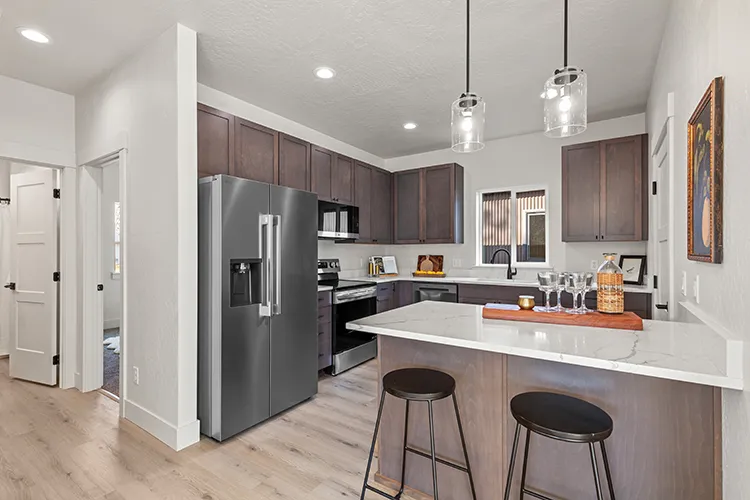
This is the longest phase of on-site work and the one where the home really starts to look finished. Interior finish work includes installing LVP flooring, hanging and finishing cabinetry, installing quartz countertops, setting plumbing fixtures and appliances, installing interior doors and trim, and completing all finish electrical work including fixtures, switches, and outlets.
Because all the interior finish components are included in the Kit Culture package and arrive with the delivery, there’s no waiting on material lead times during this phase. This is a meaningful advantage over a custom build where countertop lead times alone can run 4 to 8 weeks and individual product delays can cascade into longer overall delays.
The interior finish phase has the most flexibility in timeline. A well-organized crew with all materials on hand can complete a Kit Culture home’s interior in 2 weeks. A smaller crew or a build with more custom finish work might take 4 weeks. The presence of a GC who understands the assembly sequence and keeps subcontractors coordinated makes a significant difference here.
Phase 10: Final Inspections and Certificate of Occupancy (1 to 2 Weeks)
Once interior finish work is complete, your final inspections are scheduled. Final inspections cover building, electrical, plumbing, and mechanical. The inspector confirms that everything was installed correctly and to code. Once all final inspections pass, your building department issues a Certificate of Occupancy.
You cannot legally occupy the home until the CO is in hand. Schedule final inspections promptly after finish work is complete. The inspection wait time varies by jurisdiction: some building departments can schedule a final inspection within a few days; others may have a week or more of lead time.
Once the CO is issued, the home is yours. Move-in can happen immediately.
What Can Slow Things Down
The 12 to 16 week timeline is realistic for a well-planned build on a straightforward site. But several factors can extend it. Here’s what to watch out for.
| Delay Risk | How Much Time It Can Add | How to Avoid It |
| Permit delays | 2 to 6 weeks | Submit a complete, accurate application immediately when plans are ready; don’t wait for the foundation |
| Foundation not ready at delivery | 1 to 4 weeks | Coordinate your pour date with the manufacturing schedule so foundation is cured before delivery |
| Inspection scheduling delays | 3 to 10 days per inspection | Schedule each inspection before the prior phase is complete rather than after; don’t queue up delays |
| Crew availability gap between delivery and framing | 1 to 3 weeks | Lock your contractor and crew schedule before placing your order |
| Winter weather during drywall finish | 1 to 2 weeks | Heat the structure during drywall phases; allow full drying time between mud coats |
| Utility connection delays | 1 to 6 weeks | Contact your utility providers early in the process; some areas have long connection wait times |
| Site conditions worse than expected | 1 to 4 weeks | Get a site assessment before finalizing your foundation plan; surprises in soil or drainage add time |
The Key to a Fast Build: Run Phases in Parallel
The biggest timeline lever you have is how much of the process you run in parallel rather than sequentially. Most of the delays that push a kit home build past 16 weeks happen because phases that should overlap are being treated as sequential.
Here’s the sequence that most efficiently compresses the overall calendar time:
- Place your order and submit your permit application in the same week you receive your stamped plans
- Begin site clearing and grading while your permit is in review, where local regulations allow pre-permit site work
- Pour your foundation as soon as your permit is approved and the site is ready
- Schedule your contractor crew for delivery week before manufacturing even starts
- Schedule rough inspections before rough work is complete so the inspector arrives promptly when you’re ready
- Schedule final inspections the week before you expect to finish interior work
The homeowners and contractors who hit the low end of the timeline, 12 to 13 weeks, are typically those who treat every phase as something to tackle immediately, not something to start when the previous phase wraps up.
How Kit Culture Compares to Custom Construction
Timeline is one of the strongest arguments for a kit home system. Here’s how a Kit Culture build stacks up against a comparable custom stick-built home in the Idaho market.
| Phase | Kit Culture Home | Custom Stick-Built |
| Design and engineering | Already done; 1 to 2 weeks to confirm | 3 to 6 months; architect and engineer required |
| Permitting | 2 to 8 weeks | 4 to 12 weeks; more complex plans take longer |
| Manufacturing or material sourcing | 4 to 6 weeks, parallel with site prep | Ongoing throughout build; delays cascade |
| Foundation | 2 to 6 weeks | 2 to 6 weeks |
| Framing | 1 to 2 weeks | 4 to 8 weeks |
| Mechanicals | 1 to 2 weeks | 3 to 6 weeks; multiple subcontractors to coordinate |
| Insulation and drywall | 1 to 2 weeks | 2 to 4 weeks |
| Interior finish | 2 to 4 weeks; all materials on site | 4 to 12 weeks; material lead times add delays |
| Final inspections | 1 to 2 weeks | 1 to 3 weeks |
| Total to move-in | 12 to 16 weeks | 9 to 18 months or more |
The most important line in that table isn’t any individual phase. It’s the total. A family in temporary housing waiting to move into a custom build is paying rent or a mortgage on an existing home while their new place gets built. A contractor waiting 18 months for a spec home to sell is carrying holding costs the entire time. The time advantage of a kit home has real financial value that’s easy to underestimate when you’re focused on construction cost.
Timeline for an ADU Build
The general phases are the same for an ADU build, but a few factors make ADU timelines somewhat faster in practice:
- ADU footprints are smaller, so site prep and foundation work are typically faster
- Interior finish work has less square footage to cover
- Some municipalities have streamlined ADU permit processes, particularly in Post Falls where the city has been proactively reducing ADU barriers
A realistic timeline for a Kit Culture ADU build in Idaho runs 10 to 14 weeks from order to Certificate of Occupancy on a well-prepared site. The same parallel-phase approach applies: permit and site prep should be running at the same time as manufacturing.
If rental income is your motivation for building an ADU, the timeline math is worth doing. An ADU renting for $1,000 to $1,400 per month in North Idaho produces $12,000 to $17,000 of annual income. Every month of build delay is real income not collected. Getting the phases to run in parallel rather than sequentially is worth the coordination effort.
Ready to Get Your Timeline Started?
The 12 to 16 week window from order to move-in is achievable on a well-prepared site. The biggest variable isn’t the build itself. It’s how early you start the parallel tracks of permitting and site prep and how well you coordinate the sequence.
Kit Culture’s team can walk you through the full production and delivery schedule, help you understand what your specific site will need before delivery, and connect you with contractors who’ve built Kit Culture homes before and know how to keep the process on track.
| Let’s Map Out Your Build Timeline
Visit kitculturehomes.com or give us a call. We’re based in Post Falls and know the permitting timelines, site conditions, and contractor landscape across Idaho and eastern Washington. Tell us about your project and we can give you a realistic estimate of what your specific timeline looks like from order to keys. |
Frequently Asked Questions
How long does it take to build a Kit Culture home from start to finish?
From placing your order to receiving your Certificate of Occupancy, a Kit Culture home typically takes 12 to 16 weeks. That breaks down as roughly 1 to 2 weeks for order confirmation, 2 to 8 weeks for permitting (which runs in parallel with site prep), 4 to 6 weeks for manufacturing, and 6 to 10 weeks for on-site assembly and inspections.
How long does Kit Culture take to manufacture a home?
Manufacturing at the Post Falls facility typically takes 4 to 6 weeks from order confirmation, depending on production volume. Because manufacturing happens in parallel with your site preparation, this phase doesn’t add to the total calendar time if your site prep is well coordinated.
How long does on-site assembly take?
On-site assembly from delivery to move-in-ready typically runs 6 to 10 weeks for a primary home. Framing and getting the home weather-tight takes 1 to 2 weeks. Rough mechanicals take 1 to 2 weeks. Insulation and drywall take 1 to 2 weeks. Interior finish work takes 2 to 4 weeks. Final inspections take 1 to 2 weeks.
How does this compare to a custom stick-built home?
A comparable custom stick-built home in Idaho typically takes 9 to 18 months from breaking ground to occupancy. A Kit Culture home takes 12 to 16 weeks total from order to move-in, roughly 3 to 4 times faster. The time advantage is real and has financial value, particularly for buyers in temporary housing and contractors building for rental income.
Can a Kit Culture home really be weather-tight in days?
Yes. Because the components arrive pre-cut and the assembly instructions are step-by-step, an experienced crew can raise the frame and install the metal roof and exterior panels in a matter of days. The home is weather-tight well before the interior work begins, which protects components and allows rough mechanical work to start without weather exposure.
What’s the fastest a Kit Culture build can be completed?
On an ideal site with a permit already approved, a cured foundation ready at delivery, an experienced crew on schedule, and all inspections moving promptly, it’s possible to complete a Kit Culture home in 10 to 12 weeks from order. Most builds land in the 12 to 16 week range.
What causes Kit Culture builds to run longer than expected?
The most common causes of timeline extension are permit delays from incomplete initial applications, a gap between delivery and the start of framing because the crew wasn’t scheduled in advance, inspection scheduling delays because the next inspection wasn’t lined up before the current phase finished, and utility connection delays in areas where new service requests have long wait times.
How long does the permit process take in Idaho?
It varies significantly by city and by application completeness. In Post Falls, a complete residential permit application typically takes 2 to 4 weeks. In Coeur d’Alene and Boise, the range is typically 4 to 8 weeks. Rural county permits can sometimes move faster. Kit Culture’s permit-ready plans eliminate one of the most common causes of permit rejection: engineering document errors.
How long does an ADU build take with Kit Culture?
A Kit Culture ADU build on a well-prepared site typically runs 10 to 14 weeks from order to Certificate of Occupancy. The smaller footprint means faster site prep, foundation, and interior finish work. The same parallel-phase approach applies: permitting and site prep should be running at the same time as manufacturing.
Do I need to live on the property during the build?
No. The build happens on your lot but you don’t need to be on site. Most Kit Culture customers either live nearby or stay in temporary housing during the build period. If you’re building an ADU on a property where you already live, you remain in your primary home throughout.