Kit Homes in Idaho: What You Need to Know Before You Build

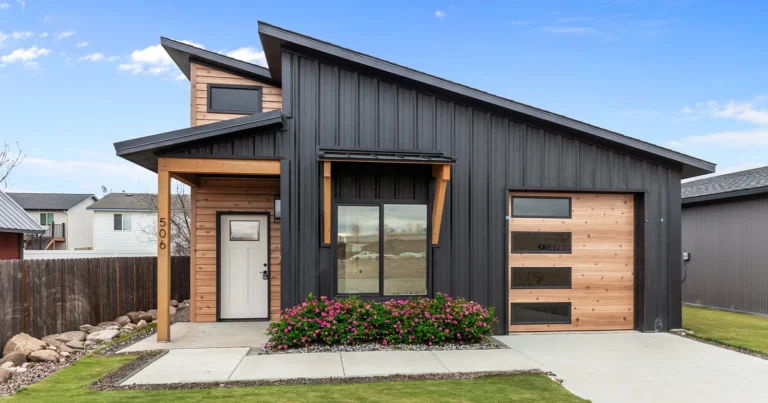
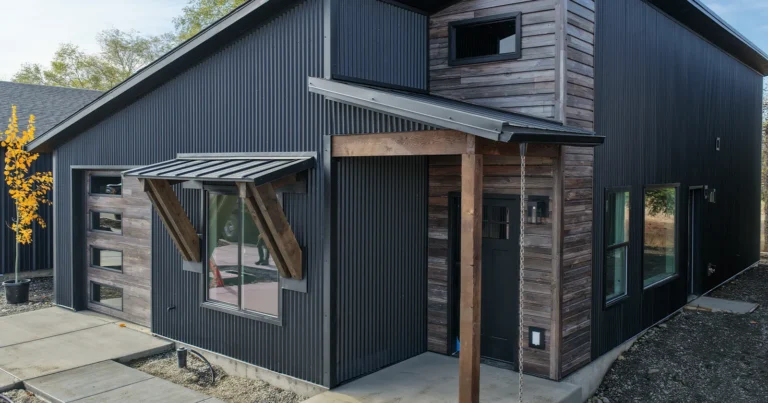
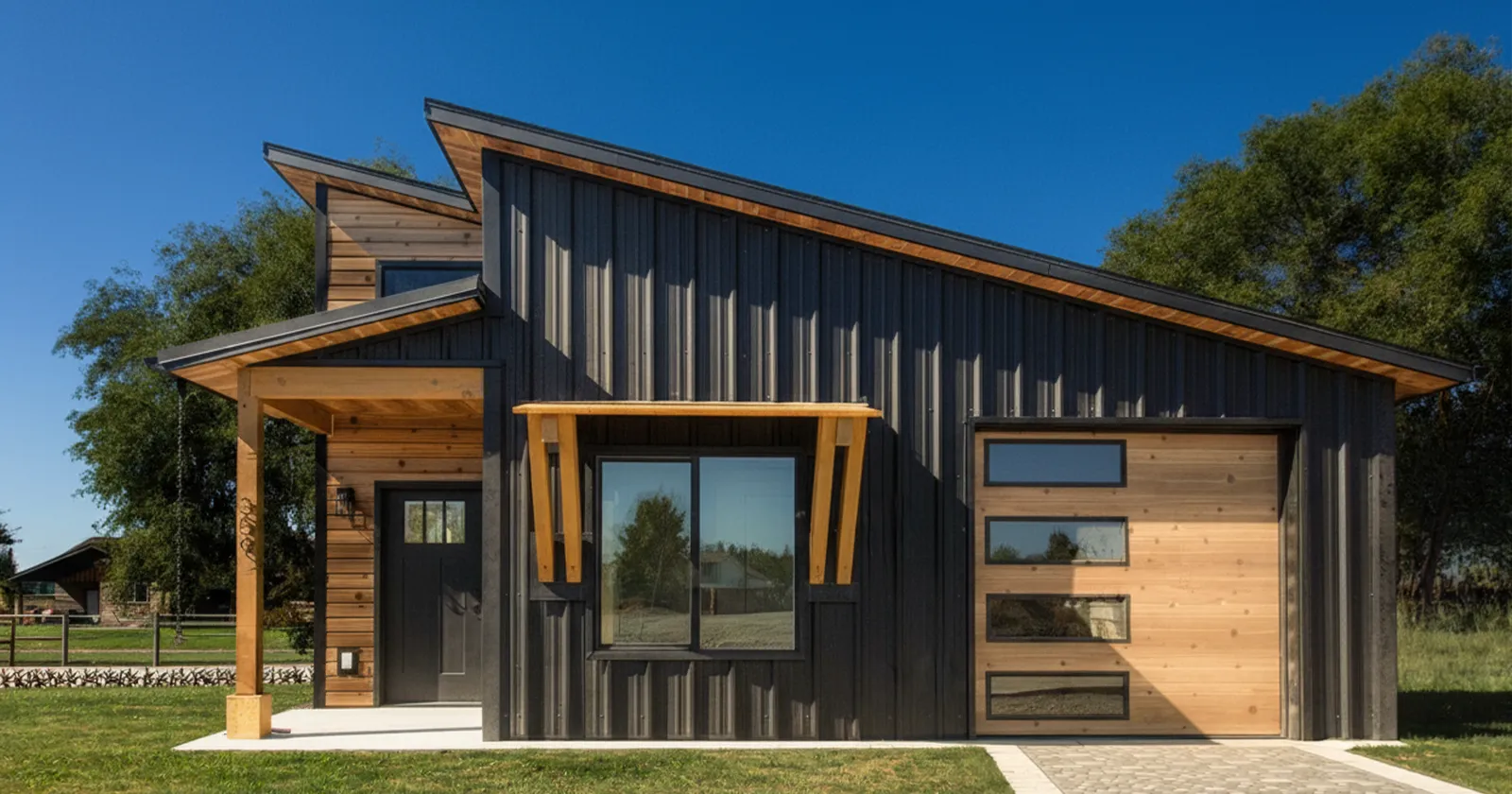
A kit home from Kit Culture, located in Coeur d'Alene Idaho

You’ve got land, or you’re close to it. You’ve looked at what custom construction costs in Idaho. You’ve probably also noticed that the timeline for a stick-built home in this market is something like a year and a half, minimum. And you’re wondering whether a kit home is a legitimate alternative or just a niche thing people do somewhere else.

The honest answer: Idaho is genuinely one of the better states in the country to build a kit home. The land is available, the permitting system is friendlier than most of the West Coast, the climate rewards the kind of metal roofing and exterior systems that come standard on Kit Culture homes, and the contractor network is solid.

But there are Idaho-specific things you need to know before you order. Your energy code requirements depend on where in the state your property sits. The permit process works differently inside city limits versus rural county land. Some site conditions that are common here catch buyers off guard. This guide covers all of it.


Why Idaho Actually Works Well for This

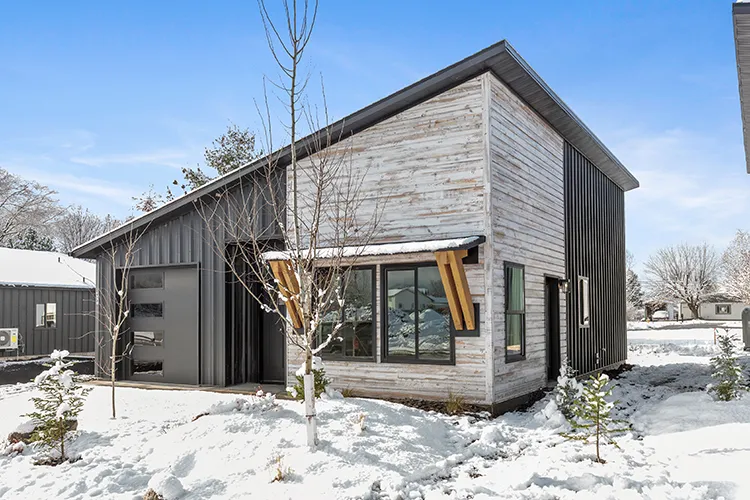
A Home from kit culture with stunning wood-look panels in this winter scene

The Land Situation

One of the most practical barriers to building a kit home is finding affordable land. In Oregon and California, that’s genuinely hard. In Idaho, it’s not. Rural and semi-rural parcels in North Idaho, the Treasure Valley, and eastern Idaho are available at prices that make the overall kit home project viable in a way that’s much harder to pull off in neighboring states.

If you already own rural acreage, you’re ahead of most people and you have more flexibility than you might think. More on that in the site section below.

The Permit Process Is More Accessible Than Most States

Washington and Oregon have complex, locally variable permitting systems with long timelines in most metro areas. Idaho is different. Outside of Boise, permitting is generally faster and more straightforward. In rural areas without a local building program, the Idaho Division of Building Safety handles the process directly, and some rural counties use a simplified notification system rather than full plan review.

That doesn’t mean there’s nothing to navigate, but the learning curve is shorter, especially when your engineering is already stamped and ready to go.

The Climate Actually Suits This Kind of Construction

North Idaho gets real winters. Metal roofing handles heavy snow loads efficiently, doesn’t absorb moisture, and sheds ice and debris without the maintenance headaches of asphalt shingles. Metal siding doesn’t need painting, holds up to freeze-thaw cycles, and stays tight over time in ways that wood or composite exterior materials sometimes don’t.

The Kit Culture exterior system, which uses Metal America panels manufactured at the same facility, was designed for this climate. It’s not adapted from somewhere else. It’s built here.

The Contractor Network Is Real

Idaho’s construction industry has grown a lot over the past decade, especially in North Idaho and the Treasure Valley. There are experienced residential GCs, capable framing crews, and established mechanical trades across most of the state. Finding a local contractor who can build a Kit Culture home is a realistic proposition, not a search that takes months.


Energy Codes: What Your Build Actually Has to Meet

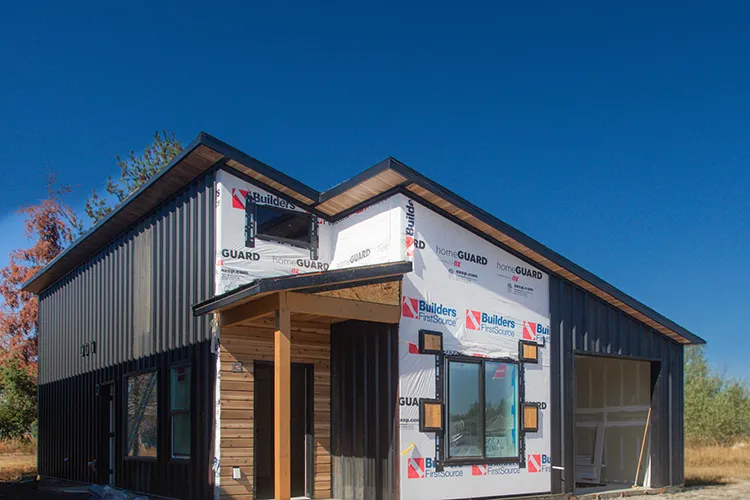
A partially constructed kit home. Insulation and vapor barrier is exposed

Every new home in Idaho has to comply with the state’s energy code, and the requirements depend on which climate zone your property sits in. This affects your insulation specifications, your window selection, and how your wall assembly gets designed.

Idaho’s current residential energy code is based on the 2018 International Energy Conservation Code (IECC) with Idaho-specific amendments, in effect since January 1, 2021. That’s the code your permit application needs to satisfy.


Quick Note on the 2024 Code Update

Idaho’s legislature considered moving to the 2024 IECC in early 2026 but rejected the update in February. As of mid-2026, the 2018 IECC with Idaho amendments is still current. Before you submit your permit application, confirm the current code with your local building department, since this may eventually change.


Which Climate Zone Are You In?

A map of the IECC climate zones
Image courtesy of 2012 International Energy Conservation Code (IECC)

Most of Idaho falls into one of two IECC climate zones. The difference between them is real, particularly for wall insulation, and it affects how your Kit Culture home’s engineering is specified.

Zone 6 covers North Idaho: Coeur d’Alene, Post Falls, Sandpoint, Moscow, and surrounding areas. Zone 5 covers southern and central Idaho: Boise, Nampa, Meridian, Twin Falls, Pocatello, Idaho Falls, and most of the Treasure Valley.


Requirement Zone 5 (South Idaho) Zone 6 (North Idaho) Where Zone 6 Applies Notes
Ceiling / attic insulation R-49 R-49 CDA, Post Falls, Sandpoint Same in both zones
Exterior wall insulation R-20 R-22 CDA, Post Falls, Sandpoint Zone 6 higher due to ID amendment
Floor insulation R-30 R-30 Both zones Same in both zones
Window U-factor max. 0.32 0.30 Zone 6 stricter Lower number = better performance
Window SHGC max. 0.25 0.25 Both zones Solar heat gain coefficient
Air sealing Required Required Both zones Visual inspection or blower door test


The practical impact: if you’re building in North Idaho, you need R-22 in your exterior walls rather than R-20. That’s an Idaho-specific amendment to the base IECC code. It matters for how your wall assembly is designed and specified in the engineering drawings.

Kit Culture’s engineering accounts for your climate zone when it’s specified at the time of order. Make sure you tell the team which zone your property falls in, and double-check that the stamped drawings reflect the correct zone before manufacturing starts. If you’re not sure which zone your parcel is in, your county planning office or building department can confirm it for you.

Air Sealing: Easier Than It Sounds

The energy code requires that your home demonstrate air sealing compliance. This is usually done through a straightforward visual inspection against a standard checklist that covers common locations like top plates, penetrations, and attic knee walls. You can also use a blower door test if your contractor prefers that approach.

For a Kit Culture home, the precision manufacturing of the structural components actually makes this easier than it is on a custom build. Your contractor still needs to seal penetrations and service entries properly, but the baseline fit of the components is tight.


Navigating the Permit Process in Idaho

The permitting experience in Idaho varies more than people expect. Where you are in the state matters a lot. Here’s the plain-language version of how it works.

Inside City Limits

In Post Falls, Coeur d’Alene, Boise, and other incorporated cities, the city’s building department handles your structural permit. They review your plans, issue the permit, and schedule inspections. Timelines range from about 2 to 4 weeks in Post Falls to 4 to 8 weeks in the Boise metro depending on volume. Spring and summer are busier.

Trade permits are often different. Electrical, plumbing, and HVAC permits in many Idaho jurisdictions are issued by the Idaho Division of Building Safety (DBS) rather than the city. Your GC needs to pull two sets of permits from two different offices. Contractors who are new to Idaho sometimes miss the DBS trade permit step entirely. Make sure yours knows the local system.

Outside City Limits (Unincorporated County Land)

If your property is outside city limits, the county handles zoning compliance and sometimes structural permits. In areas where the county hasn’t set up its own building program, the Idaho Division of Building Safety steps in as the building authority. Some rural counties use a simplified notification system instead of a full plan review for qualifying residential projects, which can compress the timeline to 1 to 3 weeks.

This is one of the places where rural Idaho is genuinely more accessible than most West Coast states. The tradeoff is that you need to know which entity has jurisdiction over your parcel, because it’s not always obvious from your address.


Jurisdiction Typical Timeline Who to Contact
Post Falls (city) 2 to 4 weeks City Community Development, 408 N Spokane St, (208) 773-8708. Trade permits through Idaho DBS separately.
Coeur d’Alene (city) 3 to 6 weeks City of CDA Planning and Building, (208) 769-2274. More detailed review process than Post Falls.
Boise / Treasure Valley (city) 4 to 8 weeks City Planning and Development Services. High volume in spring and summer. Submit complete application first time.
Unincorporated Kootenai County 2 to 5 weeks Kootenai County Community Development. DBS handles trade permits separately.
Unincorporated Bonner County 2 to 6 weeks Bonner County Planning and Zoning. Some properties near forest land have fire-resistance requirements.
Rural counties without local program 1 to 3 weeks Idaho Division of Building Safety (DBS) serves as building authority. May use streamlined notification system.


Rural Properties: Check Jurisdiction Before You Assume Anything

Your mailing address doesn’t tell you who has permit jurisdiction over your parcel. Before you assume your rural property has a fast or simple process, confirm with your county planning and zoning office exactly what’s required. Requirements vary significantly between North Idaho counties. Getting this wrong after you’ve already ordered your kit creates real delays.


What Kit Culture’s Permit-Ready Plans Cover (and What They Don’t)

Every Kit Culture home ships with stamped engineering drawings from a licensed Idaho structural engineer. These are formatted for building department submittal and address the structural, energy code, and design requirements. They eliminate one of the most common permit delays: reviewers sending plans back for engineering revisions.

What’s not included: your site-specific documents. You’ll need to produce your foundation survey, your setback plot plan showing your property lines and structure placement, your utility stub information, and if you’re on septic, your perc test results and septic permit. Those are site-specific and you’ll need to put them together separately before submitting.


Site Stuff That Catches Idaho Buyers Off Guard


Most of the surprises in an Idaho kit home build don’t come from the kit. They come from the site. Here’s what to look out for.

Septic: Start This Way Earlier Than You Think

If your property isn’t on municipal sewer, you need a septic system, and in Idaho that means a separate permit from your county health department. Before that permit can be issued, you need a percolation test to confirm your soil can handle a septic system. Scheduling a perc test, getting it completed, and receiving the health department’s approval takes time, sometimes several weeks.

The mistake a lot of people make: they wait until their building permit is in review before starting the septic process. Those two processes should be running at the same time, not in sequence. Start the septic conversation with your county health department the same week you receive your stamped plans.

Snow Load Requirements in North Idaho

North Idaho gets real snowpack, and your building’s structural engineering has to account for it. Building departments in Kootenai, Bonner, Boundary, and Shoshone counties require that new homes meet the ground snow load requirements for the building site, which vary by elevation and specific location.

Kit Culture’s engineering is designed to address Idaho snow load requirements, but the stamped plans specify a design snow load. If your property is at higher elevation or in an area known for heavy winters, confirm with Kit Culture that the engineering reflects your site’s actual load requirements before manufacturing begins. Your building department will check this.

Soil Conditions and Foundation Planning

Idaho’s geology is varied. The Treasure Valley has areas with expansive clay soils that can affect foundation design. Parts of North Idaho have shallow bedrock or rocky soil. Some lakefront and riverside properties have high water tables. A basic soil assessment before you finalize your foundation plan is worth doing, and most building departments require at least a statement of soil bearing capacity anyway.

Kit Culture homes are most commonly built on a concrete slab, which is cost-effective and appropriate for most Idaho sites. Crawlspace and full basement options are also available if your site or preferences call for it.

Wildfire Areas Near Forest Land

Properties in parts of North Idaho, particularly near national forest land in Bonner, Boundary, Kootenai, and Shoshone counties, sometimes sit in wildland-urban interface zones. Those areas can come with additional requirements for fire-resistant roofing and exterior cladding.

Good news on this one: Kit Culture’s Metal America roof panels carry a Class A fire rating, which is the highest available. Metal roofing is specifically required or strongly preferred in many Idaho fire interface areas. If your property is in one of these zones, check with your building department on any additional requirements, and there’s a good chance the Kit Culture system already satisfies them.

Well Permits for Rural Properties

If you’re not connected to municipal water, you’ll need a permitted well. That’s a separate process from your building permit, handled through the Idaho Department of Water Resources with a licensed well driller. Like septic, start this process early and run it in parallel with everything else. Don’t treat it as something you’ll figure out after the building permit is approved.


Finding a Local Contractor for Your Kit Home Build

Most Kit Culture homeowners use a local GC to manage the build. The contractor pulls permits, coordinates subcontractors, manages the assembly sequence, and handles inspections. Kit Culture handles everything that arrives on the truck. It’s a clean division of responsibility.

Finding the right contractor makes or breaks the timeline. Here’s what actually matters when you’re evaluating someone for a kit home build in Idaho.

The One Thing That Matters Most

You want a contractor who sees the kit system as an asset rather than something that cramps their style. Some experienced GCs have strong opinions about how they build and aren’t comfortable following a structured assembly sequence from a manufacturer. That creates friction throughout the build. The right contractor looks at pre-cut components and step-by-step assembly instructions and thinks: this is faster and more predictable. Find someone with that mindset.

What Else to Check


  • New construction experience, not just remodeling. A kit home build goes foundation-to-occupancy, and your GC needs to be comfortable with the full sequence.
  • Familiarity with Idaho’s dual permit system. In most jurisdictions, your GC needs to pull structural permits from the city or county and trade permits from Idaho DBS separately. A contractor who’s only worked in one state sometimes misses the second set entirely.
  • Established relationships with local subs. In North Idaho especially, good electricians, plumbers, and HVAC crews fill up fast. A GC with existing crew relationships gets them on the schedule; a GC without them is calling around.
  • A current Idaho contractor registration number. Verify it through the Idaho Contractors Board before signing anything.


Kit Culture’s Contractor Program

Kit Culture has a contractor pricing program that gives licensed Idaho GCs trade pricing on our homes. A contractor who builds through the program can offer clients a complete, premium home at a price point that beats anything else in the market, while still making money on the build.

If you don’t have a contractor already, reach out through kitculturehomes.com and ask about contractor referrals in your area. We can point you toward GCs in North Idaho and the Treasure Valley who’ve built Kit Culture homes before and know the process.


What to Expect in Each Part of Idaho

Idaho doesn’t feel the same everywhere, and building here doesn’t either. Here’s what the experience actually looks like depending on where your property is.

North Idaho: Kit Culture’s Home Turf

Post Falls, where we manufacture, is in Kootenai County. North Idaho is our primary market, and we know it the best. The contractor network is strong, both Post Falls and Coeur d’Alene have established permit processes, and the regional site conditions, snow loads, wildfire considerations, septic requirements on rural parcels, are things we’ve navigated many times.

You’re in Climate Zone 6 up here, so your wall insulation spec is R-22. Snow load matters. If you’re outside city limits, Kootenai or Bonner County planning handles your structural permit with DBS covering trades. Delivery from Post Falls to your site is about as straightforward as it gets.

The Treasure Valley: More Complexity, Bigger Contractor Pool

Boise, Nampa, Meridian, and the surrounding area are booming, which means two things: land inside city limits is expensive and harder to find, but the contractor network is very deep. If you’ve got land in the Treasure Valley or are looking at parcels in the outlying areas, there’s no shortage of qualified GCs.

You’re in Climate Zone 5, so R-20 walls and a 0.32 window U-factor. Permitting in the Boise metro takes longer than North Idaho, typically 4 to 8 weeks depending on volume. Submit a complete application on the first try and expect a spring or summer surge if you’re in that window.

Eastern and Southern Idaho: More Room, Longer Delivery

Idaho Falls, Pocatello, Twin Falls, and the areas around them offer more rural land options and generally faster permitting than the Treasure Valley. The contractor market is thinner than North Idaho or Boise, so it takes more diligence to find the right GC. Delivery from Post Falls to eastern Idaho adds distance and affects the delivery timing, so plan that coordination carefully.

Climate Zone 5 applies through most of this region. The building process itself is the same; it’s mostly the contractor search and delivery logistics that take more planning here.

Rural Acreage Anywhere in Idaho

Rural acreage is one of the most natural fits for a kit home. You’ve got space, you’ve got flexibility, and the permitting is often simpler than dealing with a city building department.

The things that take the most planning on rural parcels are all utilities: power (either a grid connection or a sized solar/generator setup), water (well permit through the state), and septic (county health department, separate from building permits). Get all three moving early, before you order your kit, not after. Utility setup is the most common reason rural kit home builds take longer than expected.


Kit Culture: Built Here, for Here

Kit Culture is manufactured in Post Falls. Our engineering is stamped for Idaho. Our roof and siding panels come from Metal America in the same facility. When you order a Kit Culture home, you’re not working with a company that ships generic product into markets they don’t know. You’re working with a company that builds in Idaho, knows Idaho’s codes, knows Idaho’s permit offices, and knows what the contractor landscape looks like across the state.

The Compact model at 799 sq ft, the Modern at 994 sq ft, and the Family at 1,360 sq ft all ship permit-ready with Idaho-stamped engineering. Every package includes pre-cut framing, Metal America metal roof and siding, Milgard windows, LG appliances, quartz countertops, a five-zone ductless heat pump, and LVP flooring. One truck, one price, for this market.


Ready to Talk Through Your Idaho Build?

Visit kitculturehomes.com to explore models and get on the waitlist for the 2026 ADU lineup. Or call us directly. Tell us about your property and what you’re trying to accomplish, and we can give you a realistic picture of what the permit process looks like in your county, what your site needs before delivery, and what a real build timeline looks like.


Frequently Asked Questions

Do you need a building permit to build a kit home in Idaho?

Yes, in almost all cases. Even in rural Idaho, building permits are required for new residential construction. In areas without a local building program, the Idaho Division of Building Safety serves as the authority. Some rural counties use a streamlined notification system for qualifying structures, but this doesn’t eliminate the permit requirement. Always confirm with your specific county or city before assuming otherwise.

What building codes apply to kit homes in Idaho?

Kit homes in Idaho are built to the same codes as any other new residential construction: the 2021 International Building Code with Idaho amendments for structure, and the 2018 IECC with Idaho amendments for energy requirements. Idaho’s legislature rejected a proposed update to the 2024 codes in February 2026, so these remain current as of mid-2026. Verify with your building department before submitting.

What climate zone is my Idaho property in?

North Idaho, including Coeur d’Alene, Post Falls, Sandpoint, and surrounding areas, is in Climate Zone 6. The Treasure Valley (Boise, Nampa, Meridian), Twin Falls, Pocatello, and most of southern Idaho are in Climate Zone 5. Zone 6 requires R-22 exterior walls and a stricter window U-factor of 0.30. If you’re not sure which zone your property falls in, your county planning office or building department can confirm it.

How long does it take to get a building permit in Idaho?

It depends on where you are. Post Falls typically runs 2 to 4 weeks for a complete submittal. Coeur d’Alene is 3 to 6 weeks. Boise metro is 4 to 8 weeks, longer in spring and summer. Rural county permits handled through county planning or Idaho DBS can sometimes move in 1 to 3 weeks. A complete, accurate first submittal is the most important factor in keeping the timeline short.

Does Kit Culture’s engineering meet Idaho’s energy code?

Yes. Every Kit Culture home ships with stamped engineering drawings designed to meet Idaho’s energy code for the climate zone specified at order. Make sure you tell the Kit Culture team which climate zone your property is in, and double-check the stamped drawings reflect the correct zone before manufacturing begins.

Do I need a special foundation for a kit home in Idaho?

Kit Culture homes can be built on a concrete slab, crawlspace, or full basement. Slab-on-grade is the most common and cost-effective option for most Idaho sites. Your site’s soil type, frost depth, and elevation affect what foundation type makes sense. Most building departments require a soils bearing capacity statement as part of the permit application.

What about the dual permit system in Idaho?

In most Idaho jurisdictions, structural building permits come from the city or county, while trade permits for electrical, plumbing, and HVAC come from the Idaho Division of Building Safety. Your GC needs to pull both, from two different offices, with two separate applications. Contractors new to Idaho sometimes miss the DBS trade permit step. Make sure your GC knows the local system before you start.

Can I build a kit home on rural acreage in Idaho?

Yes, and rural acreage is one of the most common Kit Culture use cases. Rural properties often have faster permitting than city-limit properties. The things that take the most planning are utilities: electricity, water (well permit through the Idaho Department of Water Resources), and septic (county health department, separate from building permits). Start all three processes early and run them in parallel with your building permit, not after.

What if my property is near national forest land?

Properties near national forest land in Bonner, Boundary, Kootenai, and Shoshone counties may be in wildland-urban interface zones with additional requirements for fire-resistant roofing and exterior materials. Kit Culture’s Metal America roof panels carry a Class A fire rating, the highest available. In many fire interface areas, this is specifically required or preferred. Confirm with your building department whether additional requirements apply to your specific site.

Does Kit Culture have contractors in Idaho?

Yes. Kit Culture has a contractor pricing program for licensed Idaho GCs, and we can help connect buyers with local contractors in North Idaho and the Treasure Valley who are familiar with the Kit Culture build process. Reach out through kitculturehomes.com to ask about contractor referrals in your area.