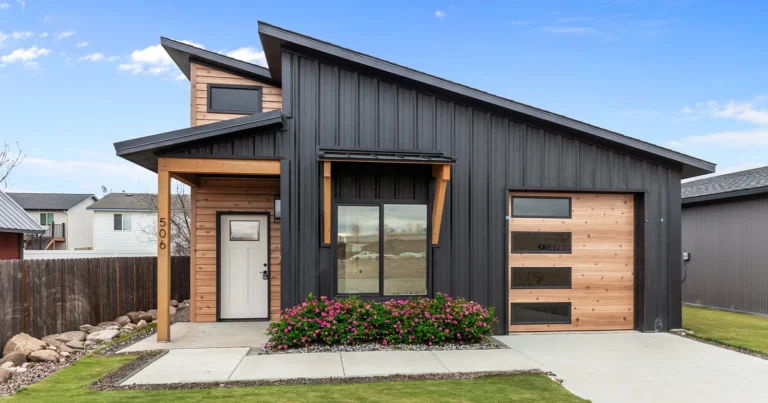
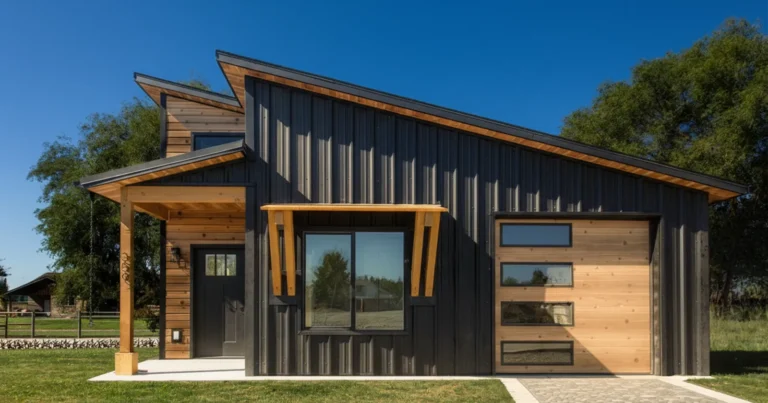
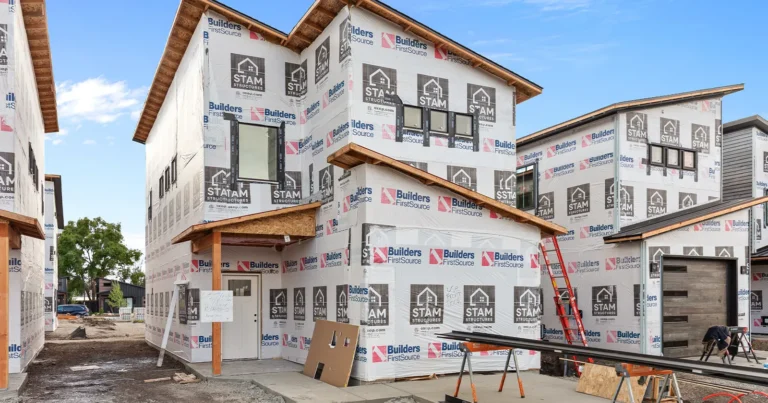
Thinking about a prefab home in Idaho? Here’s the honest answer up front: Idaho’s one of the best states in the country to build prefab, and it’s not close. Land is available at prices that make the whole project pencil, permitting is friendlier than anywhere on the West Coast, and the contractor network is real.
But “prefab” covers several very different products, and Idaho has state-specific rules (energy code climate zones, a dual permit system, rural jurisdiction quirks) that affect your build no matter which type you choose. Here’s what you need to know before you order anything.
What “Prefab” Means for an Idaho Build
Prefab is the umbrella term for any home whose major components are built in a factory before delivery. In practice, Idaho buyers are choosing between three products: manufactured homes (built to federal HUD standards on a chassis), modular homes (room-sized factory sections set by crane), and kit homes (precision-cut components assembled on your foundation). They differ in cost, financing, and code treatment. Our kit vs. modular vs. prefab comparison covers the details.
The short version: kit and modular homes are built to the same local and state building codes as stick-built houses, sit on permanent foundations, qualify for conventional mortgages, and appraise like any other home. Manufactured homes follow federal HUD standards and often carry different financing and appraisal treatment. For most Idaho buyers building on their own land, a kit home or modular home is the relevant comparison.
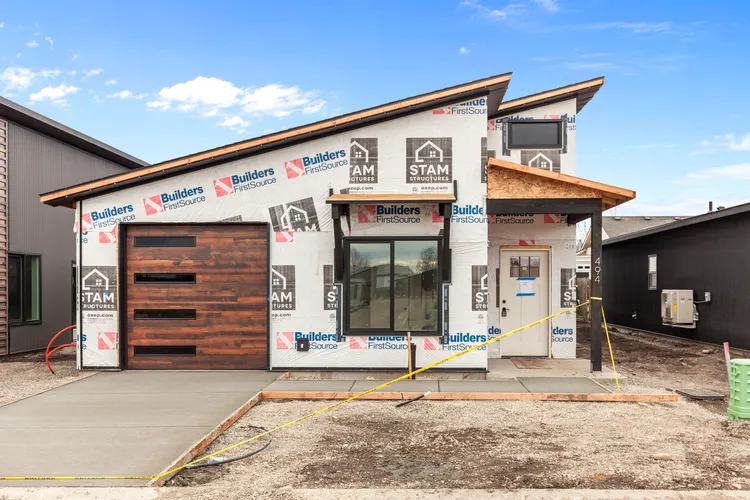
Why Idaho Works So Well for a Prefab Home
Three reasons. First, land: rural and semi-rural parcels in North Idaho, the Treasure Valley, and eastern Idaho are available at prices that make a complete prefab project viable in a way that’s much harder in neighboring states. Second, permitting: outside of Boise, permits generally move in 2 to 6 weeks, and in rural counties without a local building program, the Idaho Division of Building Safety handles the process directly. Some rural counties even use a simplified notification system rather than full plan review. Third, climate fit: metal roofing and siding handle North Idaho snow loads and freeze-thaw cycles better than most conventional exterior materials, and prefab systems that include them arrive ready for it.
Our full guide to kit homes in Idaho goes deep on permits, site conditions, and county-by-county timelines if you want the complete picture.
Idaho’s Energy Code and Your Prefab Home
Every new home in Idaho, prefab or not, must meet the state energy code, currently the 2018 IECC with Idaho amendments. The requirement depends on your climate zone. Zone 6 (Coeur d’Alene, Post Falls, Sandpoint, Moscow) requires R-22 exterior walls and a 0.30 maximum window U-factor. Zone 5 (Boise, the Treasure Valley, Twin Falls, Pocatello, Idaho Falls) requires R-20 walls and a 0.32 U-factor. Both zones require R-49 ceilings and air sealing verification.
This matters when you’re comparing prefab options: the engineering has to be specified for your zone before manufacturing starts. Kit Culture homes ship with engineering stamped by a licensed Idaho structural engineer for the climate zone you specify at order, with Milgard windows and insulation matched to code.
What a Prefab Home Costs in Idaho
Custom stick-built construction in Idaho runs $200 to $300 per square foot or more. Modular homes in the region typically come in somewhat below that, all-in. A complete kit system is usually the least expensive path to a code-built home on a permanent foundation: Kit Culture’s models run $99,500 (Compact, 799 sq ft) to $145,000 (Family, 1,360 sq ft) for the kit, with most buyers landing at $140,000 to $200,000+ all-in once site prep, foundation, contractor labor, permits, and utilities are added. The full budget breakdown is here.
One Idaho-specific advantage: buyers here tend to land toward the lower end of all-in ranges, because utility access and permitting are usually more straightforward than in denser markets.
The Permit Process for Prefab in Idaho
Idaho uses a dual permit system in most jurisdictions: structural permits come from the city or county, while electrical, plumbing, and HVAC trade permits come from the Idaho Division of Building Safety. Your GC needs to pull both sets. Contractors new to Idaho sometimes miss the DBS step entirely, so make sure yours knows the local system.
Timelines vary: Post Falls typically runs 2 to 4 weeks, Coeur d’Alene 3 to 6, the Boise metro 4 to 8, and rural counties without a local program sometimes 1 to 3 weeks through DBS. Prefab helps here: stamped, permit-ready engineering removes the most common source of plan-review delays. If you’re starting from zero, our simple starting guide to building a kit home in Idaho lays out the first steps.
Frequently Asked Questions
Is a prefab home cheaper than building a custom home in Idaho?
Generally, yes, and by a lot. Custom construction in Idaho runs $200 to $300+ per square foot. A complete kit-based prefab home typically comes in at roughly half the cost of a comparable custom build, with the kit price fixed at order.
Do prefab homes in Idaho need a building permit?
Yes, in almost all cases, even in rural areas. Where no local building program exists, the Idaho Division of Building Safety serves as the building authority. Trade permits (electrical, plumbing, HVAC) usually come from DBS separately from your structural permit.
Can I put a prefab home on rural Idaho land?
Yes. Rural acreage is one of the most common use cases. Plan early for the three utilities: power, well (permitted through the Idaho Department of Water Resources), and septic (county health department, including a perc test). Run those processes in parallel with your building permit, not after it.
Do prefab homes hold their value in Idaho?
Kit and modular homes built to Idaho codes on permanent foundations are appraised the same way as stick-built homes: square footage, finish quality, condition, and comparable sales. The factory origin doesn’t appear on the appraisal.
The Bottom Line
Idaho’s about as friendly as it gets for a prefab home: available land, accessible permitting, and a climate that rewards the metal exterior systems good kits include. Know your climate zone, plan rural utilities early, and compare complete packages rather than sticker prices.
Kit Culture manufactures complete prefab home kits in Post Falls, with Idaho-stamped engineering and every finish included on one truck. If you’ve got land, or you’re close, give us a call and we’ll give you a realistic picture of what a build looks like in your county.