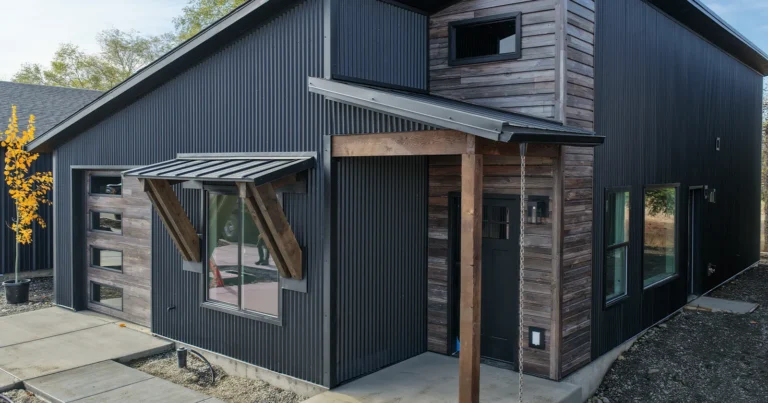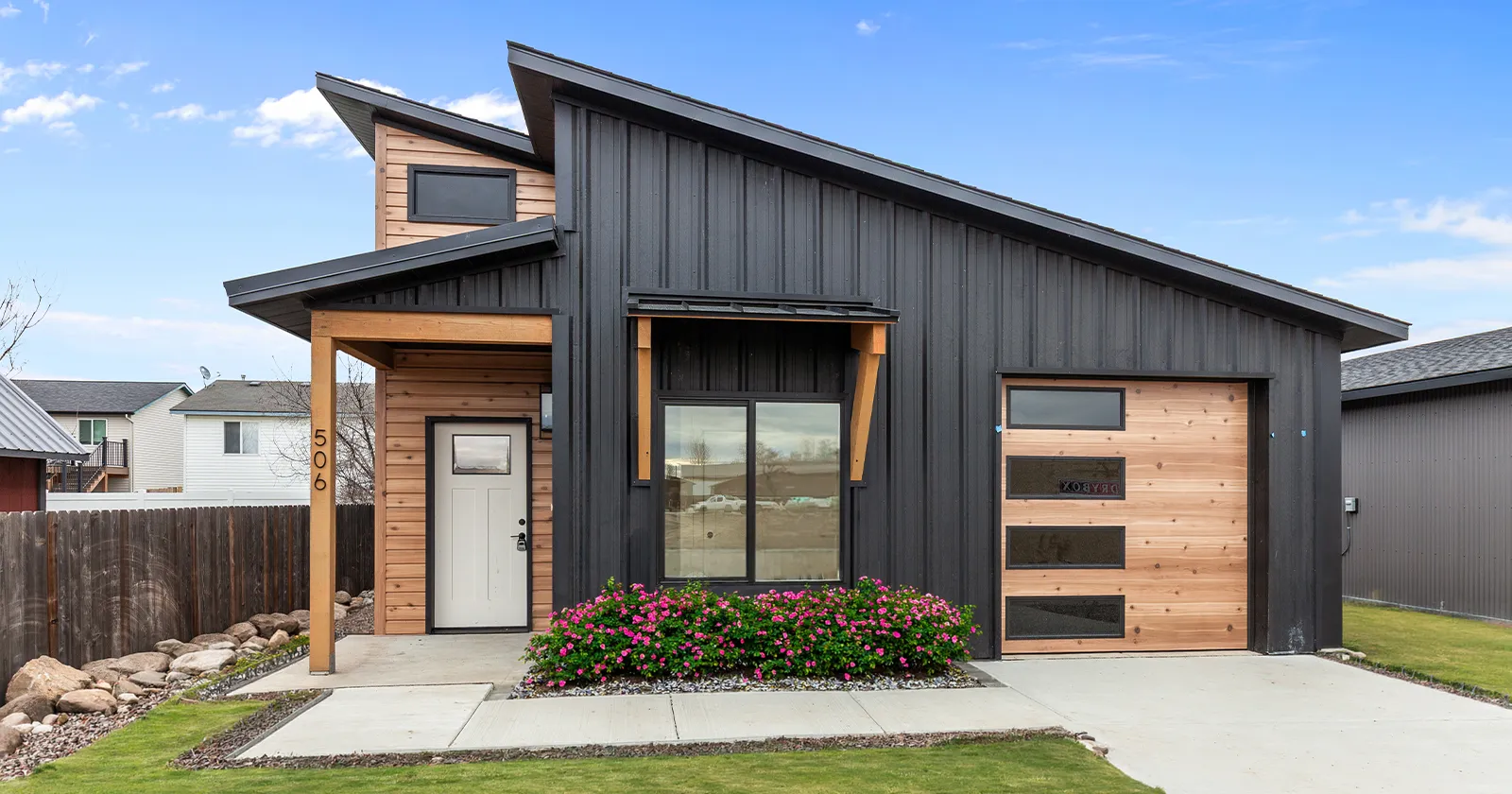
Washington is a more complicated state to build a kit home in than Idaho. The energy code is stricter, the permitting can be slower, and there are a few requirements that will feel unfamiliar if you’re coming from another state. But it’s also a state with a strong contractor network, real demand for faster and more affordable construction, and a growing interest in kit homes as a legitimate alternative to custom builds.
Kit Culture is based in Post Falls, Idaho, about 30 minutes from the Washington state line. Eastern Washington, from Spokane to the Tri-Cities to the Yakima Valley, is a natural extension of our market. The delivery logistics are straightforward, the contractor community overlaps significantly with North Idaho, and the demand for more affordable residential construction is real across the region.
This guide focuses on eastern Washington specifically, since that’s where Kit Culture operates and where the market makes the most practical sense. If you’re building in western Washington or the Puget Sound area, the basic information here still applies, but the permitting timelines, contractor dynamics, and site conditions will be different.
Where Kit Homes Make the Most Sense in Washington

Eastern Washington is genuinely underserved by the housing market relative to western Washington. Land is available, costs are lower, and population growth in Spokane and surrounding areas has been consistent. The gap between what people can afford and what custom construction costs is significant here, and that’s exactly the gap a kit home system fills.
Spokane County, Spokane Valley, and the communities east toward Coeur d’Alene form a natural construction corridor where Kit Culture is well-positioned. Delivery from Post Falls is under an hour to most of these areas. The contractor network includes many of the same GCs working on both sides of the state line.
The Tri-Cities (Kennewick, Richland, Pasco) and the Yakima Valley are further afield but still within a reasonable delivery range. These markets have strong agricultural and trades-based economies, available rural land, and growing residential demand.
Washington’s Energy Code: The Biggest Difference From Idaho
If you’re comparing Washington to Idaho as a place to build, the energy code is the first thing you need to understand. Washington’s residential energy code is significantly stricter, and it has some requirements that genuinely surprise people who are used to building in other states.
The current code is the 2021 Washington State Energy Code – Residential (2021 WSEC-R), which took effect statewide on March 15, 2024. Eastern Washington falls primarily in IECC Climate Zone 5. Here’s what the code actually requires.
| Requirement | 2021 WSEC-R (Eastern WA, Zone 5) | Notes |
| Ceiling / attic insulation | R-60 | Increased from R-49 in prior code; most significant change |
| Exterior wall insulation | R-20 cavity + R-5 continuous | Or R-13 cavity + R-10 continuous; continuous wrap required |
| Floor insulation | R-30 | Standard for raised floor applications |
| Window U-factor | 0.30 maximum | Stricter than Idaho’s 0.32 requirement |
| Space heating | Heat pump system required | Explicit code language: ‘shall be provided by a heat pump’ |
| EV-ready circuit | 40-amp circuit required | Pre-wire requirement for future EV charging |
| Air leakage | 3.0 ACH50 maximum | Tighter than earlier code versions; blower door test typically required |

The Heat Pump Requirement Is Real
This one catches people off guard. The 2021 WSEC-R explicitly states that space heating shall be provided by a heat pump system. That’s not a recommendation. That’s a code requirement. If you’re planning to heat your Washington home with a gas furnace or electric resistance heat as the primary system, your permit application won’t meet the energy code.
There are limited exceptions, but they’re narrow and apply mostly to situations where a heat pump genuinely can’t serve the space effectively. For a standard residential build, budget for a heat pump system.

| Kit Culture’s Heat Pump Is Already Included
Every Kit Culture home comes standard with a five-zone ductless heat pump system. This satisfies Washington’s heat pump requirement directly. It’s not an add-on you need to figure out separately. The system is part of the package, it’s sized for the home, and it arrives on the truck with everything else. |
The R-60 Ceiling Requirement
Washington’s 2021 code increased the ceiling insulation requirement to R-60, up from R-49 in the previous code. That’s one of the bigger jumps in the new code, and it affects both how your attic needs to be designed and what your framing depth needs to accommodate. Your engineering drawings need to specify this correctly.
Continuous Wall Insulation
The wall insulation requirement in Washington isn’t just a total R-value number. The code requires continuous insulation on the exterior of the wall assembly, not just insulation packed into the framing cavities. The prescriptive path calls for R-20 cavity insulation plus R-5 continuous exterior insulation, or R-13 cavity insulation plus R-10 continuous exterior insulation. There are alternative compliance paths, but the continuous wrap requirement applies in most cases.
This affects your wall assembly design and adds some cost compared to a simpler cavity-only approach. Make sure your Kit Culture engineering specifies the correct assembly for Washington’s code requirements.
I-2066 and the Ongoing Confusion
Washington voters passed Initiative 2066 in November 2024, which limits the state’s ability to require electric-only heating appliances. This created direct conflict with the 2021 WSEC-R’s heat pump mandate, and the State Building Code Council is still working through how to reconcile the two. As of mid-2026, the heat pump requirement is still in the energy code, but the SBCC has acknowledged the situation and is investigating changes.
| The I-2066 Situation Is Still Being Sorted Out
If you’re building in Washington right now, the 2021 WSEC-R heat pump requirement is still what your permit application needs to satisfy. The initiative created legal uncertainty, but the code hasn’t been changed yet. Confirm current requirements with your local building department at the time of application, since this may have been updated by the time you’re reading this. |
The 2024 WSEC Is Coming
Washington is developing the 2024 Washington State Energy Code. Final adoption is targeted for September 2026, with an effective date of May 3, 2027. The 2021 WSEC-R is the code to build to right now, but if you’re planning a build that won’t permit until mid-2027 or later, keep an eye on what the 2024 WSEC requires when it finalizes.
Getting Through the Permit Process in Eastern Washington

Washington’s permitting isn’t as complicated as the Puget Sound area, but it does have its own rhythm. Here’s what to expect in the eastern Washington markets Kit Culture serves.
The Basic Structure
Unlike Idaho’s split between local building departments and the state Division of Building Safety, Washington’s permitting is handled at the local level. Cities issue their own permits. Unincorporated county land is handled by the county building department. There’s no separate state authority handling trade permits in most cases.
The practical result: your GC is dealing with one entity for most permits rather than coordinating between city and state like they would in many Idaho jurisdictions. That simplifies things a bit.
One useful thing Washington has done: SB 5290, passed in 2023, requires jurisdictions to hit permit review deadlines. If they miss those deadlines, they may have to refund 10 to 20 percent of your review fees. That doesn’t always make things faster, but it creates a real accountability mechanism.
| Jurisdiction | Typical Timeline | Notes |
| Spokane (city) | 4 to 6 weeks | City of Spokane Building Department. Uses an electronic document review (EDR) process. Commercial and residential permits handled separately. |
| Unincorporated Spokane County | 2 to 4 weeks | Spokane County Building and Planning. Fees must be paid before application is routed for review (effective July 1, 2025). Use the county’s interactive map to confirm you’re in county jurisdiction. |
| Spokane Valley (city) | 3 to 5 weeks | Spokane Valley Building Department. Separate city from Spokane proper. Often faster than City of Spokane. |
| Liberty Lake, Cheney, other cities | 3 to 6 weeks | Each city handles its own permits. Check with the specific city’s building department. |
| Tri-Cities (Kennewick/Richland/Pasco) | 4 to 7 weeks | Three separate cities, three separate building departments. Confirm which city your property is in. |
| Rural eastern WA counties | 3 to 6 weeks | County building departments vary. Some rural counties move faster. Confirm jurisdiction with the county assessor if you’re not sure. |
The Energy Code Adds Complexity to Reviews
Washington’s stricter energy code means your permit application needs to document compliance more thoroughly than in Idaho. Reviewers check that your drawings specify the correct insulation assemblies, the heat pump system, the EV-ready circuit, and the air sealing approach. An incomplete or incorrect energy code submittal is one of the most common reasons for revision requests in Washington.
Kit Culture’s permit-ready stamped engineering addresses the structural requirements for your home. You’ll need to make sure the energy code compliance documentation in your permit package is complete and matches Washington’s 2021 WSEC-R requirements. Work with your GC to confirm this before submitting.
Confirming Your Property’s Jurisdiction
Washington has the same issue Idaho does: your mailing address doesn’t tell you which jurisdiction has permit authority over your parcel. If you’re in unincorporated Spokane County, the county handles your permit. If you’re inside the Spokane city limits, the city does. These can look very similar on a map. Use the Spokane County Interactive Map or contact the county assessor to confirm your parcel’s jurisdiction before you start the permit application process.
Eastern Washington Site Considerations

Eastern Washington has its own set of site conditions that affect foundation planning, structural requirements, and utility setup. Here’s what to know.
Seismic Requirements Are Real Here
Most of Washington is in Seismic Design Category D or E. That’s meaningfully higher seismic activity than most of Idaho, and it affects how your home’s structural engineering is specified. Foundation design, anchor bolting, shear walls, and hold-downs all need to be engineered for the seismic requirements of your specific site.
Kit Culture’s engineering is designed to address seismic requirements. When you place your order, confirm with the Kit Culture team that your stamped drawings specify the correct seismic design category for your property. Your building department will check this during plan review.
Water Rights in Eastern Washington
Water rights in eastern Washington are more complex than most people expect. Washington’s water law is administered by the Department of Ecology, and in many eastern Washington locations, all of the groundwater rights in a basin are already allocated. A new well permit isn’t guaranteed.
If your property relies on a well for water, confirm the water right situation before you get too far into planning. The Washington Department of Ecology’s WellTracker database is a useful starting point. This is especially relevant for rural properties in the Columbia Basin and areas east of Spokane.
Wildfire Interface Areas
Eastern Washington’s foothills, particularly in Spokane County and counties east toward the Cascades, have growing wildfire interface requirements. The requirements are still being developed at the state level, and local jurisdictions vary in what they enforce. Properties near forest land or in fire-risk areas may face requirements for fire-resistant roofing and exterior materials.
Kit Culture’s Metal America roof panels carry a Class A fire rating. That’s the highest available designation and is specifically required or preferred in many wildfire interface zones. Check with your building department about whether your site has specific fire interface requirements.
Septic Is Common Outside City Limits
In rural eastern Washington, septic systems are the norm rather than the exception. Washington Department of Health handles septic system approvals through county environmental health departments. As in Idaho, the septic permit and perc test process runs separately from your building permit.
Start the septic process early. It’s one of the most common sources of delay for rural builds in both Idaho and Washington, and it shouldn’t be treated as something you sort out after your building permit is approved.
Why Washington’s Strict Code Actually Works in Kit Culture’s Favor
Here’s something counterintuitive: Washington’s stricter energy code is actually an argument for a Kit Culture home rather than against it.
When Washington requires a heat pump, Kit Culture already includes one. When Washington requires continuous exterior insulation, Kit Culture’s engineering specifies it. When Washington requires a blower door test, a well-built kit home with precision-manufactured components is generally easier to air-seal than a conventional framed build where fit and finish varies by the skill of the crew.
The other thing Washington’s code does is make custom construction more expensive. Adding $15,000 to $35,000 to a build’s cost for energy code compliance widens the gap between what custom construction costs and what a kit home costs. Kit Culture’s pricing absorbs the code requirements. The cost advantage grows in stricter-code markets, not shrinks.
Kit homes are clearly more affordable and quicker to build. To learn more, check out our article: How long does it take to build a kit home?
Finding a Contractor in Eastern Washington

The Spokane area has a solid residential construction contractor market. It’s not as deep as Boise or Seattle, but it’s real, and the overlap with North Idaho contractors is significant. Many GCs in Post Falls, Coeur d’Alene, and Spokane Valley work across the state line regularly.
What Matters Most in a Washington GC
Washington contractor licensing is handled through the Department of Labor and Industries. All residential contractors need a current L&I registration. Check it before you sign anything.
Beyond licensing, the things that matter for a kit home build in Washington are the same as Idaho: you want someone who treats the kit assembly system as an asset, has relationships with local subs for electrical, plumbing, and HVAC, and understands how to pull permits in the specific jurisdiction your property is in. Washington’s permit process is unified (no split between city/county and a state trade permit agency), so that piece is simpler than Idaho.
One Washington-specific thing to confirm: your GC and their mechanical subcontractor need to be familiar with heat pump installation and commissioning. Heat pumps are required under the energy code, and a mechanical sub who’s primarily worked with gas systems will need to be comfortable with the ductless system Kit Culture includes in every home.
Kit Culture’s Contractor Program in Washington
Kit Culture’s contractor pricing program extends to licensed Washington State contractors. GCs in the Spokane area who want to add Kit Culture builds to their services get trade pricing that preserves their margin while delivering a product their clients can’t get cheaper anywhere else.
Reach out through kitculturehomes.com if you want contractor referrals in the Spokane market. We can connect you with GCs who’ve worked with the Kit Culture system before.
Eastern Washington by Area
Spokane and Spokane Valley
Spokane is Kit Culture’s primary Washington market. It’s close to Post Falls, it has a functioning contractor network, and its housing market has real demand for more affordable options. Spokane’s residential construction is active but not overheated the way the Seattle market has been, which means contractors have capacity and permitting, while not instant, moves at a reasonable pace.
Spokane Valley is a separate city from Spokane proper and often permits faster. If your property is technically in Spokane Valley rather than the City of Spokane, check with Spokane Valley’s building department directly. It’s a meaningfully different permit experience.
Unincorporated Spokane County land east and south of the city is often rural acreage with faster permitting through the county. These properties are common for Kit Culture builds, since they offer more space and simpler zoning than the city-limit lots.
The Tri-Cities: Kennewick, Richland, Pasco
The Tri-Cities are further from Post Falls than Spokane, which adds to delivery logistics, but it’s a manageable distance. The area has real growth, driven largely by the agricultural and federal sector economies. Three separate cities means three separate building departments, so confirm which city your property falls in before you assume anything about the permit process.
Water rights are worth extra attention in this part of eastern Washington. The Columbia Basin has been heavily allocated, and a new well permit in some areas can be difficult to secure.
Rural Eastern Washington
Rural parcels in eastern Washington, particularly in Spokane County, Lincoln County, and Stevens County, offer some of the most accessible land prices in the region. Permitting through county building departments can be faster than city processes. The main site planning considerations are water (well permits, water rights), septic, power access, and truck access for delivery.
If you’re building in a rural area with wildfire exposure, confirm with your county building department whether your site has interface requirements and what materials those require. Kit Culture’s Class A-rated metal roofing and siding is well-positioned for fire interface zones.
Kit Culture and Washington State

Kit Culture is manufactured 30 minutes from the Washington state line. Our engineering is stamped for Washington. The five-zone ductless heat pump that comes standard in every Kit Culture home satisfies Washington’s heat pump requirement. Our Class A metal roof handles Washington’s fire interface requirements in applicable areas. We’re not adapting our product for Washington. It was designed for this region.
The 2024 codes coming in 2027 will likely tighten requirements further. Kit Culture’s manufacturing-based approach is better positioned for stricter energy codes than conventional custom construction, because we can incorporate design changes at the manufacturing stage rather than trying to coordinate them across a dozen subcontractors on a job site.
| Building in Eastern Washington? Let’s Talk.
Visit kitculturehomes.com to explore Kit Culture’s current models and get on the waitlist for the 2026 ADU lineup. Or give us a call from the Post Falls facility. We can talk through your property, what the permit process looks like in your specific jurisdiction, and what a realistic build timeline looks like for a Washington project. |
Frequently Asked Questions
What building codes apply to kit homes in Washington State?
Kit homes in Washington are built to the same codes as any other new residential construction: the 2021 International Building Code (with Washington State amendments) for structure, and the 2021 Washington State Energy Code – Residential (WSEC-R) for energy requirements. The 2021 codes took effect statewide on March 15, 2024. The 2024 WSEC is currently being developed with an effective date targeted for May 3, 2027.
Does Washington really require a heat pump in every new home?
Yes, under the current 2021 WSEC-R. The code explicitly states that space heating shall be provided by a heat pump system. Washington passed Initiative 2066 in 2024 which limits mandates for electric-only appliances, creating conflict with this requirement. The State Building Code Council is working to reconcile the two. As of mid-2026, the heat pump requirement is still in the code. Confirm current requirements with your local building department at the time of application.
Does Kit Culture’s home satisfy Washington’s heat pump requirement?
Yes. Every Kit Culture home comes standard with a multi-zone ductless heat pump system. This is a code-compliant heat pump that satisfies the 2021 WSEC-R requirement. It arrives on the delivery truck as part of the standard package.
How much stricter is Washington’s energy code compared to Idaho’s?
Meaningfully stricter. Washington’s 2021 WSEC-R requires R-60 ceiling insulation (vs. Idaho’s R-49), continuous exterior wall insulation in addition to cavity insulation, a heat pump system, an EV-ready circuit, and tighter air leakage standards. Industry estimates put the additional construction cost of Washington’s energy code at $15,000 to $35,000 compared to a basic IRC-compliant build.
How long does it take to get a building permit in eastern Washington?
Permit timelines in eastern Washington run 4 to 6 weeks for City of Spokane, 2 to 4 weeks for unincorporated Spokane County, and 3 to 6 weeks for most other eastern Washington jurisdictions. Rural county permits can sometimes move faster. Washington’s SB 5290 requires jurisdictions to meet review deadlines or refund 10 to 20 percent of fees, which creates some accountability. Submit a complete application the first time and include your energy code compliance documentation.
Does Kit Culture’s engineering meet Washington’s energy code?
Kit Culture’s stamped engineering drawings address the structural requirements for your home and are stamped for Washington State. Energy code compliance documentation, including insulation specifications, heat pump details, and air sealing approach, needs to be included in your permit package and match the 2021 WSEC-R requirements for Washington. Work with your GC to confirm the energy code package is complete before submitting.
What are the seismic requirements in eastern Washington?
Most of Washington is in Seismic Design Category D or E, which is significantly higher than most of Idaho. Foundation design, anchor bolting, shear walls, and hold-downs need to be engineered for the seismic design category of your specific site. Kit Culture’s structural engineering addresses seismic requirements. Confirm with the Kit Culture team that your stamped drawings specify the correct seismic category for your property.
Is water access difficult on rural eastern Washington properties?
It can be. Eastern Washington has complex water rights, and in many parts of the Columbia Basin and areas east of Spokane, groundwater allocations are heavily committed. A new well permit isn’t guaranteed everywhere. Check the Washington Department of Ecology’s WellTracker database for water right information in your area before assuming you can simply drill a well on your property.
What contractor license should I look for in Washington?
Washington residential contractors need a current registration through the Department of Labor and Industries. Verify the license before signing any contract. The L&I website has a contractor lookup tool. Beyond licensing, look for a GC with heat pump installation experience on their crew, since Washington’s energy code requires it and a mechanical sub unfamiliar with ductless systems can create issues.
Does Kit Culture deliver to eastern Washington?
Yes. Kit Culture manufactures in Post Falls, Idaho, about 30 minutes from the Washington state line. We regularly deliver to Spokane, Spokane Valley, the Tri-Cities, and surrounding eastern Washington communities. Delivery logistics to western Washington are more complex and on a case-by-case basis. Contact us at kitculturehomes.com to discuss delivery to your specific location.