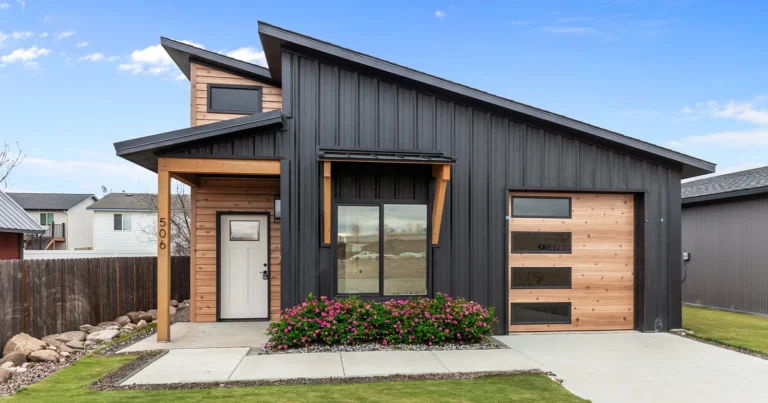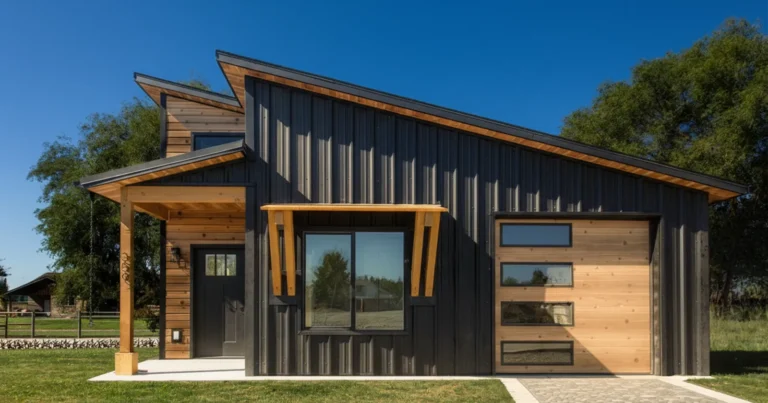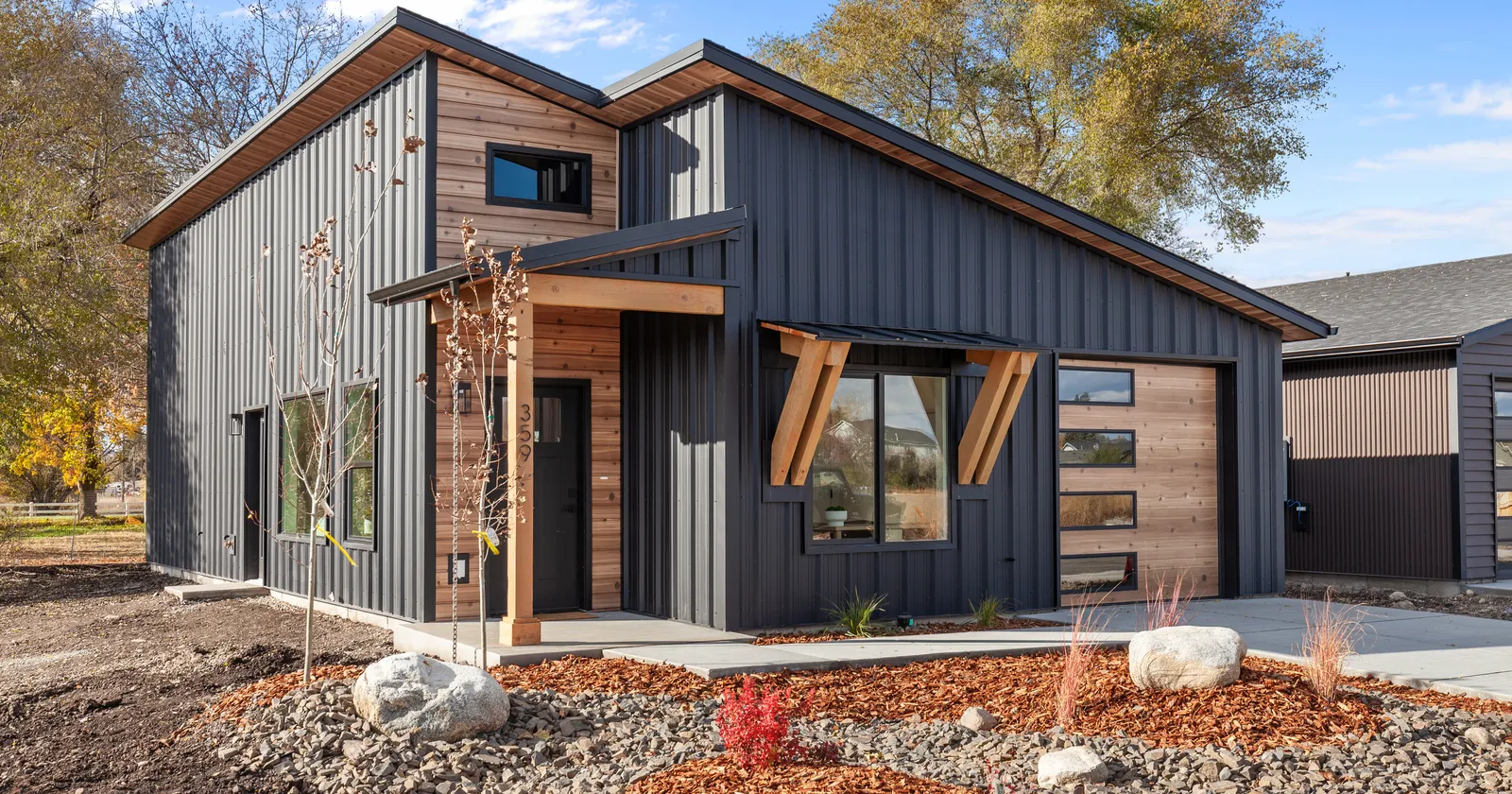
Can you build a prefab home in Washington? Yes. In eastern Washington especially, it’s one of the most practical ways to get a new home built right now. But Washington’s a more demanding state to build in than its neighbors. The energy code is the strictest in the region, a heat pump is literally required by code, and permitting has its own rhythm.
The good news: those exact requirements are where a complete prefab system earns its keep. Here’s the honest picture of building a prefab home in Washington in 2026.
Prefab Options in Washington: Kit, Modular, or Manufactured
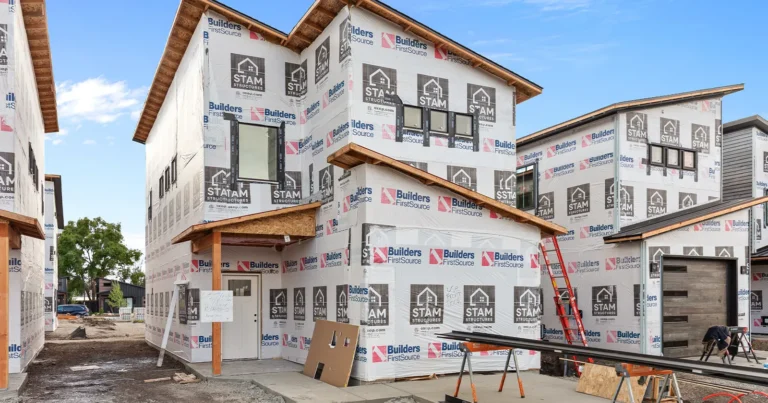
“Prefab” covers three different products. Manufactured homes are built to federal HUD standards on a chassis. Modular homes arrive as factory-built sections set by crane. Kit homes arrive as precision-cut components (framing, exterior panels, windows, finishes) assembled on your foundation. Kit and modular homes are built to the same Washington state and local codes as stick-built houses, financed with conventional mortgages, and appraised like any other home. Our full comparison walks through the differences.
This guide focuses on eastern Washington (Spokane, Spokane Valley, the Tri-Cities, and the surrounding counties), where land is available, demand is real, and delivery from regional manufacturers is straightforward.
Washington’s Energy Code: What Your Prefab Home Must Meet
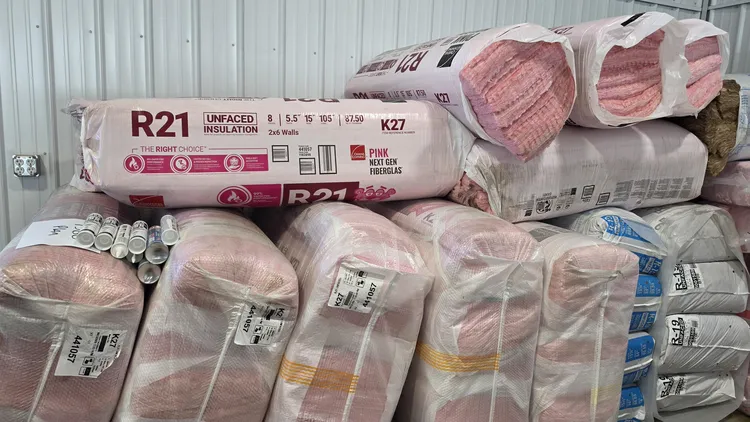
Every new home in Washington must comply with the 2021 Washington State Energy Code – Residential (WSEC-R), in effect statewide since March 15, 2024. It’s meaningfully stricter than neighboring states. For eastern Washington (Climate Zone 5), the headline requirements are R-60 ceiling insulation, R-20 cavity plus R-5 continuous exterior wall insulation, a 0.30 maximum window U-factor, a 40-amp EV-ready circuit, and air leakage of 3.0 ACH50 or better, typically verified with a blower door test.
And the big one: the code requires that space heating be provided by a heat pump. That’s code language, not a suggestion. (Initiative 2066, passed in 2024, created legal conflict with this requirement, and the State Building Code Council is still reconciling the two. As of mid-2026, though, the heat pump requirement is what your permit application needs to satisfy. Verify with your building department when you apply.) If heat pumps are new to you, the Department of Energy’s ductless mini-split explainer is a good primer.
Industry estimates put the added construction cost of Washington’s energy code at $15,000 to $35,000 versus a basic code build. Here’s the counterintuitive part: that widens the gap in prefab’s favor. When the heat pump, code-matched insulation, and high-performance windows are already in the package (every Kit Culture home ships with a five-zone ductless heat pump, Milgard windows, and insulation specified to code), the compliance cost is absorbed in a fixed kit price instead of stacking onto a custom quote.
Permits, Seismic, and Site Realities in Eastern Washington
Washington permitting is handled locally. Cities issue their own permits, counties handle unincorporated land, and there’s no separate state trade-permit agency like Idaho’s. Typical timelines: City of Spokane 4 to 6 weeks, unincorporated Spokane County 2 to 4, Spokane Valley 3 to 5, Tri-Cities 4 to 7. SB 5290 requires jurisdictions to hit review deadlines or refund 10 to 20% of fees, which creates some accountability.
Two site issues deserve early attention. Seismic: most of Washington is in Seismic Design Category D or E, so foundations, anchor bolting, and shear walls must be engineered for your site. Confirm your stamped drawings specify the correct category. Water: in much of eastern Washington, groundwater rights are heavily allocated and a new well permit isn’t guaranteed, so check the Department of Ecology’s WellTracker before assuming you can drill. Our Washington builder’s guide covers all of this in detail, jurisdiction by jurisdiction.
For contractors, verify current registration through the Washington Department of Labor and Industries’ contractor lookup, and make sure the mechanical sub is comfortable installing and commissioning ductless heat pump systems. The code requires one, and a sub who’s only worked with gas furnaces will be learning on your project.
What a Prefab Home Costs in Washington
Custom stick-built construction in the eastern Washington market runs $200 to $300 per square foot or more, before the energy code adders. Complete kit systems come in at roughly half the cost of comparable custom construction. Kit Culture’s models run $99,500 (Compact, 799 sq ft), $115,000 (Modern, 994 sq ft), and $145,000 (Family, 1,360 sq ft) for the kit, with engineering stamped for Washington, and most projects land between $140,000 and $200,000+ all-in. Timeline-wise, most builds go from delivery to move-in ready in 60 to 90 days. See how long a kit home takes to build for the full schedule.
If your project’s an accessory dwelling unit rather than a primary home, Washington is also unusually ADU-friendly. Our guide to Washington’s ADU law covers what homeowners can build now.
Frequently Asked Questions
Does Washington really require a heat pump in a new prefab home?
Yes. Under the current 2021 WSEC-R, space heating must be provided by a heat pump. I-2066 created legal uncertainty, but the code hasn’t changed as of mid-2026. A prefab package that includes a code-compliant heat pump, as every Kit Culture home does, satisfies the requirement directly.
Are prefab homes legal everywhere in Washington?
Kit and modular homes built to Washington codes on permanent foundations are treated like any site-built home statewide. Individual jurisdictions control zoning (lot size, setbacks, height), not the construction method.
Is it cheaper to build prefab in Washington or Idaho?
Idaho’s cheaper, mostly because of the energy code. Washington’s requirements add roughly $15,000 to $35,000 versus a basic code build, plus stricter documentation. But that premium hits custom construction hardest; complete prefab packages absorb most of it in the fixed kit price.
Can I finance a prefab home like a normal house?
Yes. Kit and modular homes on permanent foundations are real property and qualify for conventional, FHA, VA, and construction-to-permanent financing at standard rates.
The Bottom Line
Washington’s strict code makes building harder, and it makes a complete prefab package more valuable, because the heat pump, insulation, and windows the code demands are already in the box. Budget for the energy code, confirm your jurisdiction and seismic category early, and check water rights before you buy rural land.
Kit Culture manufactures 30 minutes from the Washington line in Post Falls, Idaho, with Washington-stamped engineering and regular deliveries across Spokane, the Tri-Cities, and eastern Washington. Give us a call if you’d like a realistic read on your property.