Easy build homes are a real category, and the name’s not just marketing. Kit homes genuinely are easier to build than traditional stick-built houses in several meaningful ways. But the word “easy” can give people the wrong idea if it’s not explained honestly, so that’s what this article does.
We’ll walk through exactly what makes a Kit Culture home easier to build, where that simplification comes from, and what you still need to know how to do. Whether you’re wondering if this project’s within reach for you, or you’re a contractor evaluating whether easy build houses fit your workflow, this is the right place to start.
What “Easy to Build” Actually Means
When someone calls a home kit easy to build, they’re describing a few specific things: less measuring and cutting on site, clearer instructions, fewer decisions to make mid-build, and lower risk of expensive mistakes. All of those are true of a Kit Culture home compared to conventional construction.
What it doesn’t mean is that anyone can pick up a hammer and have a finished house by the weekend. Building a home, even a well-designed kit home, still requires real construction knowledge and basic tool competency. The kit removes a lot of complexity; it doesn’t remove the skill requirement entirely.
The honest version: a Kit Culture home is significantly simpler to build than a traditional house, in ways that make it accessible to a broader range of builders and faster for experienced ones.
If you want to DIY, first read our guide: Build Your Own House Kit: What You Can DIY and What You Can’t.
Where the Simplification Actually Comes From
1. All the Framing Is Precut and Labeled
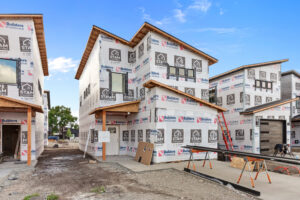
In conventional framing, a huge share of on-site labor is measuring, marking, and cutting lumber. A crew works from architectural drawings, translates them into cut lists, and executes hundreds of individual cuts. It’s slow, skill-dependent, and full of opportunities for errors. With a Kit Culture home, none of that happens on site. Every piece of framing lumber is cut to its exact dimension at the factory, and every component is labeled so you know exactly where it belongs. No cut list, no repeated measuring, no mid-build math.
2. The Instructions Come With Every Box
Every box in the delivery has a QR code. Scan it and the assembly manual for that section of the build opens on your phone. The instructions are tied directly to the materials in front of you, so you’re never hunting through a single giant document or interpreting a full set of architectural drawings. For a contractor it’s a real efficiency gain; for an owner-builder with solid tool skills it makes the process genuinely navigable.
3. No Design Decisions to Make Mid-Build
One of the underappreciated time costs in traditional construction is mid-build decisions: the crew finds something that doesn’t match the plans, the contractor calls the architect, work pauses. With a kit, the design work is done before anything ships. The components are engineered to fit as specified, and the instructions account for the assembly sequence. There are far fewer judgment calls in the field.
4. No Sourcing, No Coordination, No Material Lists
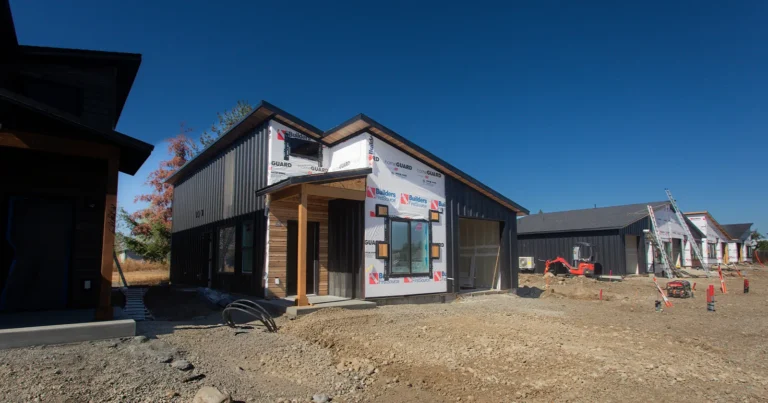
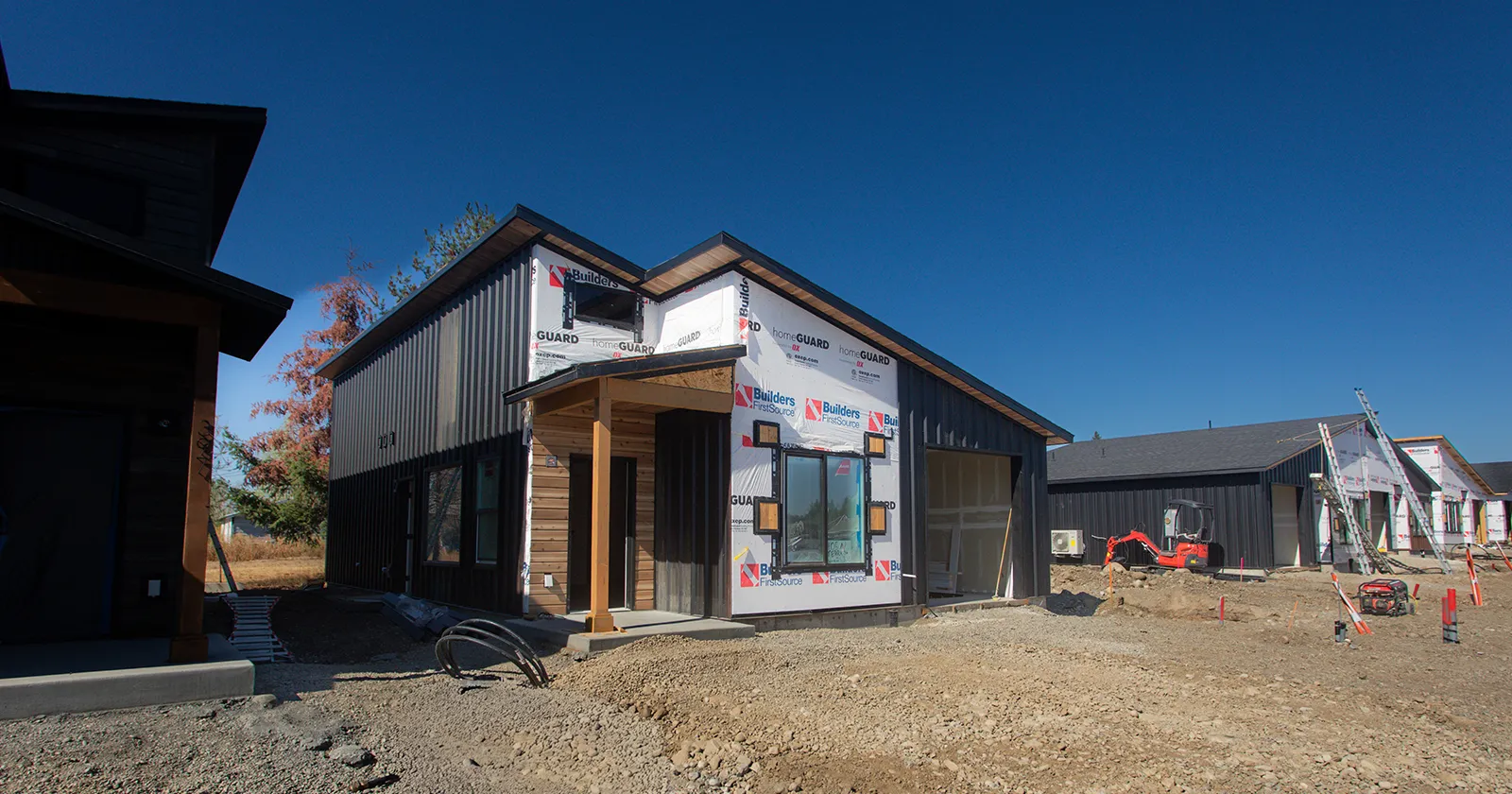
A conventional build means sourcing dozens of materials from multiple suppliers and coordinating every delivery. With a Kit Culture home, the complete package arrives together: framing, metal roofing and siding panels, Milgard windows, LG appliances, quartz countertops, LVP flooring, a multi-zone mini-split heat pump, and permit-stamped engineering drawings, all in one delivery. For owner-builders, removing the sourcing burden is one of the biggest practical simplifications there’s.
Easier doesn’t mean lower quality. The components are built to the same codes as any stick-built home. See Kit Home Construction Quality: How We Build and Why It Lasts.
What You Still Need to Know How to Do
What You Still Need to Know How to Do
Being honest about the skill requirement matters, because going in with unrealistic expectations causes trouble.
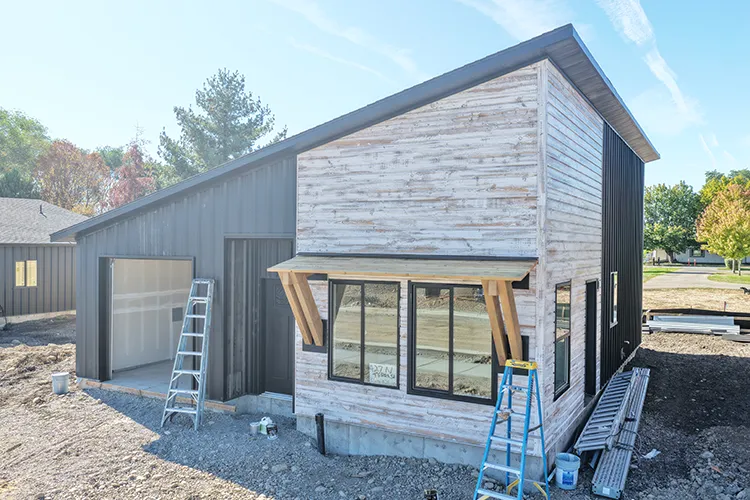
Basic framing knowledge. The lumber’s precut and labeled, but you still need to understand how framing works: reading the assembly instructions accurately, plumbing and squaring walls, and recognizing when something’s off before it becomes a bigger problem.
Tool competency. A nail gun is the primary framing tool, and you need to use one safely and accurately. You need to check level and plumb and be able to work with roofing and siding panels. If you’ve built decks, sheds, or garages, you have the baseline. If your experience is household repairs, plan on a contractor leading the work.
Foundation and site work. The kit covers the home itself. Site prep, the foundation pour, and utility connections are separate tasks that usually involve licensed contractors, which is true of any new construction. Assembly starts from a prepared site and finished foundation.
Permits and inspections. The included engineering drawings support permitting (see the ICC’s code library if you want to see what your jurisdiction enforces), but navigating the application, scheduling inspections, and having each phase ready for sign-off still requires someone who understands the process. Contractors do this routinely; owner-builders need to learn it or lean on a helpful building department.
Kit Home vs. Traditional Build: Where the Simplification Shows Up
| Task | Traditional Build | Kit Culture Home |
|---|---|---|
| Framing cuts | Made on site from raw lumber | Done at factory, ready to assemble |
| Component identification | Interpreted from architectural drawings | Every piece is labeled |
| Assembly instructions | Drawings, interpreted by contractor | QR-linked PDF guide per box |
| Mid-build design decisions | Common; often cause delays | Largely resolved before delivery |
| Material sourcing | Managed by contractor or owner-builder | Complete package in one delivery |
| Framing skill required | High | Moderate, with good tool competency |
Who Is a Kit Home Build Right For?
Who Are Easy Build Houses Right For?
Licensed contractors and GCs. Kit Culture recommends working with a licensed general contractor, and this is the path most buyers take. The precut framing, labeled components, and QR-linked instructions cut planning overhead, and a contractor who knows residential framing moves through a kit build faster than a comparable conventional project.
Owner-builders with real tool experience. If you understand framing and you’re comfortable with the tools, building a Kit Culture home yourself is realistic, with a clear-eyed sense that this is a home build, not a large weekend project.
People who want a predictable, organized build. Even buyers who hire a contractor appreciate that the kit model means fewer unknowns, fewer mid-project surprises, and a clearer path from delivery to move-in. If you’re comparing kit systems on completeness and design, our guide to modern prefab home kits covers what a complete package should include.
Frequently Asked Questions
Are easy build homes really easier, or is it marketing?
The simplification is concrete: factory-precut framing, labeled components, QR-linked instructions per box, and a complete single-delivery package. What doesn’t change: you still need real construction competency or a contractor who has it.
Can I build a kit home myself with no construction experience?
We don’t recommend it. Kit homes are the most DIY-accessible way to build a house, but they’re designed for people who know how to use tools and understand how buildings go together. Without that baseline, hire a GC. The build will still be faster and cheaper than custom construction.
How long does an easy build house take?
Most Kit Culture homes go from delivery to move-in ready in 60 to 90 days with a competent crew, dramatically faster than the 9 to 18 months typical of custom stick-built construction. Full timeline breakdown here.
Is a kit home lower quality because it’s easier to build?
No. The ease comes from precision manufacturing and organization, not from lighter materials. Kit Culture homes are built to the same local and state codes as stick-built houses, with Milgard windows, metal roofing and siding, and engineered framing.
The Bottom Line
Easy build homes earn the name in specific ways: precut labeled framing, instructions tied to every box, design decisions resolved before delivery, and one complete package on one truck. What stays the same is the need for real construction competency, whether it’s yours or your contractor’s. If you’d like to talk through whether a Kit Culture build fits your skills and your project, we’re happy to have that conversation before you commit to anything.