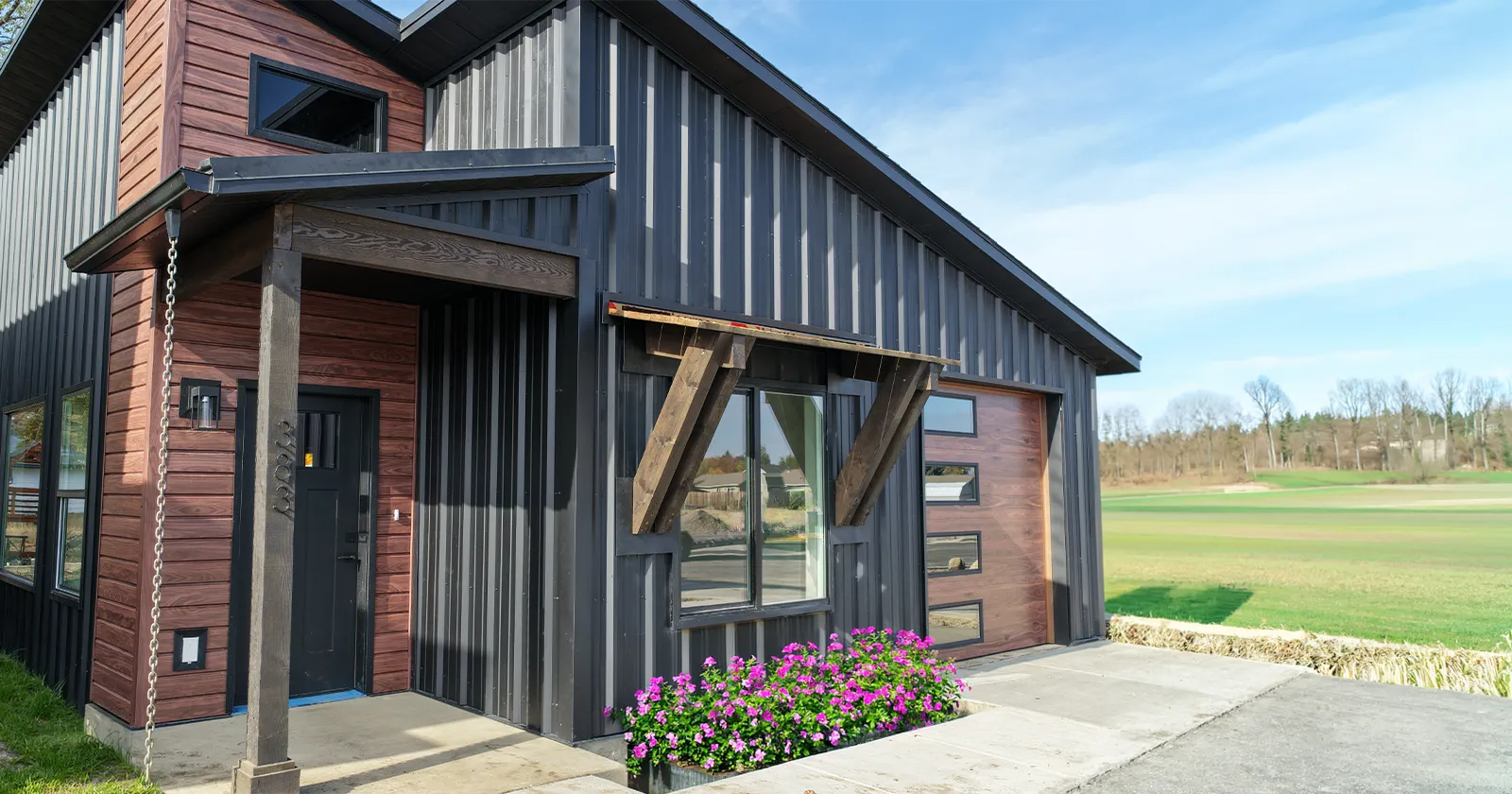
A kit home is a home that arrives on a truck. Not as a finished house, and not as a pile of raw lumber, but as a complete set of precision-manufactured components, pre-cut to size, engineered to fit together, and ready to assemble on your land. Everything that makes up the structure, and in the best versions today, the finishes too, is packaged together and delivered to your property.
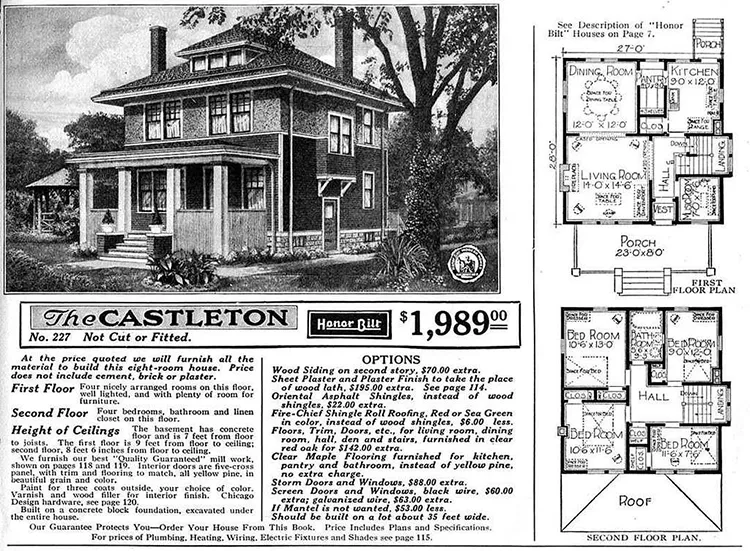
The concept is over a century old. Sears, Roebuck and Company sold nearly 75,000 kit homes between 1908 and 1940, shipping them across America in railroad boxcars. Buyers picked a model from a catalog, sent in a check, and a few weeks later a boxcar arrived with over 10,000 pieces of pre-cut lumber, windows, doors, roofing, and hardware. The Sears catalog even promised buyers their home could be built in 90 days.
Sound familiar? The core idea hasn’t changed. What has changed is everything else: the materials, the precision, the included finishes, and the cost efficiency that modern manufacturing makes possible. Today’s kit homes aren’t a compromise. For the right buyer, they’re simply the smarter way to build.
This guide covers what kit homes are, how they work, who they’re for, and what separates a genuinely good kit home from a basic lumber package. If you’re just starting to research, this is the right place to start.
We have also put together a guide comparing kit homes vs modular vs prefab homes.
The Plain-English Definition
A kit home is a prefabricated home package where all the major structural and finishing components are manufactured off-site, pre-cut to precise dimensions, and shipped to your property for assembly on a foundation you’ve prepared.
The key word is package. A kit home isn’t just lumber. A proper kit home arrives as a complete, coordinated system where every component has been designed to work together. Walls, roof, windows, and exterior cladding all come from one manufacturer, engineered to the same spec, cut to the same tolerances. On a well-designed kit, the assembly process is closer to following a detailed instruction manual than it is to traditional framing.
The higher-end versions, like the homes Kit Culture builds, go further. They include interior finishes, appliances, flooring, and HVAC systems in the same package. You’re not just getting a shell. You’re getting a complete, move-in-ready home in a box.
How a Kit Home Is Different From Other Types of Homes
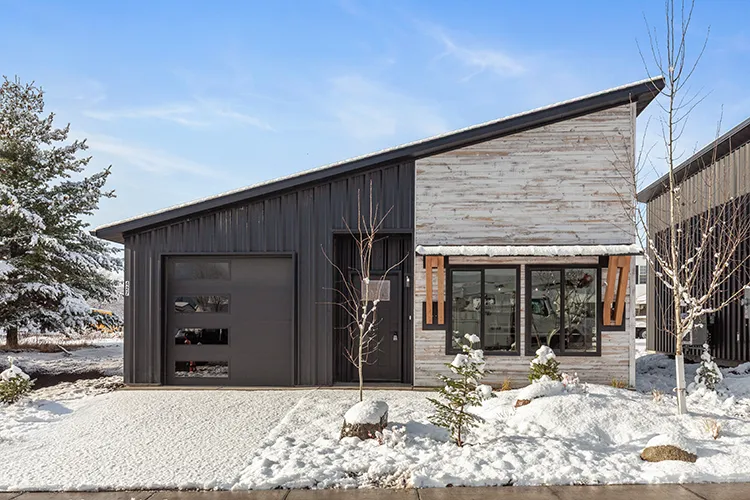
This is the question that trips most people up at the start, because the terminology in this space is genuinely confusing. ‘Prefab,’ ‘modular,’ ‘manufactured,’ ‘kit home,’ and ‘pre-cut home’ all get used interchangeably online, but they describe meaningfully different products. Here’s how they actually differ.
| Kit Home | Modular | Manufactured | Stick-Built | |
| Built where? | Components built in factory, assembled on your lot | Sections built in factory, placed on your lot by crane | Entirely built in factory, transported whole | Built from scratch on your lot |
| Arrives as… | Pre-cut parts and components | Complete room-sized modules, 80-90% finished | Complete home on a permanent steel chassis | Raw materials sourced by builder |
| Foundation | Permanent foundation required | Permanent foundation required | Often on piers; varies by model | Permanent foundation |
| HUD code? | No; built to local and state codes | No; built to local and state codes | Yes; HUD federal standards apply | No; local codes apply |
| Assembly speed | Days to weeks on site | Days on site after factory build | 1 to 2 days on site | Months on site |
| Customization | Model-based; options vary by manufacturer | Module layouts flexible; limited by transport size | Limited to manufacturer’s floor plans | Unlimited within budget |
| DIY-friendly? | Yes, most kit-friendly option for owner-builders | Generally no; crane and professional assembly required | No; dealer and installer driven | Possible but complex |
| Typical cost | Varies widely; Kit Culture starts under $100K | Mid-range; factory efficiency offset by crane costs | Usually lowest cost per sq ft | Highest cost per sq ft |
Kit Home vs. Modular Home
A modular home arrives at your property in large, nearly complete room-sized sections. A crane lifts each module onto your foundation, crews bolt them together, and the exterior is finished on site. It’s fast, but it’s not really a DIY-friendly process. Kit homes, by contrast, arrive as components that are assembled from the ground up on site. The process takes more on-site labor but gives you more flexibility in placement and doesn’t require a crane.
Modular homes typically include more finish work from the factory. Kit homes typically give you more control over how and where you assemble the structure. For a contractor building multiple homes or a DIY owner-builder, the kit process is generally the more practical path.
Kit Home vs. Manufactured Home
A manufactured home (the modern version of what used to be called a mobile home) is built entirely in a factory on a permanent steel chassis and transported to your site as a finished or near-finished home. They’re regulated by HUD federal standards rather than local building codes, which affects financing options and sometimes resale value. Kit homes are built to local and state building codes, the same standards as any stick-built home, and can be financed and appraised the same way.
Kit Home vs. Stick-Built Home
A stick-built home is built from raw materials on your lot. A contractor sources lumber, windows, roofing, and all the components separately, then frames and builds entirely on site. It offers maximum design flexibility but also maximum cost, timeline uncertainty, and coordination complexity. Kit homes trade some design flexibility for dramatically lower cost, faster construction, and a much more predictable building experience.
What Comes in a Kit Home Package?
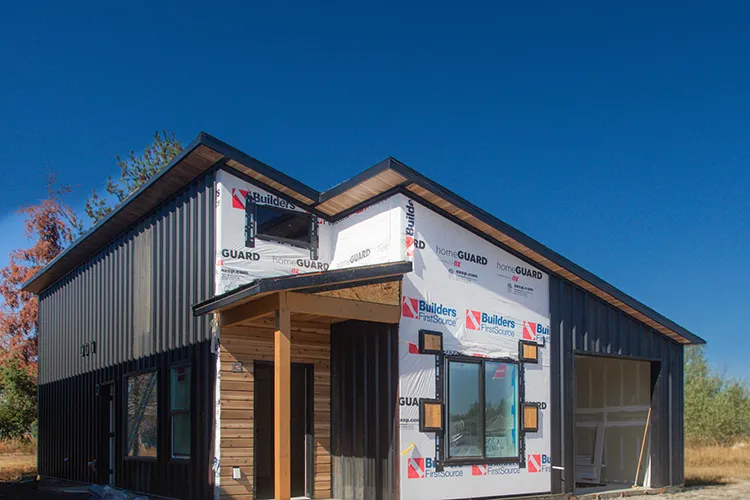
This varies significantly by manufacturer and price point, which is why it’s one of the most important questions to ask when you’re comparing options. At the low end, some kit home companies send you a basic lumber and framing package and nothing else. Everything from windows to roofing to interior finishes is your problem to source. At the high end, a complete kit includes everything except the foundation and the dirt.
Basic Kit Packages
Entry-level kit home packages typically include pre-cut structural lumber, framing plans and instructions, and basic structural hardware. Some include roof trusses and sheathing. Most do not include windows, doors, roofing, siding, or any interior finishes. You source and coordinate all of that separately, which puts a significant amount of project management responsibility back on you.
Mid-Range Kit Packages
A step up from the basics, mid-range kits typically include the structural package plus windows, exterior doors, roofing, and siding. The building envelope is accounted for, but interior finishes, electrical, plumbing, and HVAC are still your responsibility to source and install.
Complete Kit Packages (What Kit Culture Does)
The most comprehensive kit home packages include essentially everything that goes into a finished, livable home. Kit Culture’s packages are a good example of what this looks like at its best.
A Kit Culture home ships on a single truck and includes pre-cut Ready Frame structural components, metal roof and siding panels from Metal America manufacturing, Milgard windows, LG appliances, quartz countertops, a five-zone ductless heat pump system, rigid core LVP flooring, permit-stamped engineering drawings already approved for Idaho and Washington, and a complete set of Lego-style assembly instructions. The only things not in the package are the foundation, site preparation, utility connections, and interior paint.
The significance of this approach is that you know exactly what you’re getting before you spend a dollar on site work. There are no material allowances to negotiate, no builder substitutions, and no sourcing surprises halfway through the build.
| Why the Included Package Matters More Than You’d Think
A lot of kit home companies advertise a low starting price but sell you a bare structural package. By the time you source and price windows, roofing, siding, appliances, and finishes separately, the cost advantage disappears and the coordination headache multiplies. Always ask what the price includes before you compare two kit home options on sticker price alone. |
How Does the Build Process Work?
The process varies by manufacturer, but here’s how it works with a complete kit home system like Kit Culture.
Step 1: Choose Your Model and Configure Your Options
Kit homes are model-based. You choose from available floor plans, select your options and upgrades, and place your order. Unlike a custom stick-built home, there’s no design phase that stretches months. The engineering is already done. Your choices are about size, layout, and finish level, not starting from a blank page.
Step 2: Prepare Your Site and Pour Your Foundation
While your kit is being manufactured, you’re preparing your site. This means getting your building permit approved, pouring your foundation (a slab, crawlspace, or full basement depending on your design and local requirements), and getting utilities stubbed to the site. Your kit manufacturer will give you the foundation plan that matches your home’s footprint.
Step 3: Delivery
A Kit Culture home ships with every component numbered and organized for the assembly sequence. A driver delivers the package to your property. You’ll need reasonable access for a standard flatbed truck. Kit Culture’s manufacturing in Post Falls, Idaho means delivery timelines to Idaho and eastern Washington are tight.
Step 4: Assembly
This is where a kit home earns its name. The assembly instructions are designed to be followed by a small crew with standard construction skills. Kit Culture’s instructions are built around a logical, step-by-step sequence that mirrors the numbered components. Most Kit Culture homes are weather-tight within days of delivery. Full assembly, including interior finish work, typically runs 60 to 90 days.
You can assemble with your own crew if you have the skills, or hire a local general contractor to manage the build. If you use a contractor, Kit Culture’s contractor pricing program gives them trade pricing so they can make money on the project while you still pay well under what a custom build would cost.
Step 5: Inspections and Certificate of Occupancy
Because kit homes are built to standard local and state building codes, the inspection process is the same as any new construction. Your local building department will schedule inspections at foundation, framing, rough mechanicals, insulation, and final stages. Once all inspections pass and you receive a Certificate of Occupancy, you can move in.
How Much Does a Kit Home Cost?
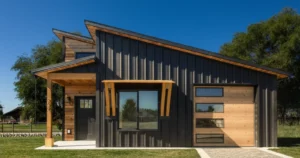
Kit home prices vary enormously depending on what’s included in the package, the size of the home, and the quality of materials. A rough structural-only kit might start under $30,000. A complete, premium kit like Kit Culture’s, with all finishes included, starts around $99,500 for the Compact model at 799 square feet.
The more useful comparison isn’t kit home price against kit home price. It’s total project cost against total project cost. When you include site prep, foundation, mechanical systems, finishes, and everything else it takes to create a livable home, a complete kit home consistently comes in at roughly half the cost of a comparable stick-built home in the same market.
For Idaho and eastern Washington specifically, where custom construction runs $200 to $300 per square foot or more, a Kit Culture home delivering a finished product under $150 per square foot all-in is a genuinely different value proposition.
How Fast Can You Build a Kit Home?
This is one of the most compelling arguments for kit homes, especially if you’re comparing against a custom build. A traditional stick-built home in Idaho takes 9 to 18 months from breaking ground to moving in, and that assumes no significant delays from weather, material sourcing, or subcontractor scheduling.
A Kit Culture home follows a different timeline. Manufacturing takes 4 to 6 weeks after your order is placed. Delivery is coordinated to arrive when your foundation is ready. Once components are on site, most homes are weather-tight within days. The full build from delivery to Certificate of Occupancy typically runs 60 to 90 days.
The speed advantage is real, but it’s not just about convenience. If you’re building a primary home, every month you’re not in it costs you in temporary housing, storage, and opportunity cost. If you’re building an ADU for rental income, every month of delay is rental income you’re not collecting. Speed has financial value that’s easy to undercount when you’re comparing options.
We have a complete break down of how long it takes to build a kit home.
Who Are Kit Homes Best For?
Kit homes aren’t the right answer for everyone. Here’s an honest look at who benefits most and where they’re a less obvious fit.
Kit Homes Work Well For…
- Landowners who want to build a primary home or ADU on property they already own
- Contractors who want a repeatable, efficient building system they can offer clients at a competitive price point
- Spec home builders who need predictable material costs and fast build cycles
- DIY owner-builders with solid construction skills who want clear, detailed instructions and pre-cut components
- Anyone who wants a high-quality finished home at roughly half the cost of traditional construction
- Homeowners adding a backyard ADU and looking for the most cost-efficient way to do it
- People who value speed and certainty over design freedom
Kit Homes May Not Be the Best Fit If…
- You need a highly custom design with unusual dimensions, complex architecture, or very specific layout requirements that don’t match any available model
- You don’t own land and aren’t in a position to purchase it, since kit homes require a lot to build on
- You need a home immediately, since even a fast kit build takes weeks from order to completion
- Financing is a challenge, since kit homes require a construction loan or cash and don’t fit a standard purchase mortgage
A Note on DIY vs. Contractor Assembly
Kit homes are more DIY-friendly than any other type of prefabricated home. If you have solid construction experience or a skilled crew, owner-assembly is a realistic option that can reduce your total cost further. That said, most Kit Culture customers work with a local general contractor for the build, even if they manage other parts of the project themselves. The decision depends on your skills, your timeline, and how much hands-on involvement you want.
If you go the contractor route, Kit Culture’s contractor pricing program gives local GCs trade pricing so they can make a fair margin while keeping your total cost well under what a custom build would run.
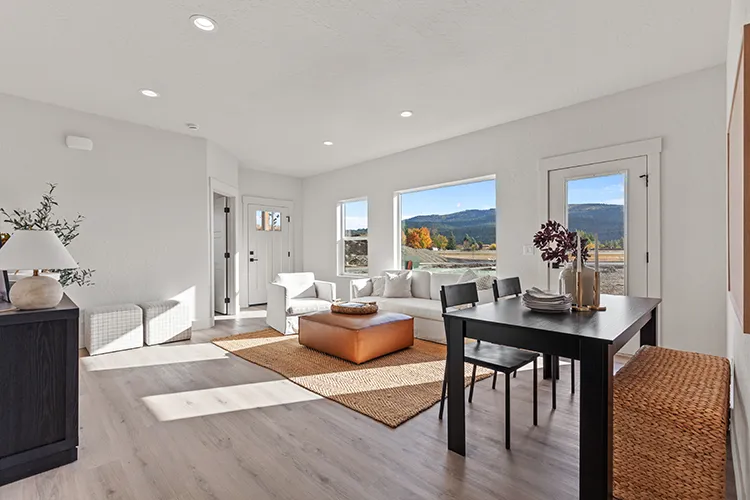
What Makes Kit Culture Different From Other Kit Home Companies?
The kit home market ranges from bare structural packages sold online to fully integrated building systems from vertically integrated manufacturers. Here’s where Kit Culture fits in that landscape and what makes it different.
Vertical Integration: Made in Idaho, Not Sourced From Somewhere Else
Kit Culture is built on the same manufacturing platform as Metal America, one of the most established metal panel producers in the Northwest. That means the roof panels and siding on a Kit Culture home are manufactured by the same company that makes the structural kit. No sourcing from multiple suppliers, no compatibility questions, no quality inconsistencies between components.
Everything Included, Not Just the Frame
A lot of kit home companies sell you a structural package and let you figure out the rest. Kit Culture includes LG appliances, quartz countertops, Milgard windows, a five-zone ductless heat pump, LVP flooring, metal roof and siding, and permit-stamped engineering drawings. One price. No material allowance games.
Permit-Ready Engineering
Every Kit Culture home ships with structural engineering drawings already stamped for Idaho and Washington. You’re not starting from scratch on the engineering review. That saves time, saves money on engineering fees, and removes one of the most common sources of permit delay.
Roughly Half the Cost of a Custom Build
This is the headline number. A Kit Culture home delivers premium finishes at roughly half the cost of a comparable stick-built home in Idaho and eastern Washington. The reason isn’t lower quality. It’s manufacturing efficiency: building components at scale in a controlled facility is fundamentally cheaper than coordinating a full custom build from scratch on a job site.
Built for the Idaho and Eastern Washington Market
Kit Culture is based in Post Falls, Idaho. The homes are designed and engineered for the climate, the building codes, and the lot patterns of the Pacific Northwest. That’s a meaningful difference from kit home companies based in other regions selling generic products into markets they don’t know well.
Kit Culture’s Available Models
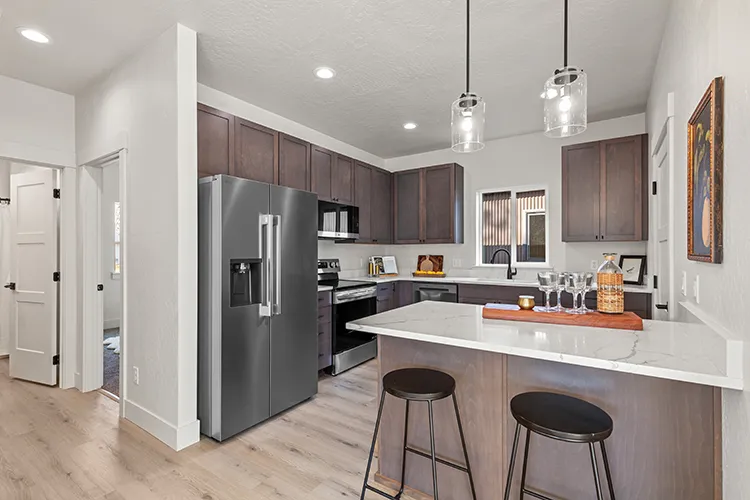
Kit Culture currently offers three primary models for residential builds, with three additional ADU-specific models in development for 2026.
| Model | Size | Starting Price | Best For |
| Compact | 799 sq ft | $99,500 | ADUs, starter homes, single owner-builders |
| Modern | 994 sq ft | $115,000 | Primary homes, young families, spec builds |
| Family | 1,360 sq ft | $145,000 | Primary family homes, larger ADUs |
All three models include the same complete package of premium finishes. The differences are in square footage, layout, and bedroom count. Three ADU-specific models designed for detached backyard placement are currently in development to comply with Idaho’s new ADU laws.
Is a Kit Home the Right Choice for Your Project?
If you own land or are planning to, if you want to build a primary home or a backyard ADU, and if cost certainty and a faster build timeline matter to you, a kit home is worth taking seriously. The category has changed dramatically from its early days, and the best examples today deliver a genuinely premium product at a price that’s hard to match through any other building method.
Kit Culture is built for exactly the Idaho and eastern Washington market. We manufacture locally, ship permit-ready, include everything you need to move in, and back the structure with a 40-year warranty. If you’re ready to explore what’s possible, we’d love to show you around the models and walk through what a project on your land would actually look like.
| Ready to See the Models?
Visit kitculturehomes.com to explore Kit Culture’s current models, see what’s included in every package, and get on the waitlist for our ADU-specific models launching in 2026. If you’d rather talk it through first, give us a call. We’re based in Post Falls, Idaho and know this market inside and out. |
Frequently Asked Questions
What is a kit home?
A kit home is a prefabricated home where all the major structural components and, in the best versions, interior finishes as well, are manufactured off-site, pre-cut to precise dimensions, and shipped to your property for assembly. The idea has been around since the early 1900s when Sears sold kit homes by mail-order catalog. Today’s versions use modern manufacturing to deliver premium quality at roughly half the cost of comparable stick-built homes.
Is a kit home the same as a modular home?
No, though they’re often confused. A modular home arrives at your site in large, nearly complete room-sized sections that are placed by crane onto your foundation. A kit home arrives as components that are assembled from the ground up on site. Kit homes are more DIY-friendly and offer more flexibility in placement. Modular homes include more factory finish work but require more specialized equipment to install.
Is a kit home the same as a manufactured home?
No. Manufactured homes are built entirely in a factory on a permanent steel chassis and transported to your site as a finished or near-finished unit. They’re regulated by federal HUD standards. Kit homes are built to standard local and state building codes, the same standards as any stick-built home. This affects financing, appraisal, and long-term value.
Can I build a kit home myself?
Kit homes are the most DIY-friendly type of prefabricated home. If you have solid construction experience and a skilled crew, owner-assembly is realistic. Kit Culture’s assembly instructions are designed to be followed by someone with standard construction skills. That said, most Kit Culture customers work with a local general contractor for some or all of the build. The right choice depends on your skills and timeline.
What’s included in a Kit Culture home?
Every Kit Culture home includes pre-cut Ready Frame structural components, Metal America metal roof and siding panels, Milgard windows, LG appliances, quartz countertops, a five-zone ductless heat pump, rigid core LVP flooring, and permit-stamped engineering drawings for Idaho and Washington. The only things not included are the foundation, site preparation, utility connections, and interior paint.
How much does a Kit Culture home cost?
Kit Culture’s current models start at $99,500 for the Compact (799 sq ft), $115,000 for the Modern (994 sq ft), and $145,000 for the Family (1,360 sq ft). ADU-specific models are in development for 2026, with prices under $200,000. These prices include the full package of premium finishes. Total project cost including foundation, site prep, and utility connections varies by site conditions.
How long does it take to build a Kit Culture home?
Manufacturing typically takes 4 to 6 weeks after your order is placed. Once components are delivered to your site, most Kit Culture homes are weather-tight within days. The full build from delivery to Certificate of Occupancy typically runs 60 to 90 days. Total time from order to move-in is generally 3 to 5 months, compared to 9 to 18 months for a comparable custom stick-built home.
Can a contractor build a kit home for me?
Yes. Kit Culture sells direct to homeowners and also through a contractor pricing program that gives licensed GCs trade pricing. Your contractor manages the site work, permitting, and assembly. Kit Culture handles everything that arrives on the truck. Many homeowners find this the best of both worlds: the cost efficiency of a kit home with the expertise of a professional builder managing the project.
Do kit homes appreciate in value like regular homes?
Kit homes built to local and state building codes, as Kit Culture homes are, appreciate similarly to comparable stick-built homes in the same market. They’re permanent structures on permanent foundations and are financed, appraised, and taxed like any other residential home. This is different from manufactured homes, which are regulated by different standards and may have different appreciation patterns.
Are kit homes available in Idaho and Washington?
Yes. Kit Culture is based in Post Falls, Idaho and serves Idaho and eastern Washington. Every home ships permit-ready with engineering drawings stamped for both states. We’re actively expanding and focus specifically on the Pacific Northwest market.