If you own a home in Boise, Coeur d’Alene, Post Falls, Nampa, Meridian, or any other Idaho city over 10,000 people, the rules around what you can build on your property just changed. Idaho’s Senate Bill 1354 was signed March 31, 2026 and takes effect July 1, 2026. It gives homeowners in qualifying cities a legal right to add a second, fully independent living space on their lot.
This guide breaks down exactly what the law says, who it covers, what your city can and can’t do under it, and how to take advantage of it.
| Heads Up: This Is Not Legal Advice
We’ve written this article in plain language so it’s actually useful, but it’s informational only, not legal advice. Rules vary by city and local codes change. Before you start a project, check with your local planning department and talk to a real estate attorney if you have specific questions about your property. |
What Is an ADU?
An accessory dwelling unit (ADU for short) is a self-contained second home on the same property as your primary residence. It has its own kitchen, bathroom, and sleeping area and functions completely independently from the main house. People build them for all kinds of reasons: housing an aging parent nearby, bringing in rental income, giving adult kids an affordable place to live, or hosting a caretaker.
You’ve probably heard them called granny flats, backyard cottages, in-law suites, or guest houses. They can be an apartment inside your existing home, a converted garage, or a completely separate structure built in your backyard. That last option is the type most relevant to this law and to Kit Culture.
For a long time, many Idaho cities effectively blocked homeowners from building detached ADUs. Some banned them outright. Others attached requirements like mandatory owner-occupancy that made the economics unworkable. SB 1354 takes those tools away from cities in a specific population tier.
The Two Idaho Laws Worth Knowing About
SB 1354 is the big one, but it builds on an earlier law that’s already floating around online and that a lot of sources get wrong.
House Bill 166 (2023): A Small First Step
HB 166 was signed in 2023 and you’ll often see it described as the law that stopped cities from banning ADUs. That’s not quite right. If you act on that assumption, you could end up with the wrong picture of your rights.
| What HB 166 Actually Does and Doesn’t Do
HB 166 dealt specifically with HOA restrictions on internal ADUs, meaning units inside your home or its garage. It did NOT stop cities from banning ADUs through zoning. The Idaho Senate stripped that broader language out before the bill passed. After HB 166, cities could still ban detached ADUs however they wanted. |
What HB 166 does cover:
- Stops HOAs from enforcing covenants that ban internal ADUs on owner-occupied properties
- Blocks new HOA restrictions created after July 1, 2023 that prohibit internal ADUs
- Covers one internal ADU per homestead
What HB 166 doesn’t cover:
- Doesn’t limit city or county zoning authority over ADUs
- Doesn’t apply to separate detached structures
- Doesn’t remove owner-occupancy requirements set by local government
Senate Bill 1354 (2026): This Is the One That Matters
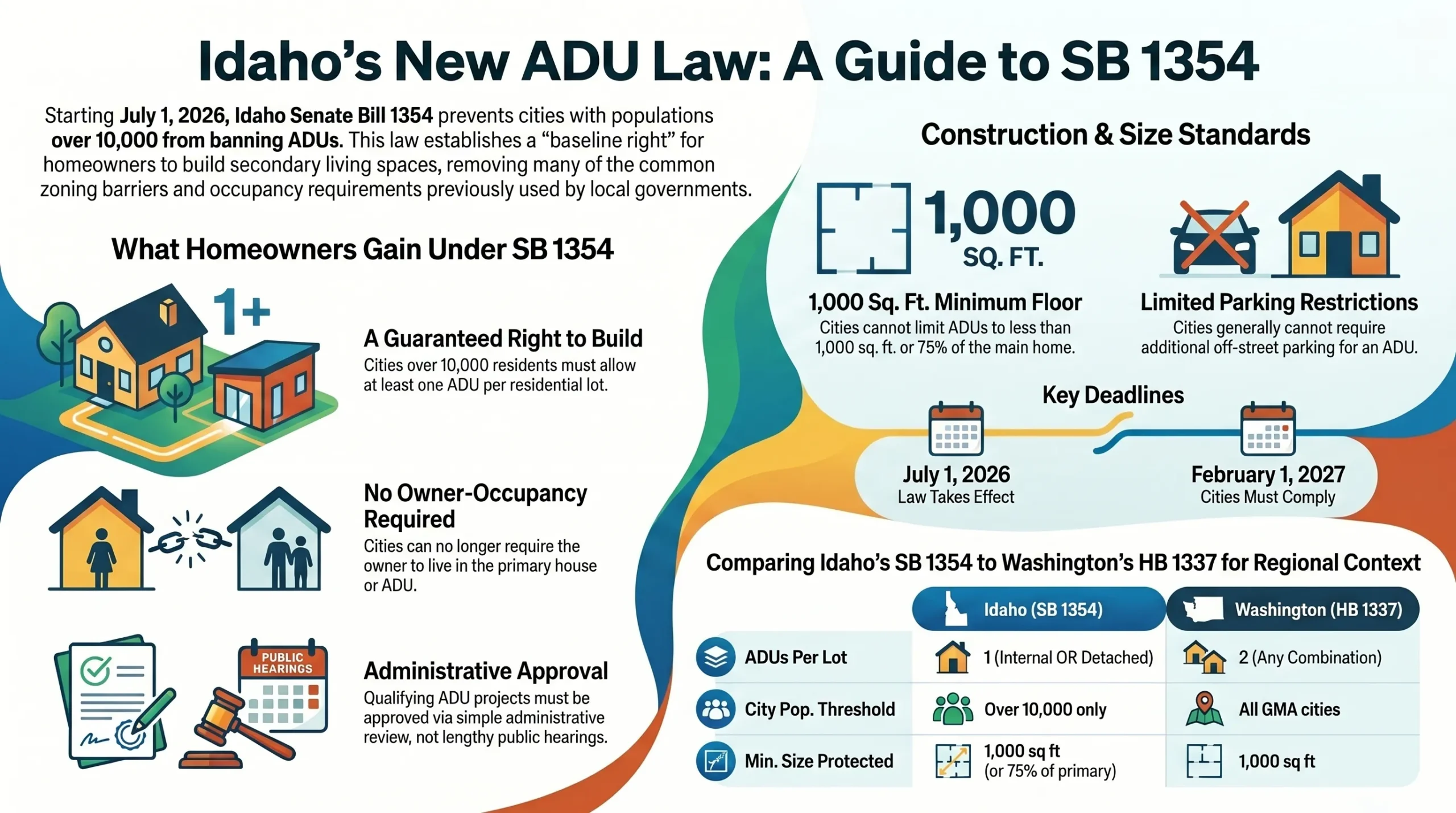
SB 1354 is a fundamentally different law. Governor Brad Little signed it March 31, 2026. It’s effective July 1, 2026, codified at Idaho Code Section 67-6541. It passed 25-10 in the Senate and 47-23 in the House. Both primary sponsors, Sen. Ben Toews and Rep. Jordan Redman, represent the Coeur d’Alene area.
Where HB 166 tip-toed around city authority, SB 1354 directly limits it. Once it’s in effect, Idaho cities above the population threshold can’t use zoning to ban ADUs, can’t require you to live on the property, and can’t impose a long list of other restrictions that previously made ADU development impractical.
| Not in Effect Yet
SB 1354 is signed and locked in, but it doesn’t take effect until July 1, 2026. Cities then have until February 1, 2027 to update their local codes. If you’re planning a project right now, check with your city’s planning department first. Some cities will update quickly, others will wait until the deadline. |
Who Does SB 1354 Actually Cover?
Cities Over 10,000 People Only
The law’s reach comes down to one number: 10,000. SB 1354 only applies to Idaho cities with populations above that threshold, written directly into Section 67-6541(6). Cities below it aren’t covered at all.
| Watch Out for Outdated Information Online
Earlier drafts of SB 1354 used 5,000 as the population cutoff. That was changed to 10,000 before the bill passed. Plenty of articles still cite the old number. The correct threshold in the final law is 10,000. |
Cities where SB 1354 applies include:
- Boise, Nampa, Meridian, Idaho Falls, Pocatello, Caldwell, Twin Falls
- Coeur d’Alene and Post Falls in North Idaho
- Any other incorporated Idaho city over 10,000 people
Rural and County Land Isn’t Covered
SB 1354 targets cities only. If your property is in unincorporated county land outside city limits, this law doesn’t apply to you. That matters more than you’d think, because your mailing address isn’t the same as your zoning jurisdiction.
If your address says Coeur d’Alene or Post Falls but your parcel actually sits in unincorporated Kootenai County, SB 1354 may not cover you. If you’re not sure, contact your county planning and zoning office and ask them directly before making any plans.
What the Law Requires and Forbids
One ADU Per Lot: You Pick Which Type
Under SB 1354, every qualifying single-family lot gets the right to one ADU. You can choose either an internal unit inside your existing home or garage, or a separate detached structure in the backyard. The law protects one or the other. It doesn’t protect both at the same time.
| Idaho vs. Washington on ADU Count
This is one of the most important differences between the two states. Washington’s HB 1337 protects two ADUs per residential lot in any combination of attached and detached. Idaho’s SB 1354 protects one ADU per lot, either internal or detached. Worth knowing if you’re looking at property on both sides of the state line. |
What Your City Can’t Do Anymore
Once SB 1354 is in effect, qualifying cities can’t:
- Ban ADUs through any zoning rule or policy in any residential area
- Require off-street or guest parking for ADUs (with a few narrow exceptions covered below)
- Charge impact fees or connection fees higher than what they charge for other single-family homes
- Limit ADU size to less than 1,000 sq ft or 75% of your primary home’s size, whichever is larger
- Require you to live in either the main house or the ADU
- Set ADU height limits below the height of your existing primary home
- Apply stricter setbacks, lot coverage rules, or frontage rules to ADUs than they apply to regular homes in the same zone
- Put ADU applications through a lengthy discretionary review process; they must be approved as a matter of right
How the Size Rules Work
The size protection scales with your primary home, so it’s worth understanding before you plan anything. Cities can’t require your ADU to be smaller than 1,000 sq ft, or smaller than 75% of your primary home’s square footage. Whichever of those two numbers is bigger is your protected minimum.
Here’s how the math plays out. If your home is 1,600 sq ft, 75% of that is 1,200 sq ft. Since 1,200 is bigger than the flat 1,000 sq ft minimum, your protected size is 1,200 sq ft. If your home is 1,200 sq ft, 75% is 900 sq ft. Since 900 is less than 1,000, the flat 1,000 sq ft floor applies. You can always build smaller if you want. The city just can’t force you to.
Setbacks: Your ADU Gets the Same Treatment as a House
The law doesn’t set a specific setback number. Instead, Section 67-6541(2)(g) says ADU setbacks can’t be more restrictive than setbacks for single-family homes in the same zone. Whatever your city requires for a regular house in your neighborhood is the most it can require for your ADU.
One thing is written directly into the law itself: a detached ADU must be placed in the rear yard, or at minimum subject to the same setbacks as your primary home. That’s a statutory requirement and it applies regardless of how your city writes its updated code.
Parking: Generally Off the Table, With Three Exceptions
Cities generally can’t require off-street or guest parking for your ADU. There are three situations where they still can:
- Your primary home has no off-street parking of its own
- The street in front of your property is unpaved and not set up for on-street parking
- Your primary home is within a quarter mile of a transit stop, employment area, or commercial services
For most Idaho homeowners, especially in North Idaho where public transit isn’t a big factor, the one that matters most is the first. If your home already has off-street parking, your city generally can’t require additional spaces for the ADU.
HOA Rules Under SB 1354
SB 1354 also updates Idaho’s HOA statute, going further than HB 166 did. Here’s the quick version:
- Your HOA can’t add new covenants or enforce existing ones that block ADUs unless you specifically agree to it in writing
- Restrictions that were already in your CC&Rs when you bought the property can still be enforced
- HOAs can still set reasonable design, size, height, and parking rules
- A new HOA can ban ADUs if the restriction is in place when you purchase
The practical question to ask yourself: what did my CC&Rs say when I closed on this property? If anti-ADU restrictions were already in there, they can still stick. If your HOA is trying to add them now, or enforce ones added after you bought, SB 1354 protects you. If you’re not sure, a real estate attorney can sort it out quickly.
Cities Have Until February 1, 2027 to Update Their Codes
The law takes effect July 1, 2026. Cities then have until February 1, 2027 to bring their local codes into compliance. Earlier versions of the bill had an October 2026 deadline for cities, but that was pushed to February 2027 before passage. Between July and February, some cities will move fast and others will wait until the last minute. It’s worth checking with your planning department about where your city stands.
What Cities Can Still Control
SB 1354 doesn’t take away all local authority. Cities can still apply:
- Standard building codes and fire safety requirements
- Health and safety standards
- Floodplain regulations
- Water, sewer, and road standards
- Setback requirements for rights-of-way and easements
Also worth knowing: properties in designated historic districts under Idaho Code Sections 67-4607 or 67-4614 are exempt from SB 1354. If your home is on a state or local historic register, the standard ADU protections may not apply. Check with your planning department to confirm.
What This Means for Homeowners in Key Idaho Cities
North Idaho: Coeur d’Alene and Post Falls
Both cities are well above the 10,000 population threshold, so SB 1354 applies to both. Coeur d’Alene must comply by February 1, 2027. Whatever resistance city officials may have expressed to recent housing legislation, the law passed and compliance isn’t optional. Once it’s in effect, a blanket ban on detached ADUs in Coeur d’Alene residential zones won’t be legally tenable.
Post Falls was already voluntarily loosening its ADU restrictions before the state stepped in, which puts it ahead of the curve. SB 1354 locks in and sets a floor under what Post Falls was already heading toward.
If your property is in unincorporated Kootenai County outside either city’s limits, SB 1354 doesn’t apply. Reach out to Kootenai County Planning and Zoning to find out what your current options are.
Boise and the Treasure Valley
Boise already had a fairly open ADU framework before SB 1354, allowing detached ADUs in all residential zones. The new law sets minimums that may expand on what Boise allowed in a few specific ways, particularly around the 75% size calculation. Nampa, Meridian, Caldwell, Twin Falls, Idaho Falls, Pocatello, and other Treasure Valley cities over 10,000 are all covered and must update their codes by February 2027.
Idaho vs. Washington: A Quick Side-by-Side
A lot of North Idaho homeowners have land on both sides of the state line or are thinking about properties near Spokane. Here’s how the two states’ ADU laws compare.
| Factor | Idaho (SB 1354) | Washington (HB 1337) |
| Key legislation | SB 1354, signed March 31, 2026 | HB 1337 (2023) and HB 1345 (2026) |
| Effective date | July 1, 2026 | HB 1337: July 23, 2023 |
| City compliance deadline | February 1, 2027 | Most eastern WA cities: June 30, 2025 |
| ADUs per lot (city) | 1 per lot, either internal or detached, not both | 2 per lot in any combo of attached and detached |
| ADUs per lot (rural) | Not covered by SB 1354 | 1 detached per rural parcel via HB 1345 |
| Population threshold | Cities over 10,000 residents only | No threshold; all GMA cities in UGAs |
| Owner occupancy required? | No, explicitly prohibited | No, explicitly prohibited |
| Minimum ADU size | 1,000 sq ft or 75% of primary home, whichever is larger | 1,000 sq ft minimum |
| HOA restrictions | Can’t add new restrictions without owner’s written consent | New HOAs after 7/23/2023 can’t restrict ADUs in CC&Rs |
Bottom line: Washington’s law is broader. It covers more geography, allows two ADUs per lot, and has been on the books since 2023. Idaho’s SB 1354 is more targeted, covering cities only and protecting one ADU per lot. But it’s a genuine and meaningful shift for homeowners in qualifying Idaho cities.
What Can You Actually Build?
Once SB 1354 is in effect, here are the most common ADU setups Idaho homeowners are considering.
A Standalone Backyard Cottage
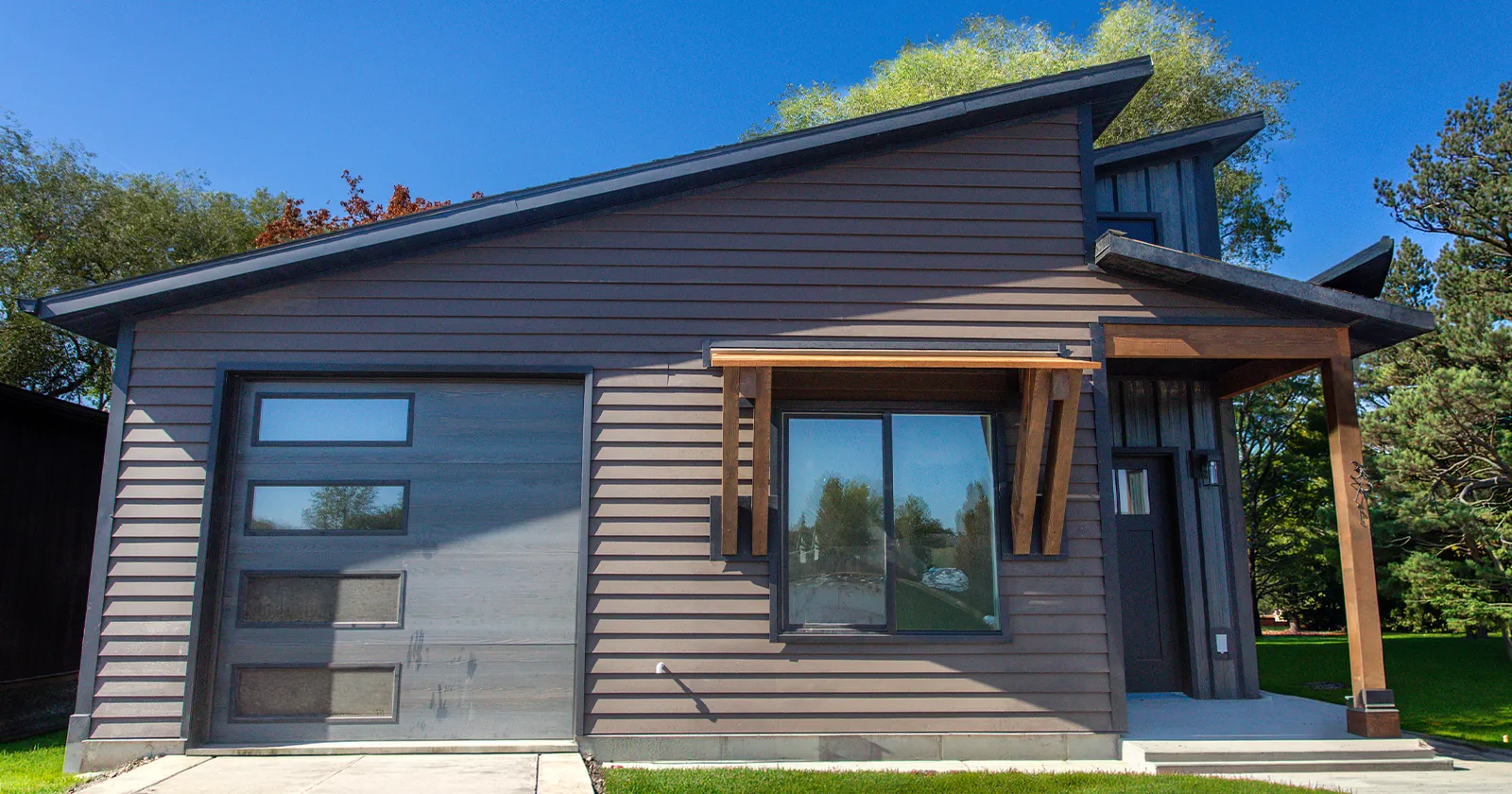
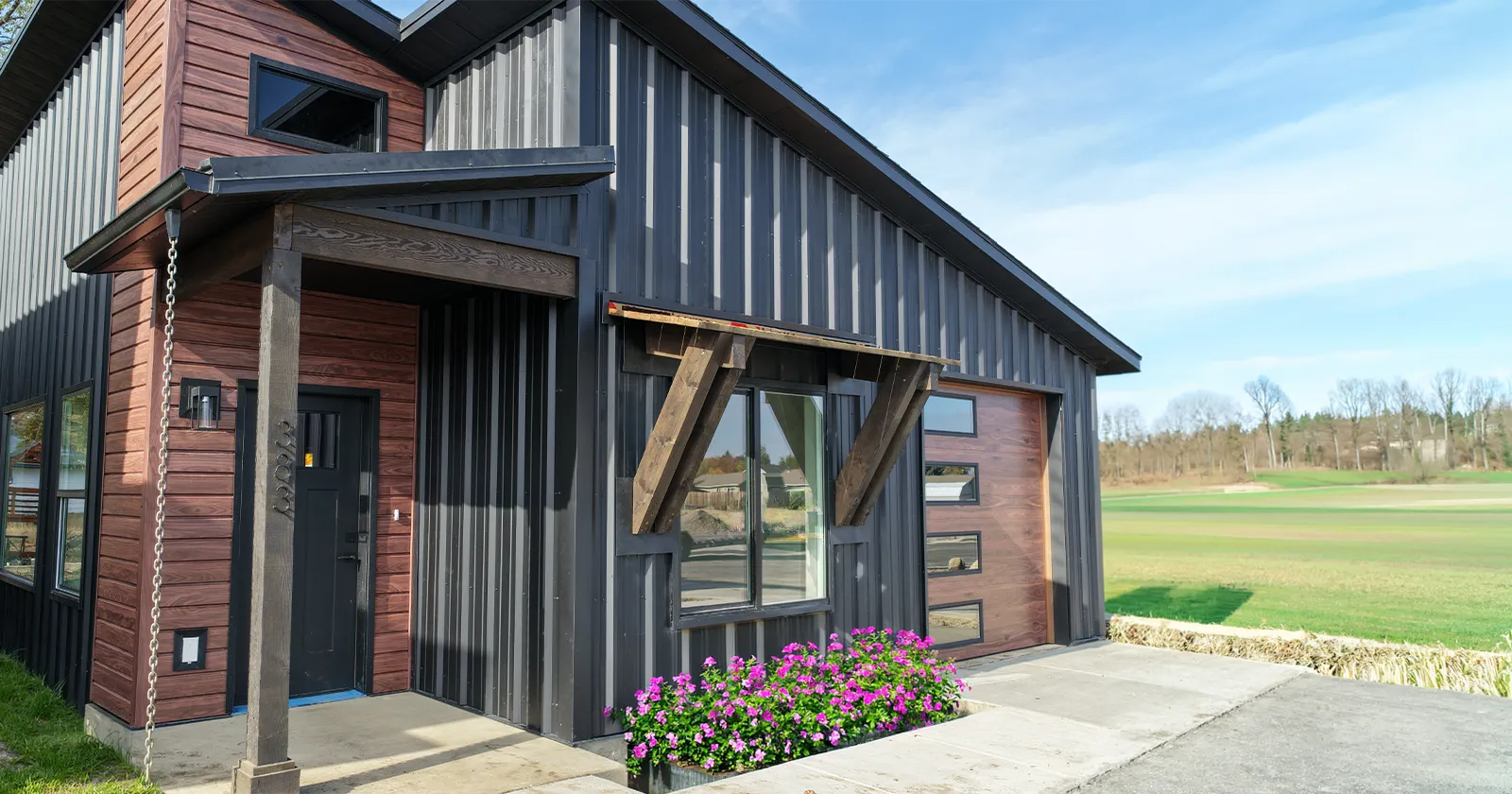
A completely separate structure with its own entrance, kitchen, bathroom, and bedroom. It’s the most straightforward ADU option and one of the most versatile: rental income, housing for family, a space for a caretaker, or a guest house that truly feels separate. Under SB 1354, your city can’t require it to be smaller than 1,000 sq ft or 75% of your primary home’s footprint.
A Shop or Garage With Living Quarters
One building that combines working or storage space with a finished living area. Popular with Idaho property owners who have equipment or vehicles to store and want a guest or rental unit in the same footprint. The shop or garage portion doesn’t count against the ADU minimum, so you get both.
An In-Law Suite or Multigenerational Setup
A separate backyard structure built specifically for family: aging parents, adult kids, or someone who needs nearby support but also wants their own space. This use case is one of the biggest drivers of ADU interest across the country, and Idaho’s law now makes it a legally protected option for homeowners in qualifying cities.
So You Want to Build One. Here’s Where Kit Culture Fits In.
SB 1354 opens the door. Kit Culture is built to help you walk through it quickly, affordably, and without the typical construction headaches.
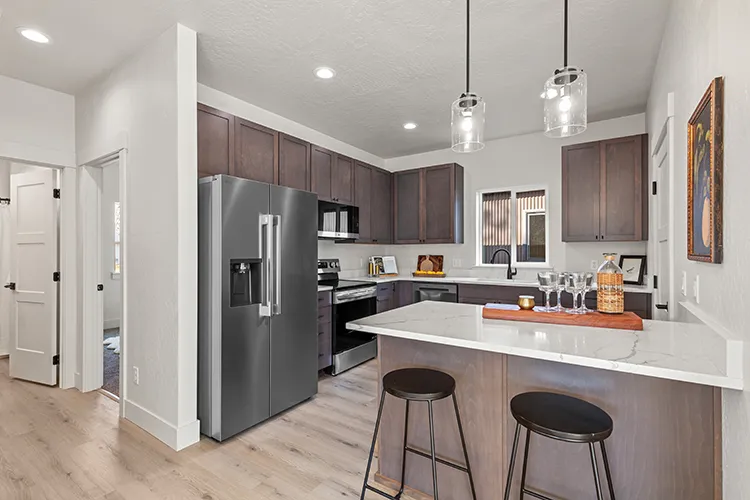
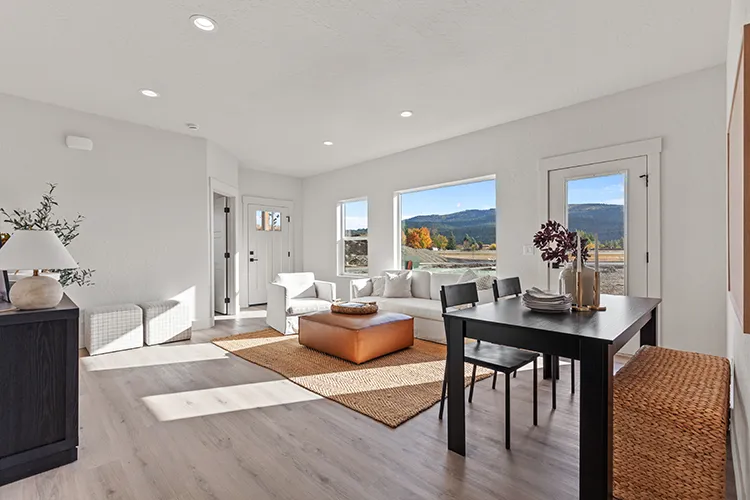
Kit Culture is an Idaho-made kit home system built using quality siding from Metal America, one of the most established metal panel producers in the Northwest. Every home ships on a single truck and arrives permit-ready. That means pre-cut framing components and engineered drawings already stamped for your state. It also includes a full package of premium finishes: LG appliances, quartz countertops, Milgard windows, a five-zone ductless heat pump, LVP flooring, and a 40-year metal roof and siding system.
The price is where Kit Culture really stands out. A traditional custom-built detached ADU in Idaho typically costs between $140,000 and $260,000, and that’s before site costs like utility connections and grading. Kit Culture’s ADU model kit homes come in at roughly half that without cutting corners on materials or build quality. The reason is straightforward: manufacturing components at scale in a controlled facility and shipping them ready to assemble is a fundamentally more efficient way to build than coordinating everything from scratch on a job site.
Speed is the other big difference. Most Kit Culture homes are weather-tight within days of delivery and fully move-in ready in under 90 days. Compare that to 9 to 18 months for a comparable custom build.
| Kit Culture ADU Models Coming in 2026
We’re currently developing ADU-specific models designed for detached backyard placement. Made in Idaho, shipped permit-ready, and backed by a 40-year structural warranty. Contact us today for early access pricing and priority production slots. |
Want a Contractor to Handle the Build?
Kit Culture sells direct to homeowners, but if you’d rather hand the whole project to a licensed general contractor, that works too. Kit Culture has a contractor pricing program that gives local GCs trade pricing. They can make money on the build while you still pay well below what a custom project would cost. Your contractor handles the site work and permitting. Kit Culture handles everything that arrives on the truck.
| Want to See What’s Possible on Your Property?
Kit Culture is based in Idaho and built for the Idaho and eastern Washington market. If SB 1354 applies to your property and you’re ready to explore your ADU options, we’d love to talk. Visit kitculturehomes.com or give us a call. Our team can walk you through the models, the process, and what it would look like on your lot. |
Frequently Asked Questions
Does SB 1354 apply to my property?
It does if you’re inside city limits in an Idaho city with a population above 10,000. That includes Coeur d’Alene, Post Falls, Boise, Nampa, Meridian, Idaho Falls, and others. If your property is in unincorporated county land outside city limits, it doesn’t apply. Contact your county planning and zoning office to find out what your options are.
When does it take effect, and when do cities have to comply?
The law takes effect July 1, 2026. Cities have until February 1, 2027 to update their local codes. During that window, compliance will vary by city. Some will move fast, others will wait until the deadline. Check with your specific city’s planning department to see where they stand.
How many ADUs can I have on my lot?
SB 1354 protects one ADU per single-family lot. You can choose an internal ADU inside your primary home or garage, or one detached structure in the rear yard. But you can’t have both as a protected right at the same time. If you want a separate backyard building, the detached option is the one to pursue.
How big can my ADU be?
Your city can’t require it to be smaller than 1,000 sq ft, or smaller than 75% of your primary home’s square footage. Whichever of those numbers is larger is your protected minimum. On a 2,000 sq ft home, your protected minimum is 1,500 sq ft (75% of 2,000). You can always build smaller if you prefer. The law sets a floor on what cities can demand, not a ceiling on what you can build.
Do I still need a building permit?
Yes, absolutely. SB 1354 gives you the right to build, but it doesn’t eliminate the permit process. What changes is that cities must approve qualifying ADU projects administratively without putting them through a lengthy discretionary review. You’ll still need a standard building permit, engineer-stamped plans, and inspections.
My property is outside city limits in rural Kootenai County. Does this help me?
Unfortunately no. SB 1354 is a city law. If you’re in unincorporated county land anywhere in Idaho, your ADU rights come from your county’s existing rules, not this law. Contact your county planning and zoning department directly to understand what’s currently allowed.
Can my HOA block me from building an ADU?
Maybe. It depends on what your CC&Rs said when you bought the property. If the anti-ADU restrictions were already in there when you closed, they can still be enforced. If your HOA is trying to add new restrictions, or enforce ones created after your purchase date, SB 1354’s HOA provisions protect you. Take a look at your CC&Rs and consult a real estate attorney if you’re not sure which situation you’re in.
Can I rent my ADU out?
Yes. SB 1354 explicitly says cities can’t require you to live in either the primary home or the ADU, so long-term rental is fair game. Short-term rentals like Airbnb and VRBO are a different story. Those are governed by your city’s local ordinances, which SB 1354 doesn’t override. Check your city’s short-term rental rules if that’s your plan.
How much does a Kit Culture ADU cost?
Our ADU models are being developed for 40 to 60 percent less than a comparable custom-built detached ADU through a traditional contractor in Idaho. Get on the waitlist at kitculturehomes.com for early access pricing when the models launch.
What’s the historic district exemption about?
If your property is designated under Idaho Code Sections 67-4607 or 67-4614 as part of a historic district, it’s exempt from SB 1354. The standard ADU protections may not apply to you. If you’re on a state or local historic register, verify your situation with your city’s planning department before assuming you’re covered.