If you’re comparing ADU builders in Idaho or eastern Washington, you’ll run into three pretty different kinds of companies bidding on the same backyard. They price differently, they schedule differently, and they hand you a different amount of the work. The honest answer is that none of them is the right choice for everyone, so the useful question isn’t who’s best, it’s which one fits your lot, your budget, and how involved you want to be.
Here’s how to tell them apart and what to ask before you sign anything.
The three kinds of ADU builders
A general contractor builds whatever you bring them. They’re the most flexible option and often the right call if your lot is odd, steep, or tight, or if you want a design that doesn’t come off a shelf. The tradeoff is that an ADU is a small job for most GCs, so it can sit behind bigger work, and you’re paying for a fully custom set of plans and a fully custom build.
A specialty ADU firm does nothing but accessory dwelling units. They know the local rules cold, and that’s worth real money when your city has its own overlay on top of state law. They usually work from a fixed set of layouts, so there’s less design freedom, and their pricing tends to sit at the higher end because the service is nearly turnkey.
A kit company supplies the house as a package of pre-cut, engineered parts with stamped plans, and you or your contractor build it on a permanent foundation. That’s what we do. It moves a chunk of the cost and schedule risk out of the field and into the factory, but it isn’t a finished building delivered on a trailer, and you’ll still need a foundation, trades, and a permit. Our guide to how a prefab ADU goes together walks through that sequence in detail.
What to ask on the first call
Most of what separates a good bid from a bad one comes out in about fifteen minutes if you ask the right things.
- What’s in the number, and what isn’t? Site work, utility connections, and permit fees are the three that get left out most often, and any of them can move a budget substantially.
- Have you permitted an ADU in my specific city? Not the county, not the state. Boise, Coeur d’Alene, Post Falls, Spokane, Spokane Valley, and Liberty Lake each handle this differently.
- What’s the actual schedule, and what drives it? Ask what happens if the permit takes longer than they hope, because that’s the delay you’re most likely to hit.
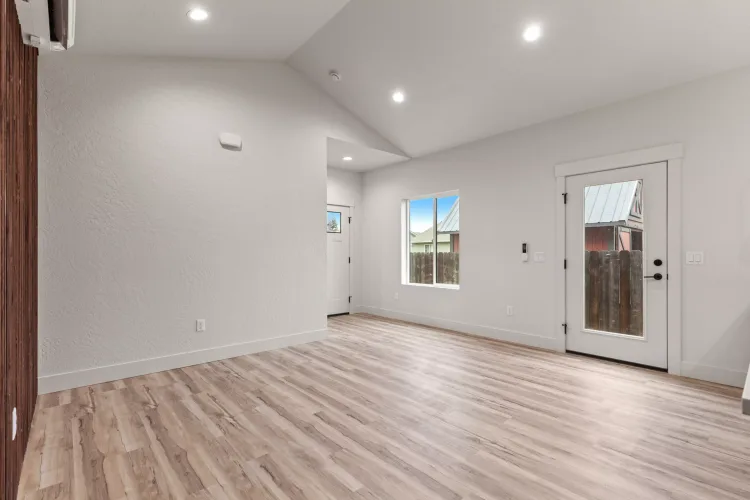
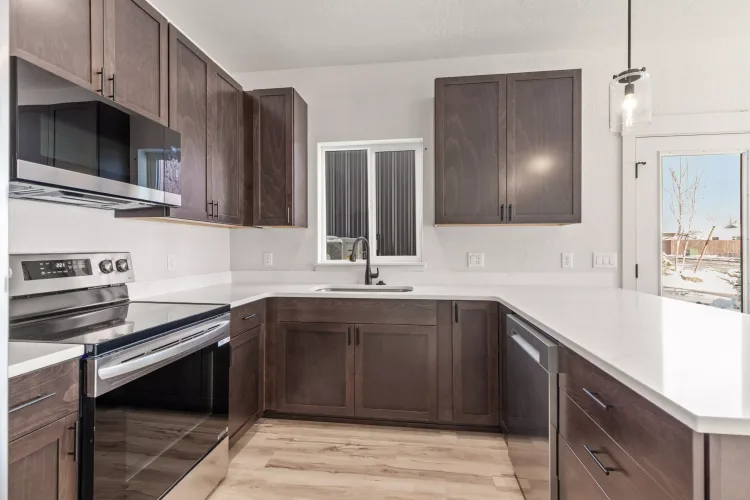
- Can I see a finished one? Renders aren’t projects. Ask for an address or a walkthrough of something they’ve completed.
- What are the specs? Windows, insulation, and heating are where quality quietly disappears. Ours ship with Milgard Low-E U-0.29 windows, a mini-split heat pump, and batt insulation matched to local code, so you’ve got a concrete benchmark to compare against. The Department of Energy’s guidance on efficient home design is a fair reference if you want to sanity check what you’re told.
Red flags worth walking away from
A vague scope is the big one. If the quote is a single number with no breakdown, you can’t compare it to anything, and you won’t find out what was excluded until it shows up as a change order.
Be careful with anyone who’s confident about your zoning before they’ve looked at your parcel. Idaho’s rules changed with SB 1354, and Washington has its own framework, which we cover in our 2026 Washington ADU law guide. Both give you more room than most homeowners expect, but cities still layer their own requirements on top. A builder who says “you’re fine” without pulling your lot up hasn’t checked.
Pressure to sign before the site visit is the third one. Nobody can price a foundation, a driveway, or a sewer tie-in from a phone call.
How your lot narrows the field
Access decides more than people expect. A kit arrives on a flatbed and needs room to unload, so a narrow lot with no alley can rule out some approaches and make others easy. Slope drives foundation cost. Distance to existing utilities drives the trenching bill.
If you’re still working out whether an ADU is allowed on your property at all, start with our statewide Idaho ADU guide or the city page for where you live, then come back to builder selection once you know what you’re allowed to put there.
FAQ
Do I need a licensed contractor, or can I build it myself?
You can take on real portions of the work as an owner-builder, but electrical, plumbing, and mechanical generally have to go to licensed trades, and the permit will reflect that. The split is worth understanding before you budget around your own labor.
Are ADU builders and kit companies competitors?
Not usually. Plenty of our customers hire a general contractor to put the kit up. The kit sets the design, the engineering, and the material package, and the contractor handles the build. That combination is common and it works well.
How much does the builder choice change the price?
Enough to matter, though the bigger swing is usually the site, not the builder. Two identical units on different lots can land far apart once you account for foundation, access, and utilities.
The bottom line
The right choice among ADU builders comes down to how much of the work you want to own and how unusual your lot is. Custom GC for a difficult site, specialty firm for a hands-off build, kit company if you want the design and materials settled up front while you or your contractor handle the field work. If you’re weighing which of those fits, give us a call and we’ll tell you honestly if a kit isn’t the right answer for your property.