Are kit homes energy efficient? It’s one of the most practical questions buyers ask, and the honest answer is yes with one important qualification. A kit home is only as energy efficient as the insulation, windows, and mechanical systems that go into it. What actually matters is whether those components are specified to meet the energy code for the climate where the home is built.
That’s exactly how a Kit Culture home is put together. Every kit is matched to the building code requirements for its delivery address before it ships, which means the energy performance is built to the same standard a local contractor would meet on a new home down the street. Here’s a plain-English look at what determines a kit home’s energy efficiency, and how the pieces work together.
What “Energy Efficient” Actually Means for a Home
Energy efficiency isn’t a single feature you can point to. It’s the result of several systems working together to keep conditioned air inside and unconditioned air out, while heating and cooling the home with as little energy as possible. For any home, kit or custom, four things carry most of the weight:
- The building envelope (insulation and air sealing) that slows heat moving in or out.
- The windows, which are typically the weakest point in the envelope.
- The heating and cooling system, and how efficiently it moves energy.
- Energy Star–rated components that reduce day-to-day consumption.
A kit home earns its efficiency the same way a site-built home does: by getting each of these right for the local climate. The rest of this guide walks through how a Kit Culture home handles each one.
The Building Envelope: Insulation Matched to Your Climate
Insulation is the foundation of energy performance. Kit Culture homes use batt insulation as the primary insulation product. It’s the same standard approach used in the vast majority of new residential construction and the R-value isn’t a single fixed number applied to every home. It’s matched to the building code requirements for your specific delivery address before the kit ships.
This matters because energy codes are climate-specific. A home in the colder zones of northern Idaho requires more insulation than one in a milder area, and the kit is specified accordingly. In practice, that means the insulation in your home meets the same standard a local builder would use for a new home on the same street. If you want the full detail on how the insulation and windows are specified, we cover it in our guide to kit home insulation and windows.
Windows: Low-E Glass and the U-Value That Matters
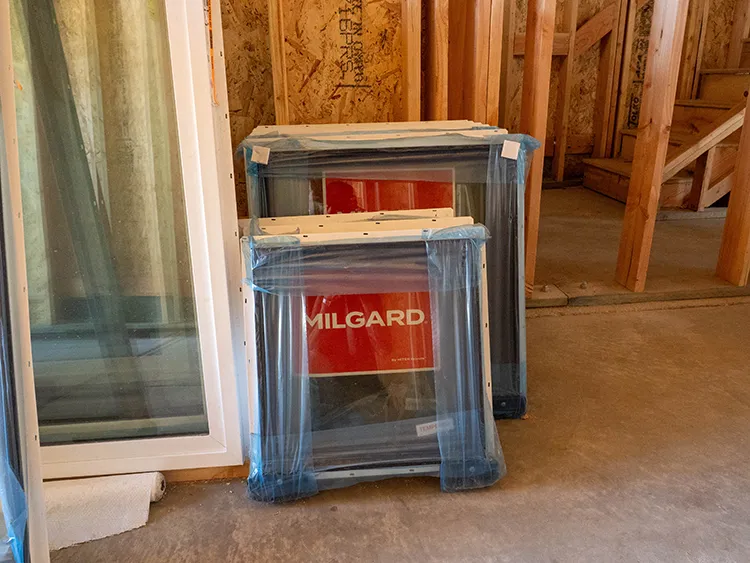
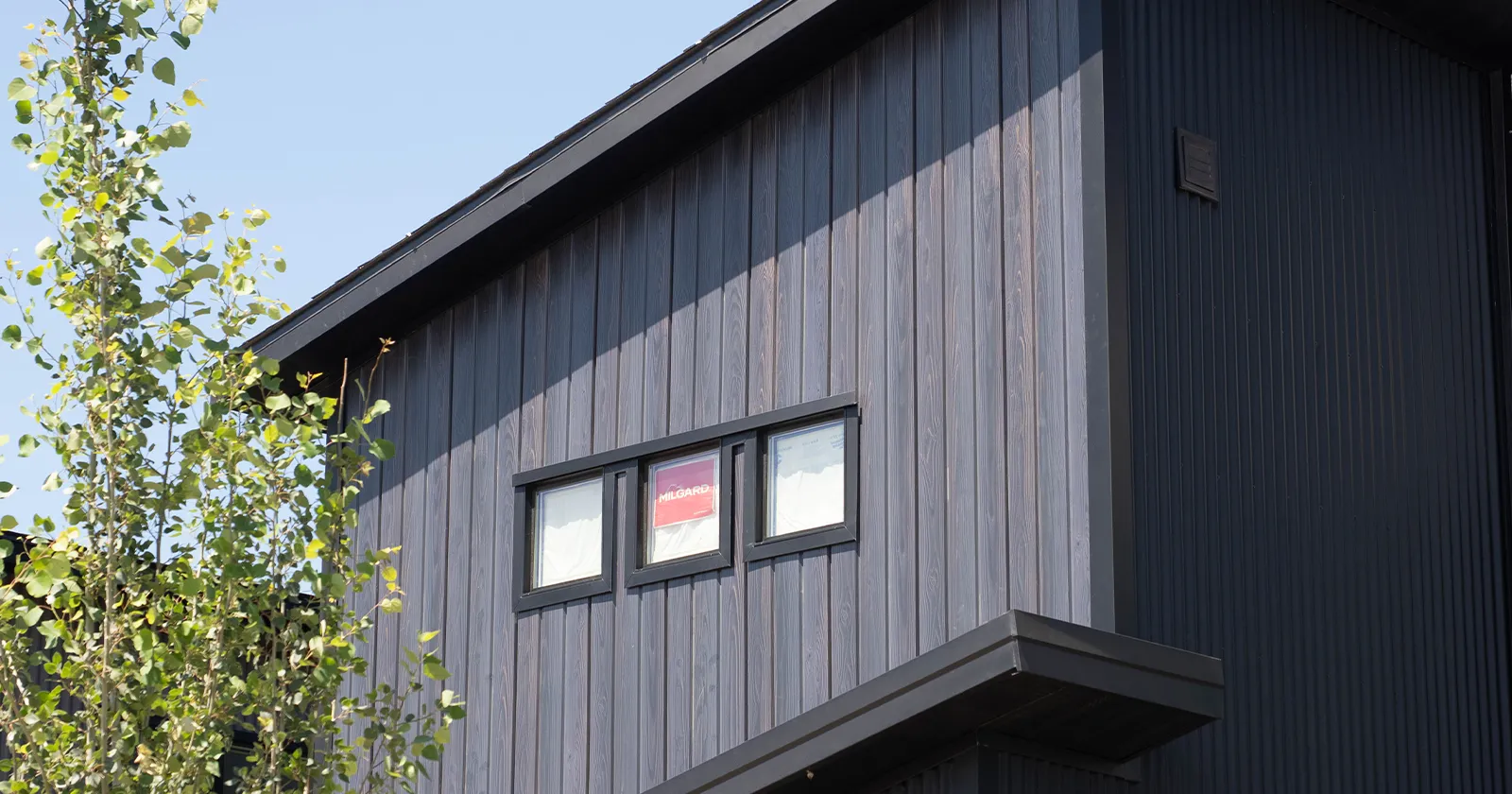
Windows are usually where a home loses the most energy, so the specification here has an outsized effect on efficiency. Kit Culture homes include Milgard Low-E windows with a U-value of U-0.29 as the standard spec.
Low-E, or low emissivity, refers to a microscopic coating on the glass that reflects heat back toward its source which keeps radiant heat inside during winter and out during summer, so your heating and cooling system doesn’t have to work as hard. U-value measures how quickly heat passes through the window, and unlike R-value, lower is better. Idaho and Washington building codes in colder climate zones typically require windows around U-0.30 or better, so the standard U-0.29 window meets or exceeds code across most of the region.
Heating and Cooling: An Efficient Mini-Split Heat Pump
Even a well-insulated home needs an efficient system to condition the air, and this is one of the strongest parts of a Kit Culture home’s energy story. Each kit includes a 5-zone mini-split heat pump system as standard equipment.
Mini-split heat pumps are among the most efficient heating and cooling systems available for residential use. Rather than burning fuel to generate heat, a heat pump moves existing heat from one place to another, which takes far less energy. In Idaho and Washington, where winters are cold but generally within the effective operating range of modern heat pumps, a properly sized mini-split handles both heating and cooling efficiently across the year. The zoned design also lets you condition only the rooms you’re using, which cuts waste further.
Energy Star Components Throughout
Efficiency adds up across the smaller pieces, too. The mini-split systems, appliances, and other energy-consuming components in a Kit Culture home are ENERGY STAR rated. Beyond lowering your monthly energy use, Energy Star–rated equipment contributes toward energy code compliance credits during permitting, which helps the whole home clear its efficiency requirements more easily.
Why “Matched to Your Climate” Is the Real Answer

The single most important thing to understand about kit home energy efficiency is that the specification is reviewed against your local requirements before the kit is packaged. You aren’t getting a generic, one-size-fits-all envelope that might fall short in a cold climate. The insulation R-value, the window performance, and the mechanical systems are all set to the standard your building address requires and the same benchmark a local contractor builds to on a conventional new home.
That’s what makes the honest answer to “are kit homes energy efficient” a confident yes. The efficiency isn’t left to chance or to whatever materials happen to be cheapest; it’s engineered to code for your location before anything ships.
What This Means for Your Energy Bills
A tight envelope, quality windows, and an efficient heat pump translate directly into lower operating costs month after month. For buyers weighing the long-term math, energy efficiency is a meaningful part of why a well-built kit home can be cheaper in the long run than the sticker price alone suggests. If you’re still getting oriented on how these homes work in the first place, our overview of what a kit home is is a good starting point.
The Bottom Line
Kit homes are energy efficient when their insulation, windows, and mechanical systems are specified to the local energy code, and that’s precisely how a Kit Culture home is built. Code-matched batt insulation, U-0.29 Low-E windows, an Energy Star mini-split heat pump, and efficient components throughout add up to a home that performs on par with quality new construction and keeps energy bills in check.
If you want to know the exact R-value and window spec for your specific build address, give us a call and we can tell you precisely what your location requires and what your kit will include.
Frequently Asked Questions
Are kit homes well insulated?
Yes. Kit Culture homes use batt insulation with an R-value matched to the building code for the home’s delivery address, so the insulation meets the same standard a local builder would use for new construction in your area.
Do kit homes meet energy code?
They’re designed to. The insulation, windows, and mechanical systems in a Kit Culture home are specified against your local energy code before the kit ships, and Energy Star–rated components contribute toward code compliance credits during permitting.
Are mini-split heat pumps efficient in cold Idaho and Washington winters?
Yes. Modern mini-split heat pumps operate effectively through the winter temperatures typical of Idaho and Washington, and because they move heat rather than generate it, they use significantly less energy than conventional systems.