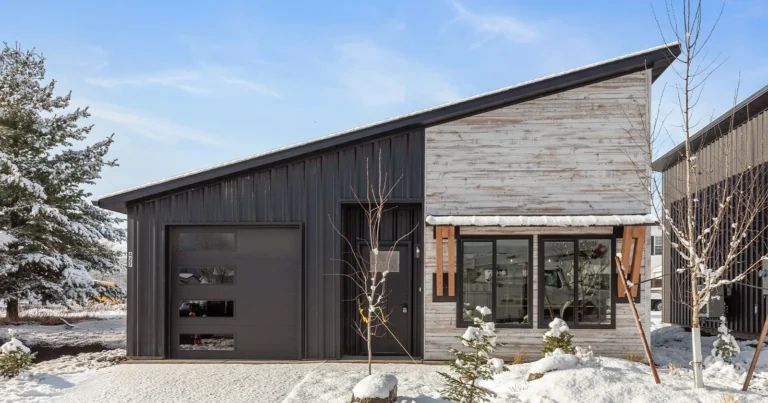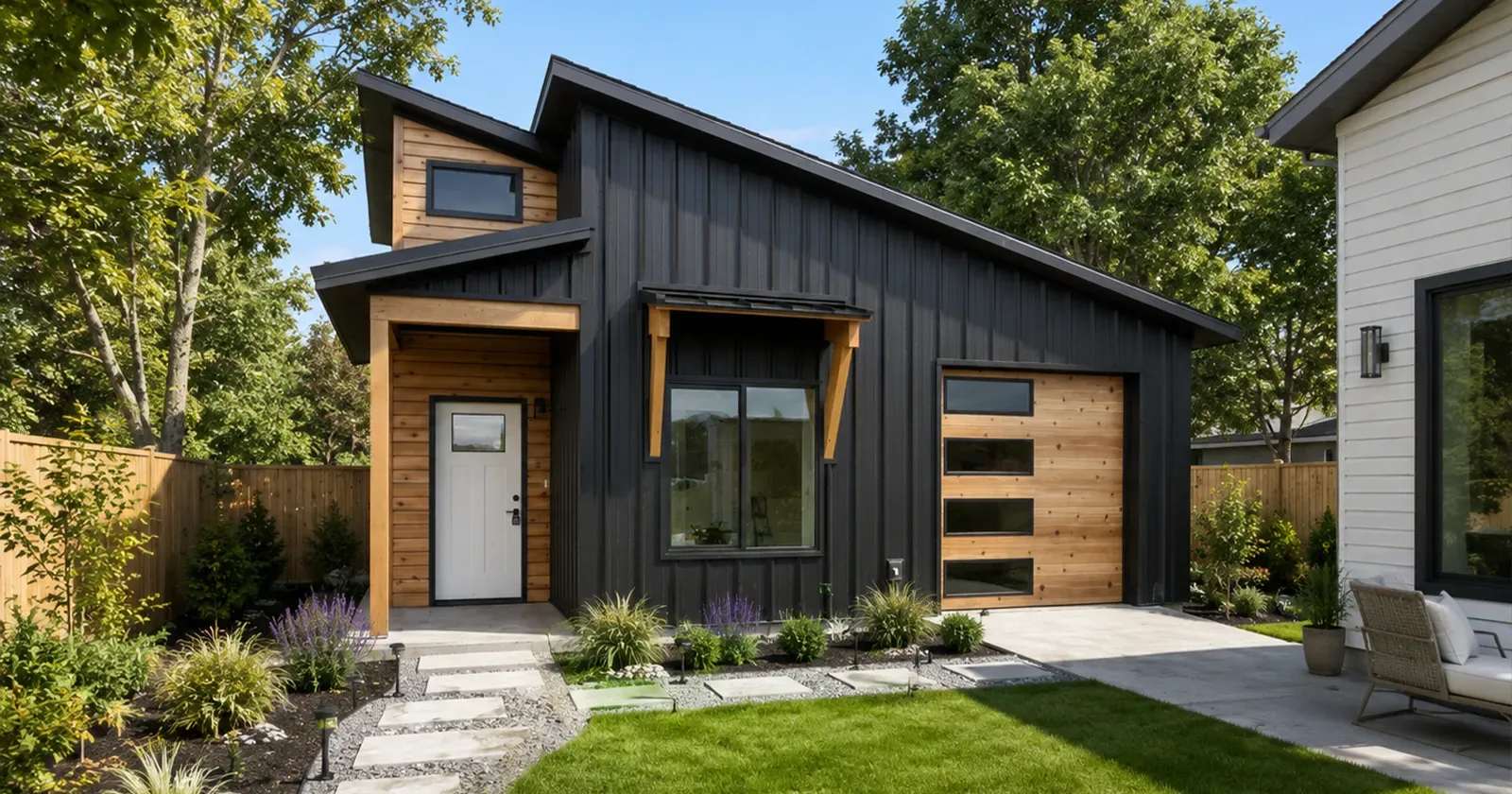
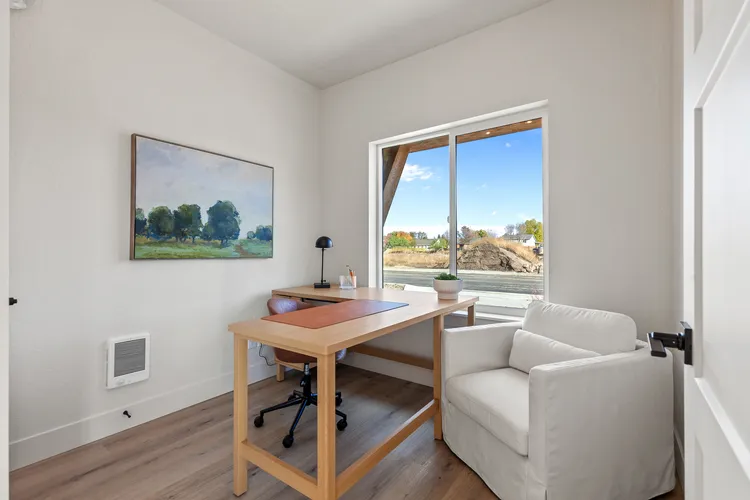
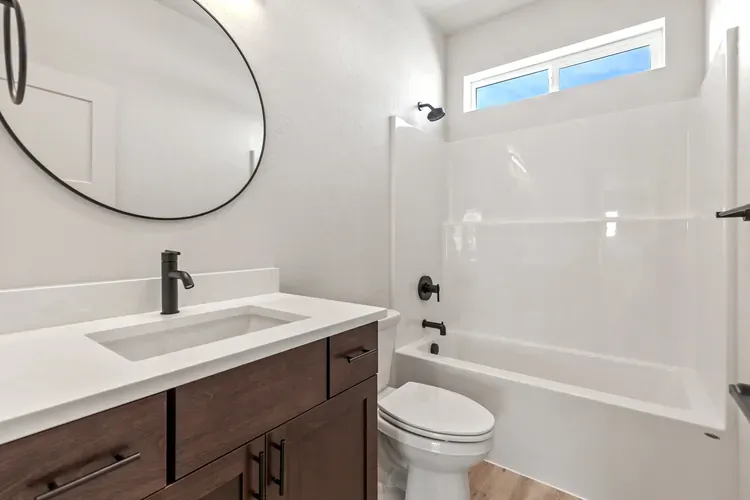
An ADU home office is a small, permanent second building on your lot that you work from instead of live in. If you run a business from a spare bedroom or the kitchen table, it gives the work its own front door, its own bathroom, and a commute of about forty feet.
The honest answer on whether it’s worth it: yes for some businesses, overkill for others. Here’s how to tell which one you are, and what to check before you build.
Why an ADU home office beats a spare room or a shed
A backyard shed office is cheaper, and if all you need is a desk and an outlet, it might be enough. An ADU is a different thing. It’s a code-built dwelling on a permanent foundation, with plumbing, heat, insulation, and a kitchen. That matters for three reasons:
- It’s comfortable year round. Kit Culture homes are specified with Milgard Low-E windows at U-0.29, a mini-split heat pump system, and batt insulation matched to local code. That’s a real building in a Spokane or Coeur d’Alene January, not a space heater in a box.
- It’s separate. Clients, calls, and deliveries don’t come through your living room, and you can close the door at the end of the day.
- It isn’t stuck being an office. Because it’s permitted as a dwelling, the same building can later house a parent, a grown kid, or a tenant. A shed can’t do that.
If you’re new to how these come together, start with our guide to what’s in an ADU kit and what you still buy.
What to check before you build
Home occupation rules
Getting the ADU permitted and being allowed to run a business in it are two separate questions. State law has made the first one easier in both states (see our guides to building an ADU in Idaho and the Washington ADU law). The second one is your city’s home occupation rules.
Those rules vary by city, and they usually care about the same handful of things: customer visits, employees who don’t live on the property, signs, parking, and noise. A bookkeeper or designer working alone rarely has a problem. A business with a steady stream of clients or staff might. Call your planning department and describe exactly what you do before you pick a model.
Taxes
The IRS allows a deduction for a separate structure that isn’t attached to your home, as long as you use it exclusively and regularly for your business. The details are in IRS Topic 509, Business Use of Home. “Exclusively” is the word that trips people up, so if the ADU doubles as a guest house, talk to your accountant before you count on the write-off.
Layout
Think about where a client would park, walk, and sit. Then think about what the building becomes later. The 799 sq ft Cottage kit home is the size most people look at for this, because it works as an office now and a full home later.
What it costs
An ADU costs the same to build whether you sleep in it or work in it. The kit is one line item, and site work, foundation, utilities, permits, and trades sit on top. Our breakdown of the total cost of a kit home walks through the whole number.
That’s also why the flexibility matters. If the business moves or you retire, the building can switch to earning ADU rental income instead of sitting empty.
ADU home office FAQ
Can I use an ADU as an office?
In most cases, yes. It’s your building. What’s regulated is the business activity, through your city’s home occupation rules, so check those for your type of work.
Is an ADU better than a shed office?
It’s better if you need plumbing, real heating and cooling, client space, or a building that can become housing later. If you only need a quiet desk, a shed costs less and an ADU is more than you need.
Can I meet clients in an ADU home office?
Often, within limits. Many cities cap how many customers can visit a home business or require off-street parking for them. Ask your planning department before you build around client visits.
The bottom line
An ADU home office makes sense when your business has outgrown the spare room and you want a building that keeps its value after the business changes. Check your city’s home occupation rules first, then size the building for what it’ll be in ten years, not just this year.
If you’re weighing one for a lot in Idaho or eastern Washington, give us a call.