ADU housing is a second, smaller home on the same lot as a house: a backyard cottage, a unit over a garage, or a converted basement with its own entrance. ADU stands for accessory dwelling unit, and it’s become one of the simplest ways to add a home without buying more land.
Whether it’s worth it depends on what you need the space for. Here’s what counts as ADU housing, who it’s for, what the rules look like in Idaho and Washington, and how a kit fits in.
What counts as ADU housing
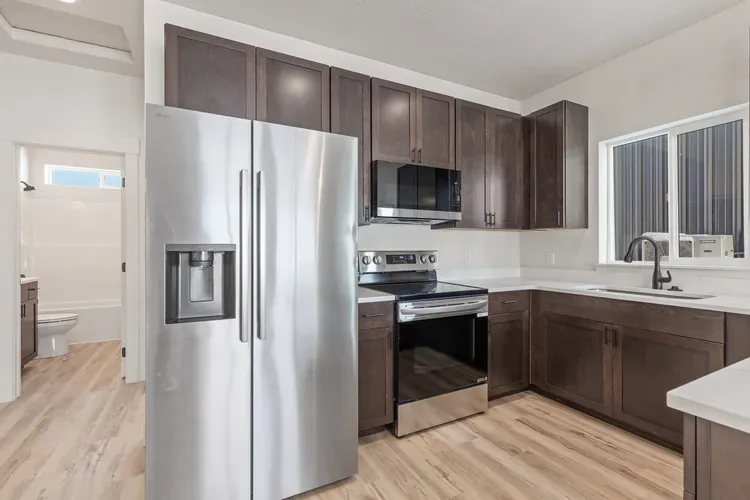
An ADU is a complete, independent home: its own kitchen, bathroom, sleeping space, and entrance. That’s the line between an ADU and a guest room. There are three common forms:
-
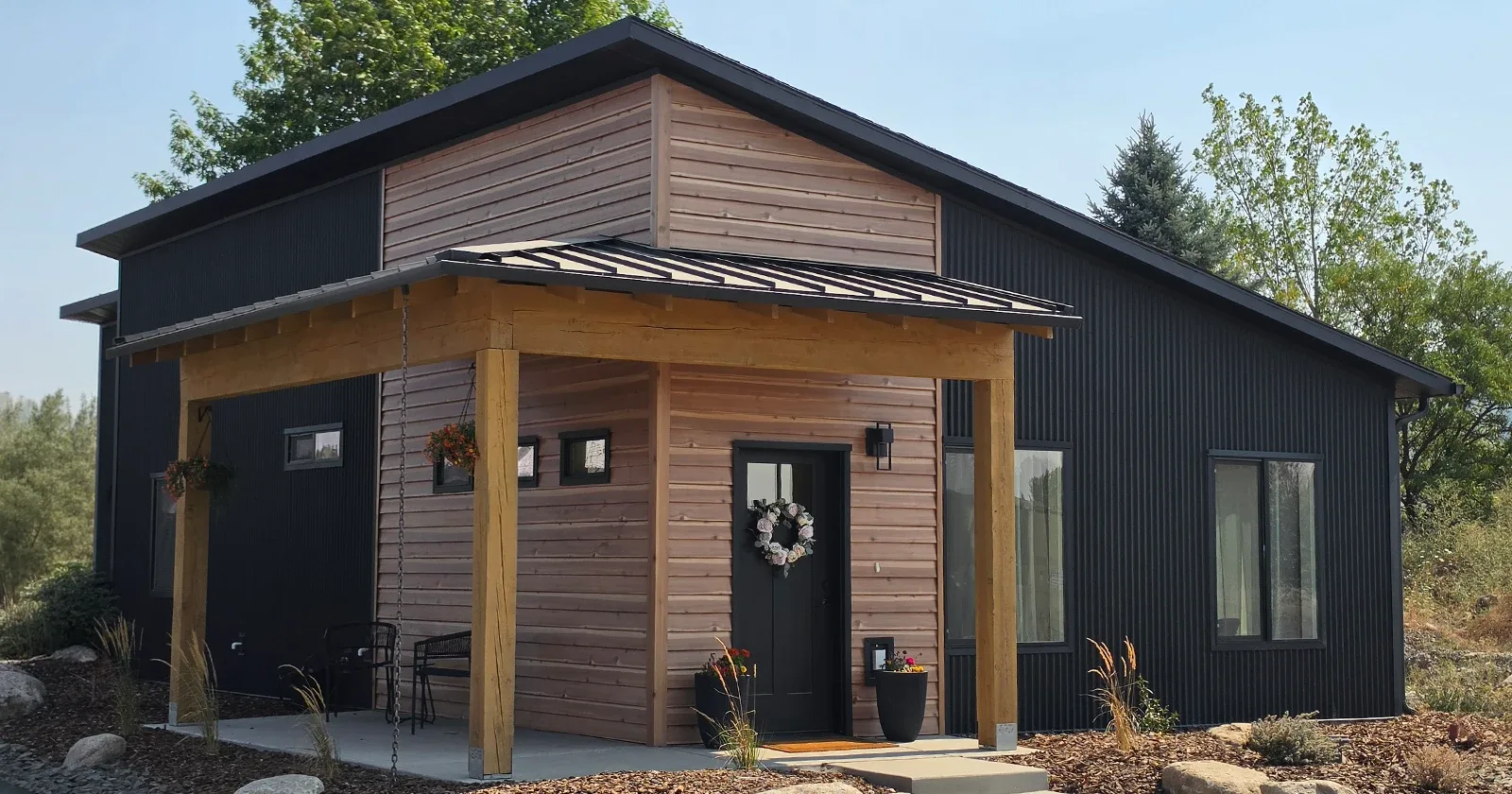
Detached. A separate building in the backyard. It’s the most private option and the one a kit home is built for.
-
Attached. An addition that shares a wall with the main house.
-
Conversion. A basement, attic, or garage turned into a unit.
Who ADU housing is for
Most people build an ADU for one of four reasons:
-
Family. An aging parent who wants to stay close but keep their own front door. See our guide to an ADU for aging parents.
-
Grown kids. A first place that doesn’t eat a whole paycheck in rent.
-
Rental income. A long-term tenant, or nightly guests where your city allows it. Our breakdown of ADU rental income walks through the payback math, and our guide to using an ADU as an Airbnb covers short-term stays.
-
Downsizing. Owners who move into the small home and rent out or hand off the main house.
Why ADU housing matters right now
ADUs add homes inside neighborhoods that already have roads, water, and sewer. There’s no new subdivision, no new street, and no land to buy. That’s a big part of why both Idaho and Washington have rewritten their rules to make ADUs easier to build.
Idaho
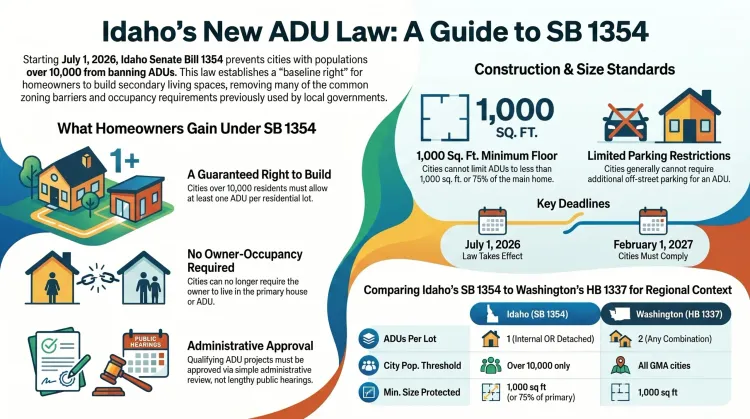
Idaho’s SB 1354 set statewide ground rules for ADUs. We’ve broken down what it means for homeowners in our guide to Idaho’s ADU law, SB 1354. Your city still sets details like setbacks and utility connections, so check locally before you design anything.
Washington
Washington’s HB 1337 requires most growing cities to allow ADUs and limits some of the conditions they can attach. The state Department of Commerce keeps a summary of the Washington ADU requirements, and our guide to Washington ADU law covers what homeowners can build now.
How a kit fits into ADU housing
A kit ADU is a precut, engineered package that’s built on a permanent foundation in your yard. It’s real property, permitted like any house, not a unit on a trailer. Our ADU kit guide covers what’s in the package and what you still buy.
Kit Culture’s smallest home is the 799-square-foot Cottage, a two-bedroom layout with a full kitchen and bath. The kit is priced at $99,500. Site work, the foundation, utility hookups, permits, and trade labor sit on top of that, and your lot usually moves the final number more than the model does.
ADU housing FAQ
Does an ADU need its own utilities?
It depends on your city and your lot. Some ADUs tie into the main house’s water and sewer lines, and others need their own connections. Ask your city early, because utilities are one of the biggest variables in the budget.
Is an ADU the same as a tiny house?
Not usually. Many tiny houses sit on wheels and are treated more like RVs. ADU housing is a permanent home on a foundation, permitted like any other house.
Can I live in the ADU and rent the main house?
Often, yes, but rules on who has to live where vary by city and state. Check your local code before you plan around it.
The bottom line
ADU housing puts a full, independent home on a lot you already own. Idaho and Washington have both made it easier to build one, but your city still controls the details. Start with what the space is for, check your local rules, then price the whole project, not just the building.
If you’d like help figuring out what fits on your lot in Idaho or eastern Washington, give us a call.