If you’re searching for an accessory dwelling unit for sale, the first thing worth knowing is that you’re shopping in a category where “for sale” covers wildly different things. Some listings are a finished building delivered on a trailer. Some are a set of drawings. Most of what’s genuinely worth buying sits in between: a complete kit of pre-cut, pre-engineered parts that gets assembled on a permanent foundation on your own lot.
Knowing which one you’re looking at is most of the work. Here’s how to tell them apart, what should be in the package, and what to confirm before you put money down.
The three things sold as an accessory dwelling unit for sale
Nearly every listing falls into one of three buckets, and they aren’t interchangeable.
A finished movable unit. Built entirely in a factory and trucked in complete. It’s fast, and it’s limited by what can legally travel down a road. Depending on how it’s built and titled, it may be classified as a manufactured home, which affects financing, appraisal, and in some cities whether you’re allowed to put it in a backyard at all.
Plans only. You’re buying drawings. Everything else, from sourcing lumber to finding a framer, is on you. It’s cheap up front, and the savings evaporate quickly if you aren’t already in the trades or willing to act as your own general contractor.
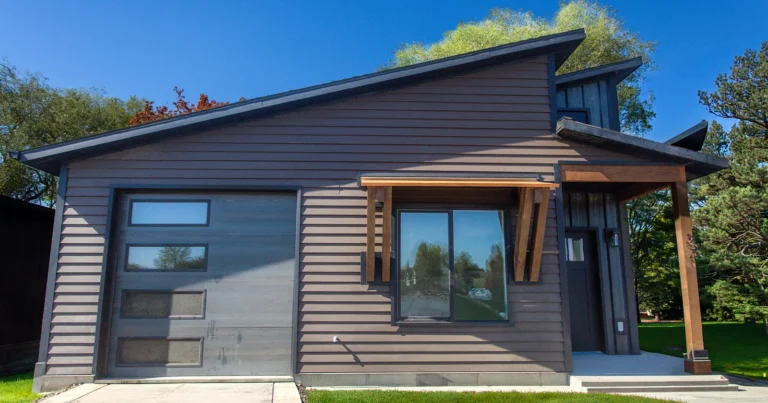
A kit. The structure arrives pre-cut, labeled, and engineered, then gets assembled on site on a foundation you pour. It’s a stick-built home by the time it’s finished, and it’s inspected and appraised like one. That’s what we build, and if the category is new to you, our complete guide to what a kit home is is the place to start.
The distinction matters most at the bank and at the permit counter. A kit home on a foundation is real property. A manufactured unit may not be, and that single fact changes your loan options, your resale, and sometimes your eligibility to build. We spell out the difference between a kit home and a manufactured home if you want the detail, because it catches more buyers off guard than anything else in this process.
What’s included, and what quietly isn’t
Ask for the inclusion list in writing. Every time. A package that looks cheaper than the one beside it is usually cheaper because something’s been left out, and the gap is rarely advertised on the page you’re reading.
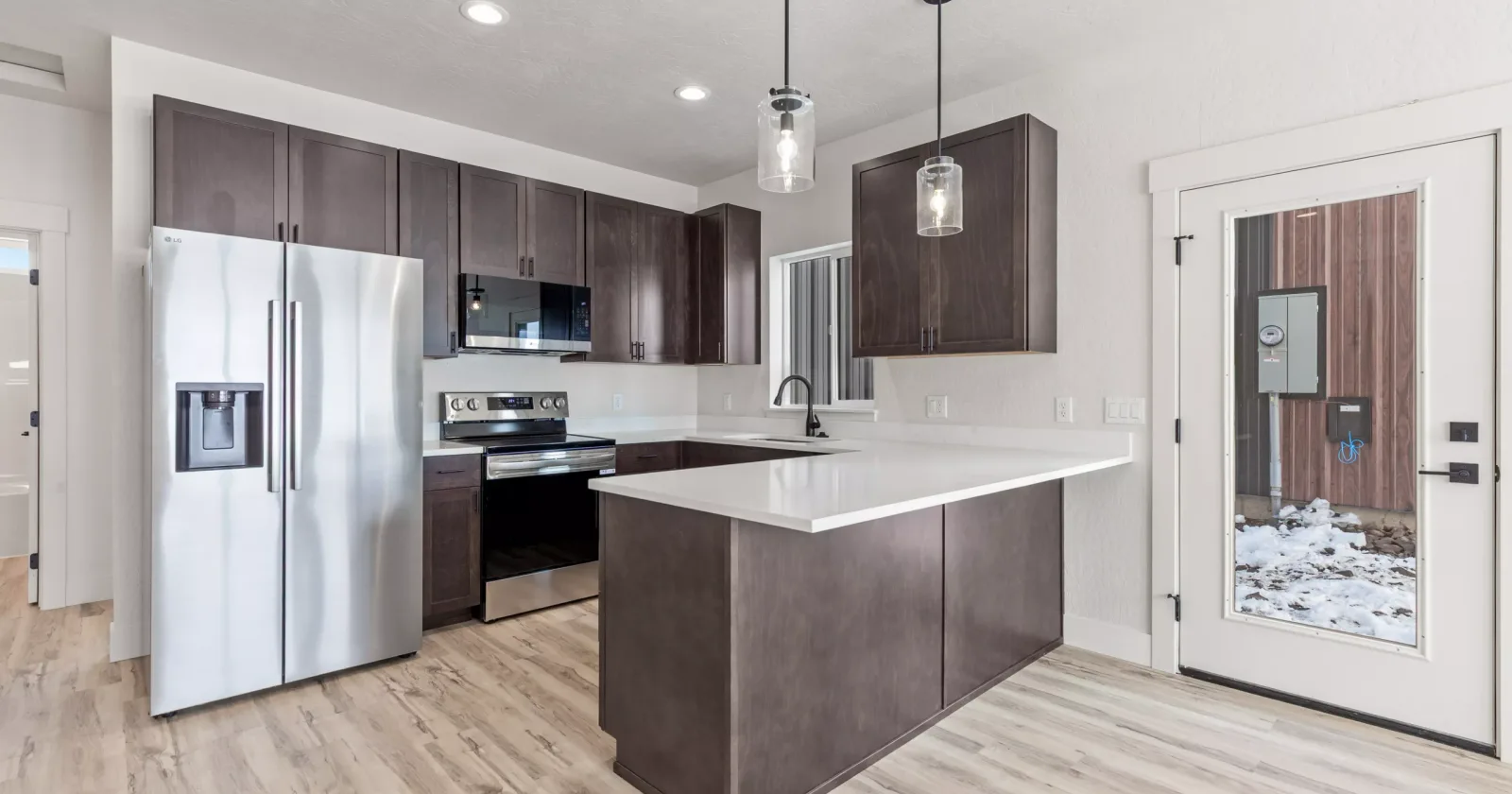
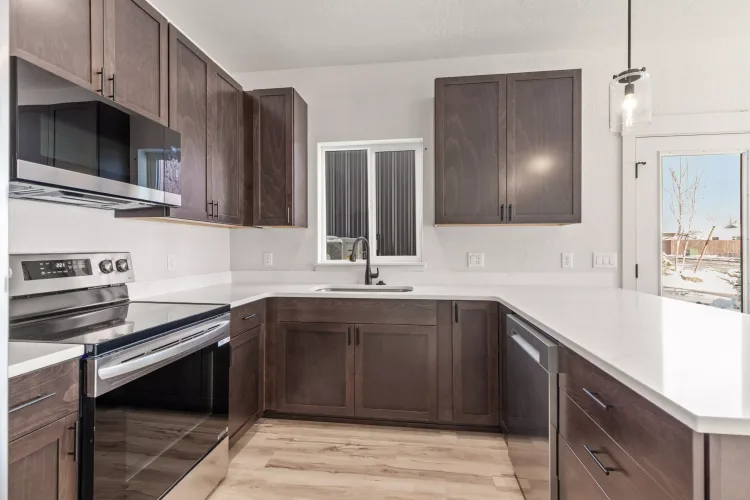
A complete package should cover the structural shell, the building envelope, insulation, windows and exterior doors, and the interior finish work: cabinets, counters, flooring, fixtures, and the heating and cooling equipment. Ours use Milgard Low-E windows, mini-split heat pumps, quartz counters, and stainless appliances.
Here’s what no kit includes, from any company: the foundation, the site work, the utility connections, permits, and labor. If a quote seems remarkably low against the others you’re holding, check whether it’s a shell price. A weathertight shell and a finished, occupiable home are separated by a large number and several months.
Will it fit your lot and your city’s rules?
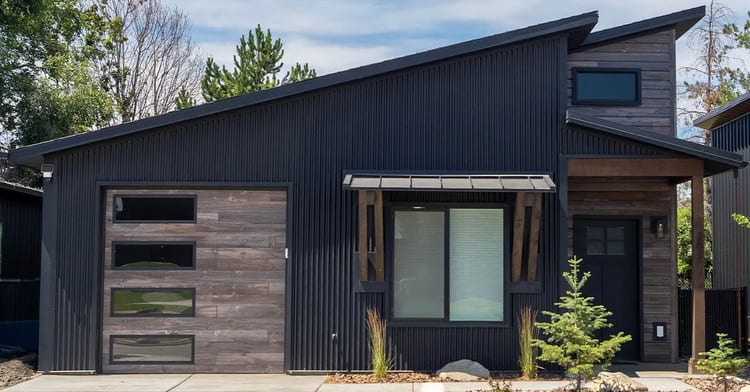
You can buy the best kit on the market and still be unable to build it. Size caps, height limits, setbacks, parking minimums, and owner-occupancy requirements are all set locally, and they vary between neighboring cities.
Both states have moved recently. Idaho’s rules are walked through in our statewide guide to building an ADU in Idaho, and Washington’s current framework is in the 2026 Washington ADU law guide. City rules stack on top of state law, so confirm with Spokane, Spokane Valley, Liberty Lake, Coeur d’Alene, Post Falls, or Boise directly before you commit to anything.
Then check the lot itself. Delivery access, slope, soil, and the distance to a sewer tap or a well shape your budget more than most buyers expect. A tight urban infill lot with no side access is a different project from a half acre with a driveway you can back a truck down, even if the building going on it is identical.
How to compare two listings honestly
Put them side by side on these points rather than on headline price:
- What’s in the package, itemized, in writing
- Whether the finished unit sits on a permanent foundation
- Which building code it’s engineered to, and whether it meets your local snow and wind loads
- What the windows, insulation, and heating equipment are, by make and spec
- What the delivery requires from your site, including truck access and unloading equipment
- What the warranty covers, and for how long
- Who’s responsible for pulling permits
Snow and wind loads deserve particular attention in the Inland Northwest. A design engineered for a mild coastal climate isn’t automatically approvable here, and finding that out during plan review is an expensive way to learn it. On the equipment side, ENERGY STAR is a reasonable neutral reference for comparing efficiency claims between sellers who each say theirs is the efficient one.
Who this tends to work for
The buyers who get the most out of an ADU usually have a specific job for it rather than a general sense that a second building would be nice. Housing a parent, giving an adult kid a landing spot, creating rental income, or replacing an office that’s currently a corner of the dining room are all concrete uses that make the size and layout decisions much easier.
That clarity also keeps the budget honest. It’s the projects without a defined use that tend to creep from a compact one-bedroom into something approaching a second house, at which point the economics stop looking like an ADU at all.
Common questions
Can I get a mortgage on an accessory dwelling unit for sale?
Usually not the way you’d finance a house purchase, because you’re funding a build rather than buying a finished property. Construction loans and home equity are the common routes. We go through the options in how to pay for a kit build.
Which size should I be looking at?
For most backyard projects, a compact one-level plan does the job. The Cottage is the model most of our ADU customers land on, and it’s worth looking at before you go bigger than you need to.
Is a prefab unit the same thing as a kit?
They overlap, and the terms get used loosely across the industry. Our guide to what a prefab ADU includes covers how the build sequence works once the parts arrive on your lot.
How long until someone can move in?
Longer than the framing timeline suggests, because permitting and inspections run on their own schedule regardless of how fast the shell goes up. Build your expectations around the permit counter, not the delivery date.
The bottom line
An accessory dwelling unit for sale can mean a finished trailer-delivered box, a stack of drawings, or a complete kit that becomes a permanent home on your property. They finance differently, permit differently, and appraise differently. Get the inclusion list in writing, confirm your city’s rules before you buy, and price the site work honestly instead of hoping it’s small.
If you’d like a second opinion on a quote you’re holding, give us a call. We’ll tell you what we see in it, no sales pitch.