If you’re researching ADU options in Idaho or eastern Washington, you’ve probably already noticed that custom-built detached ADUs take a long time. A lot of contractors quote 9 to 12 months as a realistic timeline. When you include design and permitting, the actual door-to-occupancy timeline for a custom ADU in North Idaho is often closer to 12 to 18 months.
A kit-built ADU from Kit Culture follows a very different path. Order to weather-tight typically takes 6 to 8 weeks. Order to Certificate of Occupancy runs 10 to 14 weeks in most cases. That’s not a promotional claim. It’s the result of manufacturing components in a controlled facility rather than sourcing and coordinating everything from scratch on a job site.
This article is about why the timelines are so different, where each approach actually spends its time, and what the timeline difference means practically for someone deciding between a custom build and a kit system.
The Headline Numbers
| Phase | Kit Culture ADU | Custom Stick-Built ADU |
| Design and engineering | Already done; confirm model and options in 1 to 2 weeks | Hire architect; full custom design takes 2 to 4 months |
| Permitting | 2 to 6 weeks with permit-ready stamped plans | 4 to 12 weeks; complex custom plans take longer to review |
| Site preparation and foundation | 2 to 6 weeks, runs parallel with manufacturing | 2 to 6 weeks |
| Manufacturing or material procurement | 4 to 6 weeks at the Post Falls facility | Ongoing throughout the build; delays cascade |
| Framing and exterior | Days to 2 weeks; pre-cut components, home is weather-tight fast | 4 to 8 weeks; framing from raw lumber on site |
| Rough mechanicals | 1 to 2 weeks | 3 to 6 weeks; scheduling subcontractors adds time |
| Insulation, drywall, interior finish | 3 to 6 weeks; all materials included and on site | 6 to 14 weeks; material lead times add delays |
| Final inspections and CO | 1 to 2 weeks | 1 to 3 weeks |
| Total to Certificate of Occupancy | 10 to 14 weeks | 9 to 18 months |
| The Key: Manufacturing and Site Prep Run in Parallel
The total timeline for a Kit Culture ADU is shorter than the sum of the phases because manufacturing and site preparation happen at the same time. While your components are being built in Post Falls, you’re pouring your foundation and working through permitting. This parallel structure is what compresses a multi-month process into 10 to 14 weeks. |
Why Custom ADU Builds Take So Long in Idaho
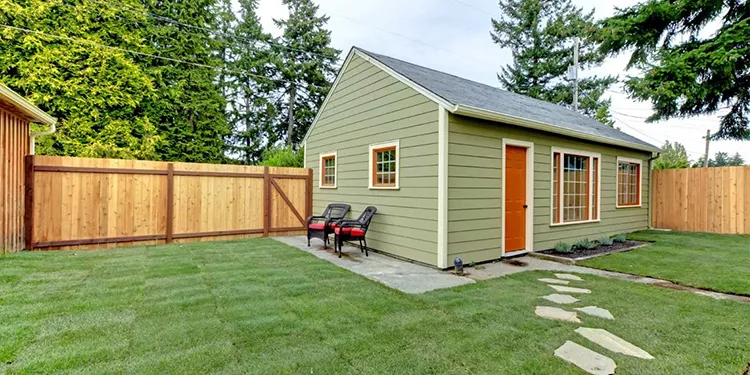
A 9 to 18 month timeline for a custom ADU isn’t incompetence on the contractor’s part. It’s the natural result of how custom construction works. Every phase starts from scratch, most phases happen sequentially, and delays in any single step push everything that follows.
| Why Custom ADU Builds Take So Long | Typical Impact | How a Kit-Built ADU Avoids It |
| Design from scratch | 2 to 4 months | Kit Culture’s engineering is done. You pick a model and confirm options in a week or two. |
| Permit review of complex custom plans | 1 to 3 months | Permit-ready stamped plans reduce review to 2 to 6 weeks. Reviewers have seen the engineering before. |
| Material lead times mid-build | 2 to 8 weeks per item | Every material in the package is included in the delivery. Nothing is sourced separately mid-build. |
| Subcontractor scheduling gaps | 2 to 6 weeks | A coordinated kit build with pre-cut components keeps crews moving faster with fewer scheduling gaps. |
| Weather delays during framing | 1 to 4 weeks | Framing is fast with pre-cut components. The home becomes weather-tight in days, protecting subsequent work. |
| Countertop and specialty material lead times | 4 to 10 weeks | Countertops, appliances, and finishes ship with the kit. No ordering, no waiting, no substitutions. |
| Architect and engineer revision cycles | 2 to 6 weeks | No revision cycles. The engineering is already stamped. No architect back-and-forth to manage. |
When you add these up across a custom build, 9 to 18 months isn’t surprising. What’s surprising is that people routinely underestimate it at the start. Most custom ADU projects in Idaho that a homeowner expects to take 6 to 8 months end up closer to 12 to 15. The design phase alone is often longer than the original estimate for the whole project.
The Kit Culture ADU Timeline, Phase by Phase
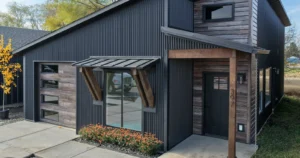
Weeks 1 to 2: Order and Confirm
You choose your model, finalize any options, and place your order. Kit Culture produces your stamped Idaho or Washington engineering drawings from that configuration. Within a week or two of placing your order, you have permit-ready plans in hand. The design phase that takes 2 to 4 months in a custom build is complete before manufacturing even starts.
Weeks 2 to 8: Manufacturing and Site Prep Run at the Same Time
This is the most important part of the timeline to understand. While your components are being manufactured at the Post Falls facility over 4 to 6 weeks, you’re simultaneously submitting your permit application, clearing and grading your site, and pouring your foundation. These activities run in parallel, not in sequence.
In a custom build, you can’t pour a foundation until you have plans. You can’t get plans until your architect finishes the design. You can’t source materials until plans are approved. Everything is sequential. In a kit build, the engineering is done the week you place your order, and manufacturing starts immediately. Parallel tracks replace sequential dependencies.
Delivery Day: Everything Arrives at Once
A single flatbed truck delivers your complete ADU package to your property. Every component that goes into the home, structural framing, roof and siding panels, windows, doors, interior finishes, appliances, and HVAC system, arrives on one truck, organized in the assembly sequence. There’s no waiting on a second delivery of countertops or a third delivery of windows. It’s all there.
The day your delivery arrives, your foundation should be cured and your crew should be ready to start framing. Coordinating this handoff is where good project management makes a real difference.
For insight on what to expect in the delivery, read our article on how kit homes are packed and delivered.
Days 1 to 14 After Delivery: Framing and Weather-Tight
With pre-cut components and detailed assembly instructions, a competent crew raises the frame, installs the metal roof panels, and gets the exterior cladding on in a matter of days. By the end of the first week or two after delivery, the ADU is weather-tight. Interior work can begin regardless of what the weather does outside.
This is where you feel the difference between a kit system and conventional framing most concretely. Conventional framing a small ADU from raw lumber typically takes 4 to 8 weeks. The same structure from pre-cut kit components takes a fraction of that time.
Weeks 3 to 10 After Delivery: Mechanicals, Drywall, Interior Finish
Rough electrical, plumbing, and HVAC rough-in typically take 1 to 2 weeks. Inspections follow. Insulation and drywall take another 1 to 2 weeks. Interior finish work, which on a conventional build is often where the longest delays occur because of material lead times, moves quickly because everything is already on site.
The quartz countertops, LVP flooring, LG appliances, and Milgard windows came with the delivery. No waiting 6 to 10 weeks for countertops from a fabricator. No back-ordering windows. No sourcing LVP from a flooring supply house. Everything is there when you need it.
Final Inspections and Certificate of Occupancy
Once interior finish is complete, final inspections are scheduled across building, electrical, plumbing, and mechanical trades. Scheduling these promptly, before you’ve actually finished each phase rather than after, keeps this from becoming a waiting-on-the-inspector delay. Most Kit Culture ADU builds receive their Certificate of Occupancy within 10 to 14 weeks of the original order date.
Why the Timeline Difference Has Real Financial Consequences
The speed advantage of a kit-built ADU isn’t just a convenience. It has measurable financial value that most people undercount when they’re comparing options.
Rental Income You’re Not Collecting Yet
If your ADU is intended as a rental unit, every month between your decision to build and your first rent check is income not collected. Here’s what that looks like at typical North Idaho rental rates.
| Monthly Rent | Custom Build Delay (12 mo.) | Kit Build Delay (3 mo.) | Income Difference |
| $900/mo | $10,800 not collected | $2,700 not collected | $8,100 in favor of kit |
| $1,100/mo | $13,200 not collected | $3,300 not collected | $9,900 in favor of kit |
| $1,300/mo | $15,600 not collected | $3,900 not collected | $11,700 in favor of kit |
| $1,500/mo | $18,000 not collected | $4,500 not collected | $13,500 in favor of kit |
The income comparison assumes a 12-month custom build delay versus a 3-month kit build delay. At $1,200 per month average North Idaho rent, the faster build timeline is worth roughly $10,000 to $12,000 in uncollected income for every 9 months of delay you avoid.
Carrying Costs During Construction
If you’re financing the ADU with a construction loan, you’re paying interest on drawn funds from the day construction starts. A 12-month build at 8 percent interest on a $150,000 draw generates roughly $12,000 in interest. A 3-month build generates roughly $3,000. The difference in carrying costs alone covers a significant portion of the price gap between a kit and a custom build in many scenarios.
Family Use Cases Have Their Own Timeline Value
If the ADU is for an aging parent, an adult child, or a caretaker, the question isn’t just financial. The sooner the ADU is ready, the sooner your family situation stabilizes. A 12-month timeline means a year of navigating a situation that isn’t sustainable yet. A 3-month timeline means the answer is in place before the end of the next quarter.
What Can Slow a Kit Build Down
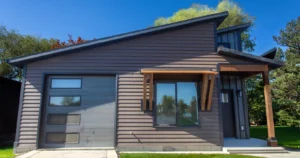
The 10 to 14 week timeline is achievable, but it’s not automatic. Here are the things that push it longer.
- Permit delays from an incomplete first submittal. Submit a complete, accurate application the week you receive your stamped plans. Don’t wait for the foundation to be poured first.
- Foundation not cured at delivery. Coordinate your pour date with Kit Culture’s production schedule so your foundation is ready and cured when the truck arrives.
- Crew not scheduled for delivery week. Lock your contractor’s schedule before manufacturing starts. A gap between delivery and the start of framing adds weeks.
- Inspection scheduling delays. Book each inspection before the prior phase is finished. Don’t finish rough electrical and then call to schedule the inspection. Call when you’re two days out.
- Utility connection delays. In some North Idaho areas, getting new electrical service or a sewer connection can take 4 to 8 weeks from the utility. Start this process early, ideally before you even pour the foundation.
Every one of these delays is avoidable with a small amount of advance coordination. The homeowners and contractors who consistently hit the low end of the timeline do so not because they got lucky, but because they ran parallel tracks instead of sequential ones and stayed a phase ahead on scheduling.
Is a Kit-Built ADU Right for Your Situation?
Timeline is one of the strongest arguments for a kit-built ADU, but it’s not the only factor in the decision. Here’s an honest look at when the kit path makes the most sense.
Kit-Built Makes the Most Sense When:
- You need the ADU producing income or in use within 6 months and a custom build timeline would cost you more in lost income than the price difference between options.
- You’re managing a family situation that needs to be resolved this year, not next year.
- Cost certainty matters as much as speed. Kit pricing is fixed at order. Custom build pricing drifts.
- Your site is relatively straightforward and you have reasonable access for a flatbed delivery truck.
- You don’t need a completely custom layout that falls outside the available models.
Custom Build May Make More Sense When:
- You need a layout or architectural design that isn’t available in any kit system and the design specifics matter enough to justify the longer timeline and higher cost.
- Your site has significant access constraints that make flatbed delivery complicated.
- You’re in a jurisdiction where a custom design is required to meet specific local historic district or design review requirements.
For most Idaho and eastern Washington homeowners adding a backyard ADU for rental income, a family member, or both, the kit-built path aligns better on timeline, cost, and simplicity. The custom option makes sense when the design requirements can’t be met by an available model.
Ready to Get Your ADU on a Realistic Timeline?
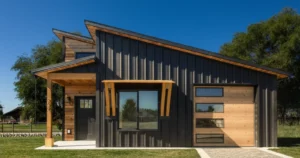
Kit Culture’s ADU-specific models are designed for exactly this use case: detached backyard placement in Idaho and eastern Washington, with a timeline that gets you to occupancy in 10 to 14 weeks rather than 9 to 18 months.
Every Kit Culture ADU ships permit-ready with stamped Idaho and Washington engineering drawings, pre-cut structural components, and the full package of premium finishes already included. You’re not sourcing materials mid-build, waiting on countertop lead times, or coordinating four different suppliers. One truck. One delivery. One clear assembly sequence.
| ADU Models Launching in 2026
Kit Culture is developing three ADU-specific models for detached backyard placement, priced between $69,000 and $75,000 depending on size and options. Made in Post Falls, Idaho. Permit-ready for every state we deliver to. 40-year structural warranty. |
| How Fast Could Your ADU Be Ready?
Give us a call or visit kitculturehomes.com. Tell us about your property and what you’re trying to accomplish, and our team can give you a realistic picture of what your specific project looks like: the permitting timeline in your city, the site prep required, and what it takes to hit the 10 to 14 week window. |
Frequently Asked Questions
How long does it take to build an ADU in Idaho?
A traditional custom-built detached ADU in Idaho typically takes 9 to 18 months from design to Certificate of Occupancy. That timeline includes 2 to 4 months of design and engineering, 1 to 3 months of permitting, and 6 to 12 months of construction. Material lead times and subcontractor scheduling are the most common causes of extension beyond the original estimate.
How fast can a Kit Culture ADU be built?
A Kit Culture ADU can typically be ordered, manufactured, delivered, assembled, and issued a Certificate of Occupancy in 10 to 14 weeks. The home is usually weather-tight within 1 to 2 weeks of delivery. The full interior build, including finish work and inspections, runs another 6 to 8 weeks.
What makes a kit-built ADU faster than a custom build?
Three main things. First, the engineering is already done: no 2 to 4 month design phase. Second, manufacturing and site preparation run in parallel: while your foundation is being poured, your components are being built. Third, all materials arrive on one truck: no mid-build delays waiting on countertop fabricators, appliance deliveries, or flooring suppliers.
Can I really be weather-tight in days?
Yes. Because the framing components are pre-cut and the assembly instructions are step-by-step, a capable crew can raise the frame and install the metal roof and exterior panels in a matter of days. The home is protected from the elements well before interior work begins.
How long does permitting take for an ADU in Idaho?
Permitting timelines vary by city. In Post Falls, a complete residential ADU permit application typically takes 2 to 4 weeks. In Coeur d’Alene, 4 to 8 weeks is typical. In Boise, 4 to 8 weeks is common as well. Rural county permits can sometimes move faster. Kit Culture’s permit-ready stamped plans reduce review time because the engineering is consistent and previously reviewed.
What’s the financial value of building an ADU faster?
If your ADU is intended as a rental, every month of build delay is income not collected. At $1,200 per month average North Idaho rent, a 9-month timeline advantage over a custom build is worth roughly $10,800 in rental income. Add construction loan interest savings and the financial value of the faster timeline is typically $10,000 to $15,000 or more compared to a year-long custom build.
What can slow down a kit ADU build?
The most common causes of timeline extension are permit delays from incomplete initial applications, a gap between delivery and framing start because the crew wasn’t scheduled in advance, inspection scheduling delays because the next inspection wasn’t lined up before the current phase finished, and utility connection delays in areas where new electrical service or sewer connections have long wait times.
Does a kit ADU require a building permit?
Yes. A kit-built ADU goes through the standard residential permit process, including a building permit, rough inspections at each mechanical trade, and a final inspection before a Certificate of Occupancy is issued. What Kit Culture’s permit-ready plans change is the permit review timeline, not the requirement for permits.
Can a contractor build a Kit Culture ADU, or do I have to do it myself?
Both options work. Kit Culture sells direct to homeowners and also through a contractor pricing program that gives local GCs trade pricing. Most Kit Culture buyers use a local general contractor for the build. The contractor manages the site work, local permitting coordination, and assembly. Kit Culture handles everything that arrives on the truck.
How does the Kit Culture ADU timeline compare to a modular ADU?
Modular ADUs arrive nearly complete and can be set quickly once the site is ready, often within a few days. However, factory lead times for modular units from distant manufacturers can be 2 to 4 months. Kit Culture manufacturing in Post Falls runs 4 to 6 weeks, and delivery to Idaho and eastern Washington is fast. The total timelines are often comparable, though the on-site processes are different.