If you’re looking at kit homes for sale, here’s the honest answer up front: that phrase covers three pretty different products, and they don’t cost the same, finance the same, or permit the same. Working out which one a seller is offering you is the most useful thing you can do before you start comparing numbers.
Here’s what’s usually behind the listing, what a real kit package should spell out, and what you’ll still need to budget for on top. No sales pitch, just the information you need.
What “kit homes for sale” usually means
When you search that phrase, you’ll get three very different things back:
- A set of plans. You’re buying drawings, not materials. Everything else is on you and your builder. These are the cheapest listings you’ll see, and the price gap is why.
- A finished unit delivered on a trailer. It shows up built. Depending on how it’s constructed and titled, it may be treated as a manufactured home rather than a house, which changes how it’s financed, taxed, and permitted.
- A true kit. Pre-cut, engineered components that get assembled on a permanent foundation on your lot. It’s a site-built house at the end of it, and it’s financed and permitted like new construction.
Kit Culture sells the third kind. If you want the longer version of that distinction, we’ve covered what a kit home is in detail, plus a side-by-side on kit homes vs. manufactured homes, which is the comparison most shoppers get wrong the first time around.
What a kit package should spell out
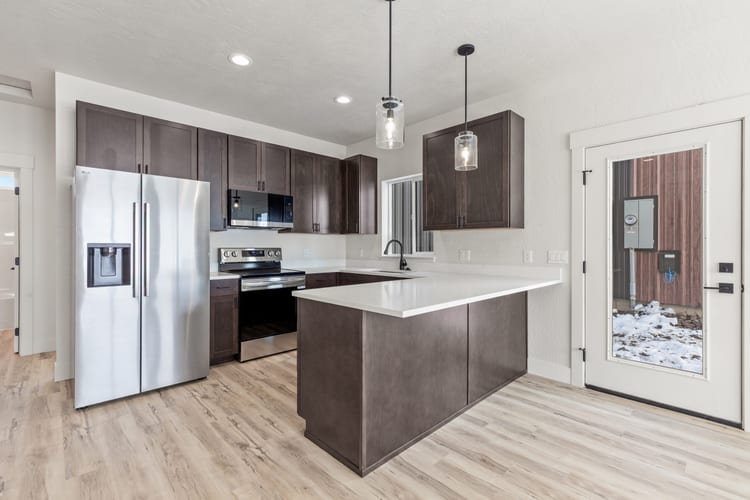
This is where listings get vague, and it’s where you should push hardest. A package list that just says “materials included” isn’t telling you anything. Ask for the itemized version, and check that it names the parts that drive both cost and comfort:
- The structural package. What’s pre-cut and engineered, and what still has to be sourced locally.
- Windows. Kit Culture homes use Milgard Low-E windows at U-0.29. Whatever brand you’re quoted, get the U-factor in writing, because it drives your heating bills for the life of the house.
- Insulation. Ours is batt insulation matched to local code. “Meets code” is the floor, not a selling point, so ask which code year and which climate zone they’re quoting.
- Heating and cooling. A mini-split heat pump system is standard in our homes. Ask whether HVAC is in the package at all, since plenty of kits leave it out.
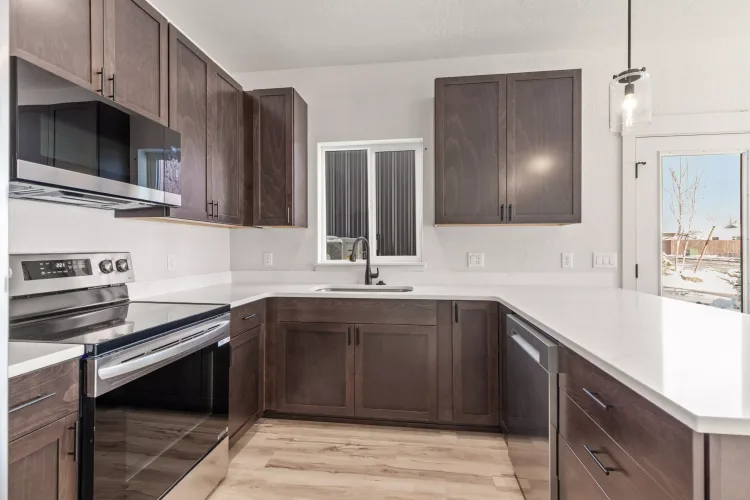
- Interior finishes. Cabinets, counters, flooring, fixtures. Some kits include them, some hand you a shell.
If you want a sense of where the finish level lands before you commit, we walk through it in what the finishes inside a kit home really look like. It’s worth a look, because “kit” makes a lot of people picture something rougher than what shows up.
What the kit price doesn’t cover
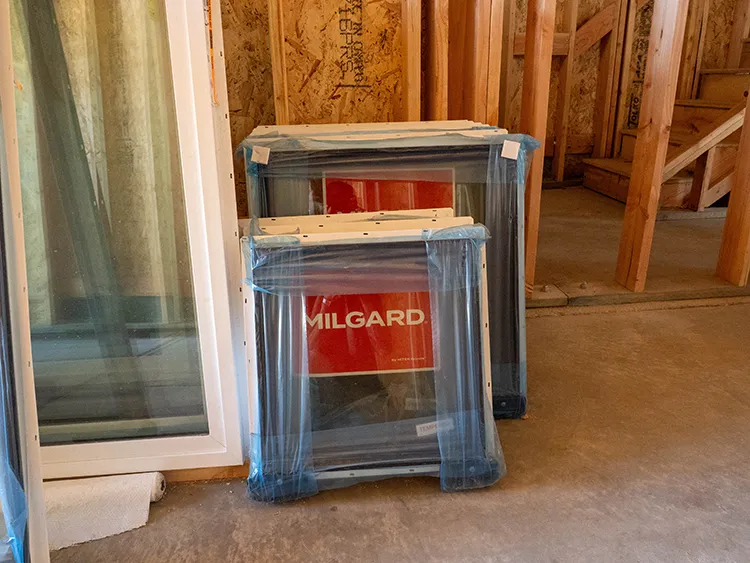
This is the part that surprises people, so it’s worth being blunt. The kit price is not the price of a finished house. On top of it you’re looking at:
- Land, if you don’t already have it
- Site work and the foundation
- Utility connections, whether that’s a hookup or a well and septic
- Permits and impact fees, which vary a lot between jurisdictions
- Labor, unless you’re doing the assembly yourself
- Delivery to your site
None of that is a hidden fee. It’s just work that sits outside the box, and every kit seller has the same list whether or not they put it in the listing. We’ve broken the whole thing down in our guide to the total cost to build a kit home after hiring a contractor, and if you’re working out how to pay for it, kit home financing covers how construction loans handle a kit build.
How to compare kit homes for sale

Once you’ve got two or three real quotes, here’s what separates them:
Is it engineered for your local code? Snow load in North Idaho isn’t snow load in the Willamette Valley. A kit that isn’t engineered for your county is a kit your building department can reject. The International Code Council publishes the model codes most jurisdictions here adopt, but your county’s amendments are what govern.
Will a lender treat it as a house? If it’s assembled on a permanent foundation and inspected as site-built, it appraises and finances like any other new home. If it’s titled as a manufactured home, that’s a different loan product and a different resale picture.
What’s the delivery reality? Lead time, what arrives on the truck, and who’s responsible for offloading. We’ve written up how kit homes are packed and delivered so you know what to expect on the day.
Does the energy performance hold up? Window U-factor, insulation values, and the heating system together decide what you’ll pay to live there. ENERGY STAR is a reasonable benchmark to hold quotes against.
Which Kit Culture model fits
We build three:
- The Cottage. Our smallest footprint, and the one most people are after for a backyard unit or a downsizing build. Details are in the Cottage kit home.
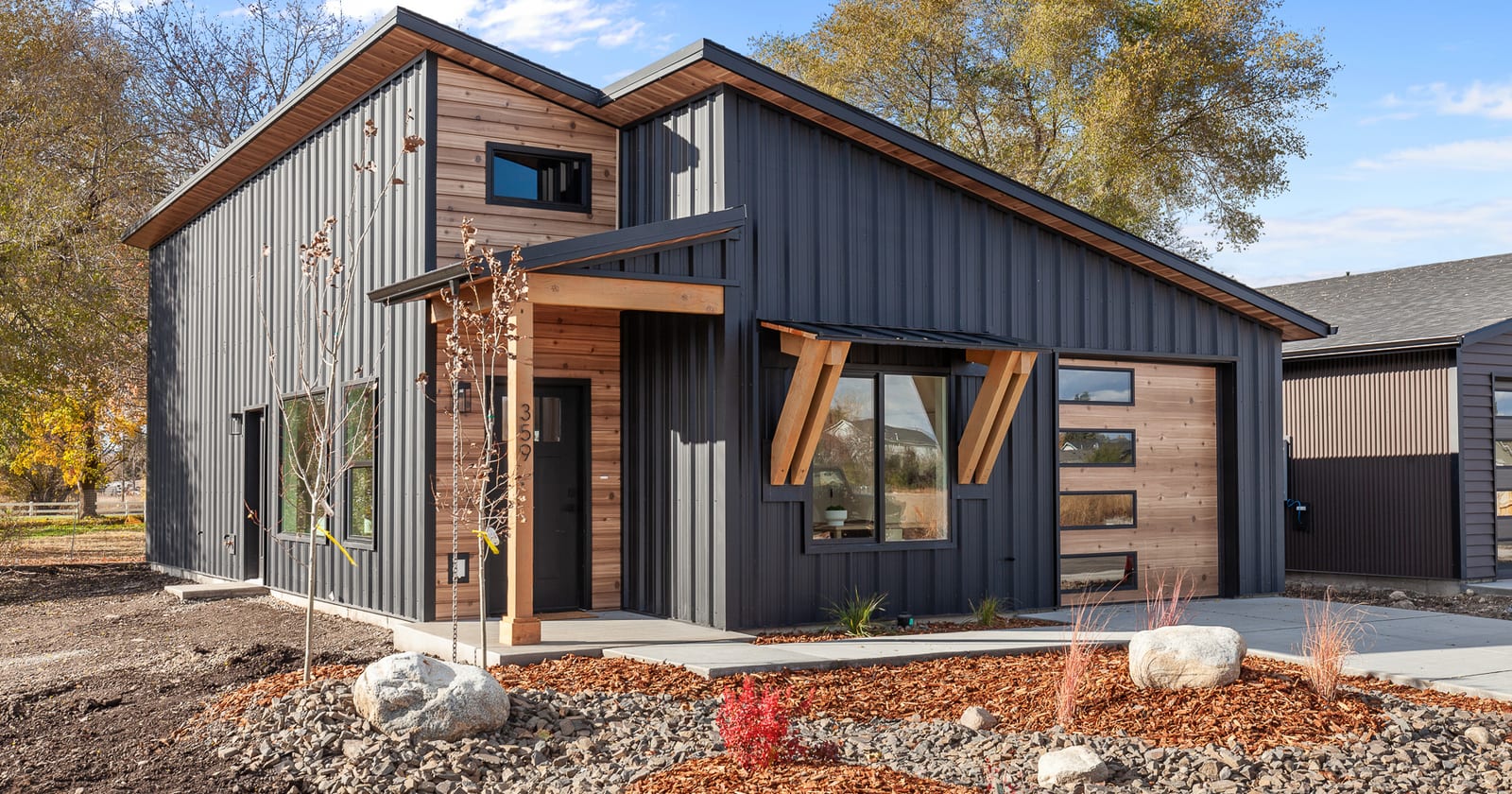
- The 994 Modern. A single-level modern plan with black metal and wood siding.
- The Family Size. Our two-story plan, covered in the family-size two-story kit home.
If you’re building in our home region, kit homes in Idaho covers the zoning and permitting side, and there’s a companion guide for kit homes in Washington State.
Common questions
Are kit homes for sale cheaper than building traditionally?
Usually on the materials and labor side, because the components arrive pre-cut and the framing goes up faster. Whether it’s cheaper overall depends on your land, site work, and how much of the labor you’re paying for. We put real numbers against it in kit home vs. stick-built cost over time.
Can I get a mortgage on one?
Yes, if it’s built on a permanent foundation and inspected as a site-built house, which ours are. Most buyers use a construction loan that converts to a standard mortgage once the home’s finished.
Do I have to assemble it myself?
No. Plenty of buyers hire a general contractor for the whole build. Others take on part of it and sub out the rest. The kit doesn’t require DIY, it just makes DIY more realistic than it’d be with a conventional build.
How long does it take?
It depends on your permitting timeline and your crew more than on the kit. We’ve laid out the sequence in how long it takes to build a kit home.
The bottom line
Most of the confusion around kit homes for sale comes from three different products sharing one search term. Once you know whether you’re being sold plans, a finished trailer-delivered unit, or a true kit on a permanent foundation, the quotes start making sense and you can compare them honestly.
If you’re weighing options in Idaho or Eastern Washington and want a straight answer about what a package would include on your lot, give us a call. We’ll tell you what’s in it and what isn’t.