Contemporary house kits have come a long way from the utilitarian boxes most people picture when they hear ‘kit home.’ Today’s modern kit homes feature clean architectural lines, large windows, open floor plans, and exterior profiles that hold their own against custom-designed builds. If you have been holding off on kit homes because you thought the design options were limited, this guide is for you.
The Old Reputation vs. the New Reality
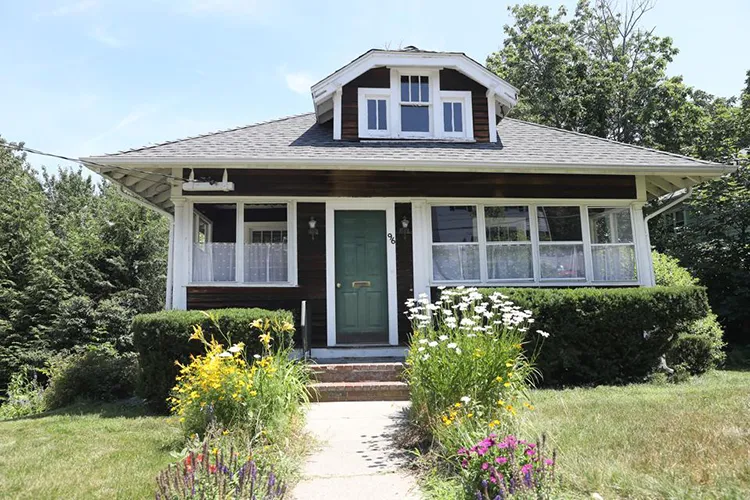
The kit home industry carried a certain aesthetic for decades: simple gabled roofs, small windows, cookie-cutter exteriors. That image made sense for the era. The goal was affordable, functional shelter built fast. Design was secondary.
That has changed significantly. Today’s modern kit homes are engineered around the same visual priorities that drive custom architecture: proportion, material quality, natural light, and cohesive exterior detailing. The difference is that you get those results without the 18-month custom build timeline or the custom build price tag.
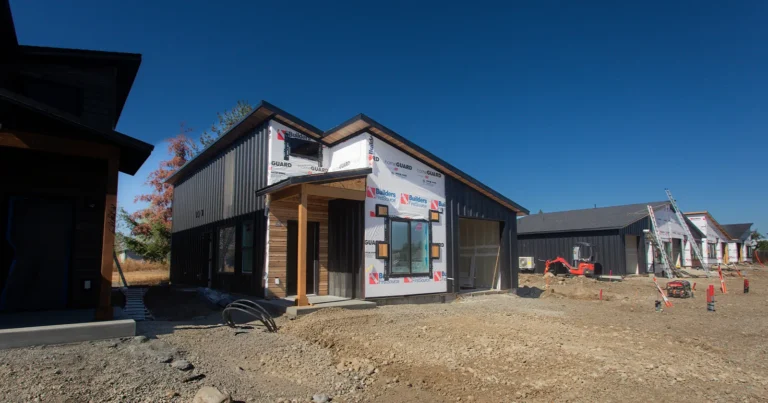
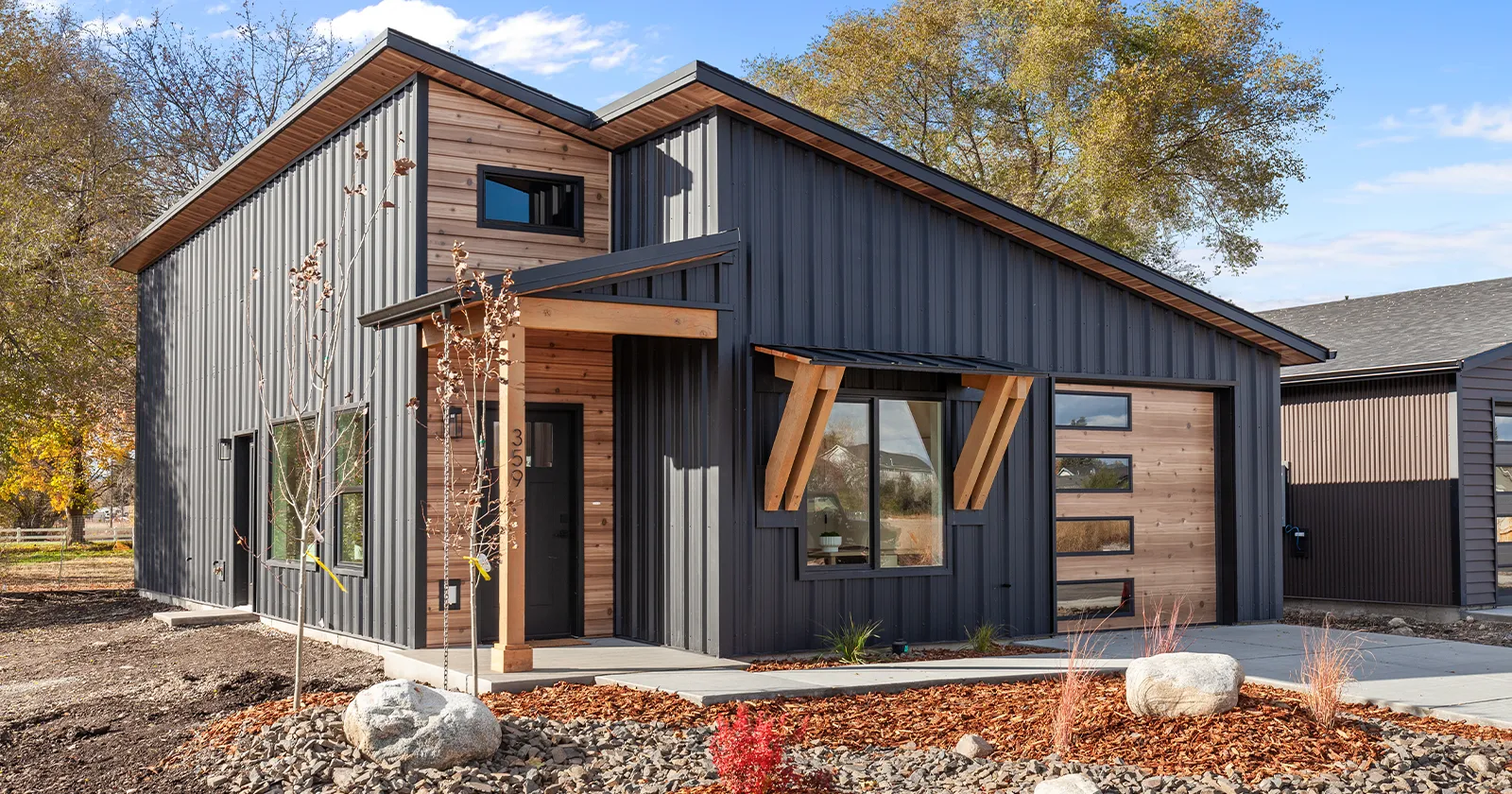
Kit Culture’s homes are a good example of where the category has landed. Three available models, each with clean contemporary proportions, integrated garages, a standing seam metal roof, and over 100 color and panel combinations for the exterior. The look is intentional and it photographs well, which matters when you are building something that affects your property value and your neighbors’ first impressions.
What Makes a Kit Home Look Modern
Contemporary residential design has a few defining visual characteristics. Modern kit homes that execute well on these tend to blend into design-forward neighborhoods without standing out as kit-built.
Roof Profile
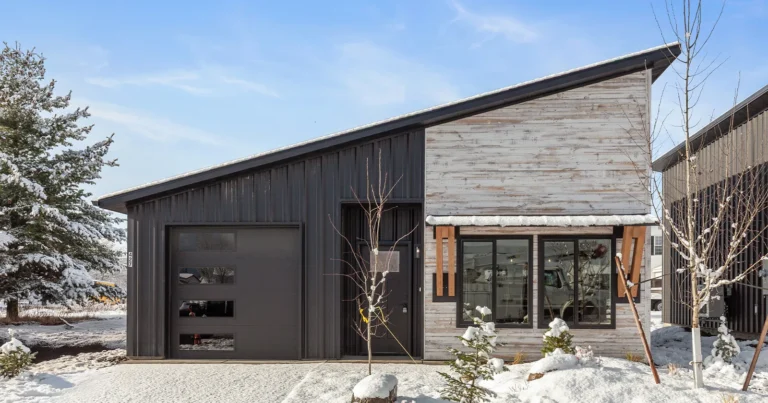
A low-pitch or flat-pitch roof reads as modern almost immediately. Steep gabled roofs tend to signal a more traditional or rustic aesthetic. Kit Culture’s models use a standing seam metal roof with a clean, low-profile look that aligns with current architectural trends. The metal material also contributes to the aesthetic in ways that asphalt shingles typically do not: sharper lines, a more refined surface, and no granule bleed over the fascia over time.
Exterior Cladding and Color
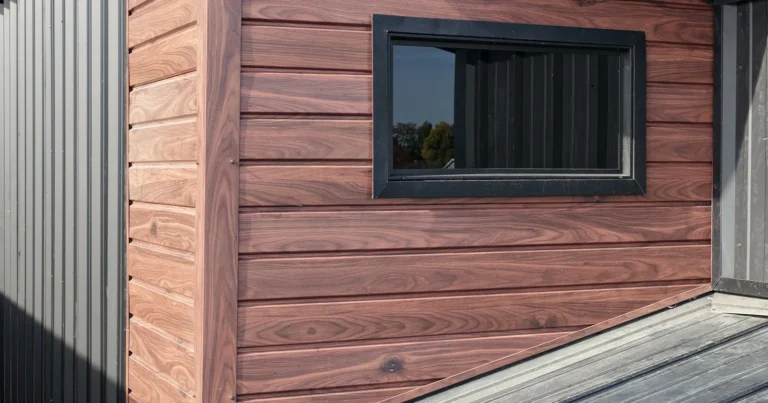
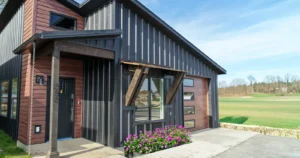
Traditional kit homes leaned heavily on painted wood siding or vinyl. Contemporary exterior design has moved toward textured metal panels, fiber cement, and mixed-material facades. Kit Culture ships steel siding panels in a wide range of textures and colors, with over 100 combinations available through the online 3D configurator. The result is an exterior that can read as modern industrial, Pacific Northwest contemporary, or clean farmhouse depending on the color and panel style you select.
One thing worth knowing: paint, stain, and caulk are not included in the kit. That is intentional. Rather than locking you into a specific color scheme, the materials ship ready for your finish choices so you have full control over the final look. Your contractor handles paint and finish application locally.
Window Placement and Size
Nothing dates a house faster than small, scattered windows. Modern residential design uses windows strategically: larger openings, grouped placements, and orientation toward views or natural light. Kit Culture’s homes include Milgard windows throughout with Low-E glass, black exterior frames, and white interior frames. The black exterior framing is a contemporary detail that pops against lighter siding colors and gives the home a finished, intentional look.
Open Interior Floor Plans
Contemporary homes tend to prioritize flow between living spaces over compartmentalized rooms. Kit Culture’s floor plans are built around this principle. The Compact model at 799 square feet, the Modern at 994 square feet, and the Family at 1,360 square feet all use open-concept layouts that make the square footage feel larger than it is. High ceilings and natural light from well-placed windows amplify that effect.
Kit Culture’s Three Models: A Design Overview
Here is a quick summary of what each model offers from a design and livability standpoint.
| Model | Size | Beds / Baths | Design Character | Starting Price |
| Compact | 799 sq ft | 2 bed / 1 bath | Efficient and minimal; strong ADU and guest house aesthetic | $99,500 |
| Modern | 994 sq ft | 3 bed / 2 bath | Clean proportions, open concept; most popular for primary and ADU builds | $115,000 |
| Family | 1,360 sq ft | 3 bed / 2 bath | Two-story with room to grow; contemporary family home proportions | $145,000 |
How the Color and Exterior Customization Works
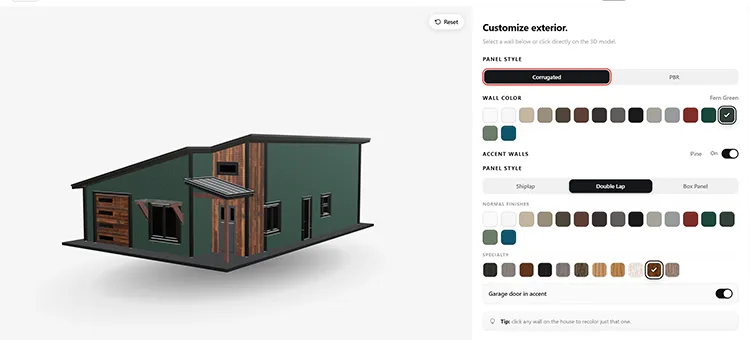
One of the more surprising things about Kit Culture’s design approach is how much visual variation you can create within the same structural model. The exterior panel system ships in a wide variety of textures and colors, and the 3D configurator on the website lets you build out your look before you order.
Some popular exterior combinations buyers choose:
- Classic cedar-tone panels with a dark roof for a Pacific Northwest contemporary feel
- Barnwood texture in a warm neutral for a modern farmhouse aesthetic
- Clean white or light gray panels with black window frames for a minimalist modern look
- Two-tone combinations with an accent wall in a contrasting panel style
The configurator is interactive: you can rotate the model, switch panel textures on individual walls, and preview roof and trim combinations before committing. It is one of the more practical design tools in the kit home space and removes a lot of the guesswork from the exterior selection process.
Interior Finishes: Where the Contemporary Feel Continues
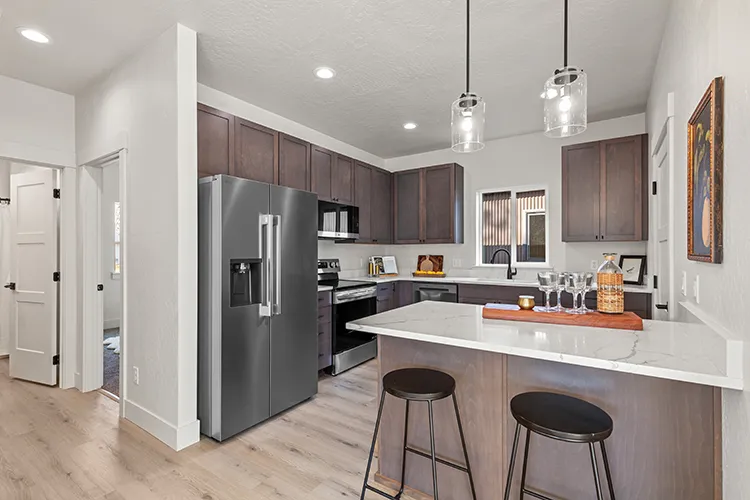
A home can have a strong exterior and fall apart on the inside. Kit Culture’s included interior finishes are consistent with the contemporary design language of the exterior.
Every kit ships with:
- Wide-plank rigid core LVP flooring throughout all interior spaces
- Quartz countertops in the kitchen and both bathrooms
- Two-tone shaker cabinetry in slate and linen with soft-close doors and drawers
- Quartz backsplash in the kitchen
- LG stainless steel appliances including refrigerator, range, microwave, and dishwasher
- Premium fixtures in every bathroom
- 5-zone ductless heat pump for room-by-room climate control
Shaker cabinetry in a two-tone finish is a strong design choice that reads as contemporary without being trendy. It is not going to date poorly in five years the way some bold kitchen palettes do. The quartz countertops and LVP flooring reinforce that same durable-but-current quality level.
How a Kit Home Fits Into a Design-Conscious Neighborhood
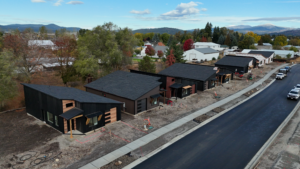
A legitimate question for buyers in established neighborhoods or communities with active HOAs is whether a kit home will fit in visually. The honest answer: it depends on the model and how you finish it, but Kit Culture’s homes are designed with curb appeal as a genuine priority, not an afterthought.
The standing seam metal roof, the Milgard windows with black exterior frames, and the textured panel options all contribute to a home that looks like it was designed intentionally. It does not scream ‘kit home’ in the way that some modular or panelized options do when they arrive on site.
A few practical notes for buyers in HOA communities or design-review neighborhoods:
- The permit-stamped engineering drawings that ship with every kit are a significant help during design review processes
- The 3D configurator output can be useful for presenting your proposed exterior to an HOA board
- Because paint and stain are not included in the kit, you retain full control over color matching any neighborhood standards or HOA requirements
The Construction Method Behind the Look
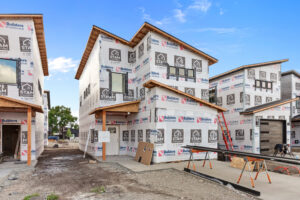
Contemporary aesthetics have to be backed up by solid construction or they are just surface level. Kit Culture’s homes are built on a wood-framed Ready Frame system: pre-engineered, pre-cut structural components that assemble faster than traditional stick framing without sacrificing structural integrity.
The framing is wood, not steel, which matters for a few practical reasons: wood is easier for most contractors to work with, more widely understood by local building departments during permitting, and performs well in the Idaho and Washington climate zones the homes are designed for.
The wall insulation package comes in at 50% above code, which is a meaningful number in a climate with cold winters. The Milgard Low-E windows contribute to that thermal envelope. A home that performs well energetically also tends to be more comfortable, quieter, and less expensive to heat and cool, all of which are things buyers in design-forward markets increasingly expect.
Read more detail in our article on Kit Home Construction Quality.
Who Chooses a Contemporary Kit Home
The buyers who gravitate toward modern kit homes tend to share a few common characteristics:
- They have a clear aesthetic preference for clean, contemporary design but do not want to pay custom build prices to achieve it
- They are building on rural or semi-rural land where they have more design freedom and want the home to make a strong visual statement
- They are adding an ADU or guest house and want it to complement the existing home’s contemporary architecture
- They are contractors or spec builders who need a design-forward product at a price point that leaves room for margin
The contractor market is actually a significant segment for Kit Culture. A licensed general contractor who adds kit home builds to their services gets a product that clients find visually appealing and that assembles faster than a comparable custom build. That combination is commercially useful: shorter project timelines mean more projects per year, and design-forward clients are easier to close.
What Kit Culture Homes Do Not Offer on the Design Side
Being straightforward matters here. Kit Culture’s homes are designed around three pre-engineered floor plans. There is no custom architectural service, no bespoke layout option, and no ability to move load-bearing walls. The design flexibility lives in the exterior finish and color selection, not in the floor plan itself.
If your project requires a highly specific layout, a multi-story custom configuration, or integration with a complex site that a standard footprint cannot accommodate, a fully custom build may be the better path. But for buyers who fit into one of the three available floor plans and want a contemporary aesthetic at a fraction of custom build pricing, the tradeoff is straightforward.
Next Steps
If the design direction fits what you are looking for, the best place to start is the 3D configurator on kitculture.com. You can work through exterior color and panel combinations, view all three floor plans in detail, and get a clear picture of what your finished home would look like before you ever speak to anyone.
If you have questions about how a Kit Culture home would fit your specific site, budget, or neighborhood requirements, the team can walk you through it. Call 855-260-0715 or reach out through the website.