Search prefab homes prices and you’ll get a wall of numbers with no scope attached. Some of those figures describe a package of parts on a truck. Others describe a finished house you can move into. They can differ by more than the price of a car, and nothing on the page tells you which one you’re looking at.
Here’s what’s usually inside a prefab price, what sits outside it, and how to line up two quotes so the comparison means something. We’re not going to invent a number for your lot, because anyone who does that without seeing it is guessing.
What prefab homes prices usually include
Most advertised prefab and kit numbers describe the package: engineered, pre-cut framing, roof trusses, sheathing, exterior doors, windows, and the stamped plans your building department reviews. On a Kit Culture package that also covers Milgard Low-E windows and insulation matched to your local code, so the envelope isn’t the place where the number gets thin.
That’s a real, defined list, which is exactly why it can carry a firm price. Our breakdown of what prefab home kit prices do and don’t cover goes line by line through a typical package.
What the price doesn’t cover
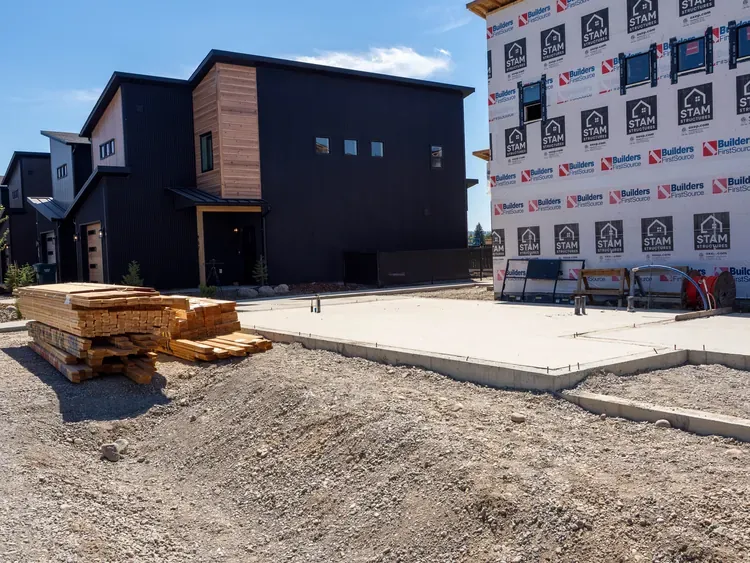
The site. Land, clearing and grading, the foundation, water and septic or sewer, power, permit fees, and labor all sit outside the package number, and together they’re often the larger half of the project.
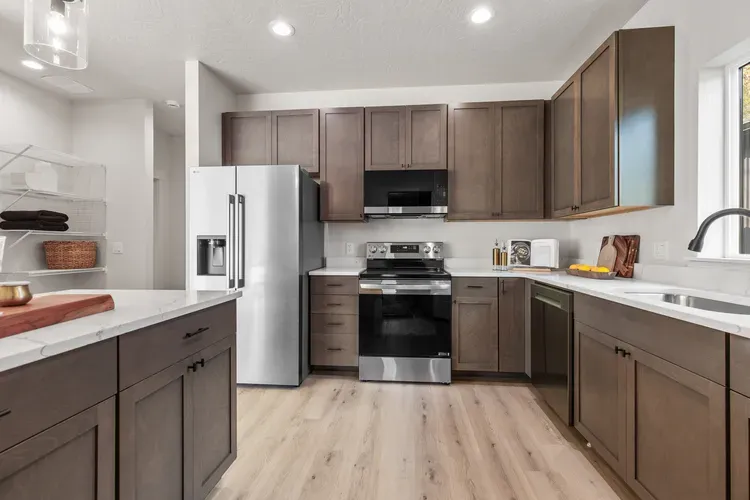
Interior finishes are the other gap. Some sellers quote a shell, others quote something closer to move-in ready, and the words they use for it aren’t standardized. If a quote doesn’t spell out cabinets, flooring, and fixtures, assume they’re yours to buy. For the whole-project view, our guide to the total cost of a kit home once you’ve hired a contractor is the more useful budgeting document.
The five things that move your number most
-
Site work. A flat, serviced lot in Post Falls and a sloped parcel outside Coeur d’Alene are different jobs before anyone frames a wall.
-
Foundation type. Slab, crawlspace, and full basement aren’t close to each other in cost.
-
Utility runs. Distance to power and water, and whether you need a well and septic, can swing the budget hard.
-
Size and shape. Square footage matters, but so does complexity. A simple rectangle is cheaper per foot than the same area with bump-outs.
-
Finish level. The same shell can be finished modestly or expensively, and this is where owners have the most control late in the project.
Efficiency choices belong in this conversation too, since they change what the house costs to run for the next thirty years. The ENERGY STAR resources are a reasonable neutral place to sanity-check what a good envelope is worth.
How to compare two quotes without getting fooled
Put them side by side and ask the same four questions of each. What’s the exact component list? Is the foundation in or out? Are permits and site work in or out? What finish level is assumed?
Nine times out of ten a cheaper quote is cheaper because it covers less, not because the seller found savings. Once you normalize scope, the gap usually shrinks to something sensible. Our honest look at whether kit homes are worth it covers where the savings are real and where they aren’t, and where low-cost prefab claims hold up is worth reading before you trust a headline figure.
Paying for it
A prefab or kit home on a permanent foundation finances like normal construction. Most buyers use a construction loan that converts to a permanent mortgage at completion, and the lender releases funds in draws as work gets inspected.
The wrinkle specific to kits is timing: the manufacturer wants payment on a schedule that doesn’t always match a lender’s draw schedule, so that’s a conversation to have early rather than mid-build. We cover the details in our guide to kit home financing.
Common questions
Why won’t anyone quote a total price online?
Because half the cost lives on your lot, and nobody’s seen it. A seller can price a package honestly and can’t price your site work honestly, so the responsible ones split the two.
Are prefab homes cheaper than stick-built?
Often somewhat, mostly through less waste, fewer weather delays, and less framing labor. The savings don’t touch land, foundation, utilities, or finishes, so the gap on total project cost is narrower than package prices suggest.
What should I budget beyond the kit?
Get real local quotes rather than a rule of thumb. Excavation, foundation, and utility contractors in your county will give you numbers, and those three will tell you most of what you need to know.
The bottom line
Treat any prefab price as a package price until proven otherwise, then build your real budget around the site work, the foundation, and the finish level. That’s where projects go over, and it’s also where you have the most say.
If you’d like a clear picture of what’s in our package and what your lot in Idaho or eastern Washington would add on top, give us a call.