If you’re shopping for prefab homes, you’re probably trying to settle one question first: is this a real house, or a shortcut that comes with strings attached? The honest answer is that “prefab” covers three pretty different products. They don’t build, finance, or permit the same way, and only some of them end up as a permanent house on a foundation.
Here’s what the term covers, what shows up on your lot, what moves the budget, and how the build runs in Idaho and Washington. No sales pitch, just the information you need.
What prefab homes are, in plain English
Prefab is short for prefabricated, which means some of the house gets made in a shop instead of cut from scratch on your lot. That’s the whole idea. What the word doesn’t tell you is how much gets built indoors, and that’s where the real differences hide.
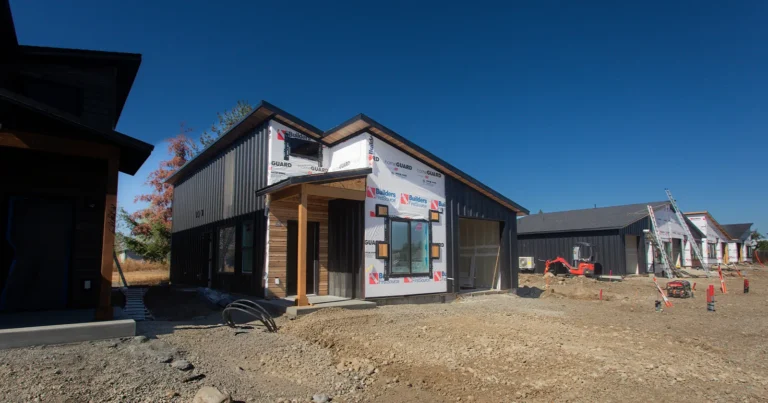
A kit home sits at one end of that range. The walls, trusses, windows, and hardware get engineered and pre-cut in a shop, then shipped to your site with stamped plans. Crews frame and finish it on a permanent foundation, the same way they’d finish a site-built house. If you want the long version, our guide to what a kit home is walks through it step by step.
The three things people mean by prefab homes
Kit homes
You get a package of engineered components and plans. Everything is assembled on your lot, on a foundation you pour. It’s site-built construction with the cutting and engineering already done.
Modular homes
Whole sections of the house get built indoors, trucked out, and craned onto a foundation. More finishing happens in the factory, and you’re limited by what can legally travel down a highway.
Manufactured homes
These are built to a federal HUD standard rather than your local building code, and they arrive complete on a steel chassis. They’re a different product with different financing and different resale behavior. Our breakdown of kit homes compared with modular and prefab covers where each one makes sense.
The distinction matters more than it sounds. A house built to your local code on a permanent foundation is treated as real property by lenders, appraisers, and county assessors. Something on a chassis often isn’t.
What’s in the package, and what isn’t
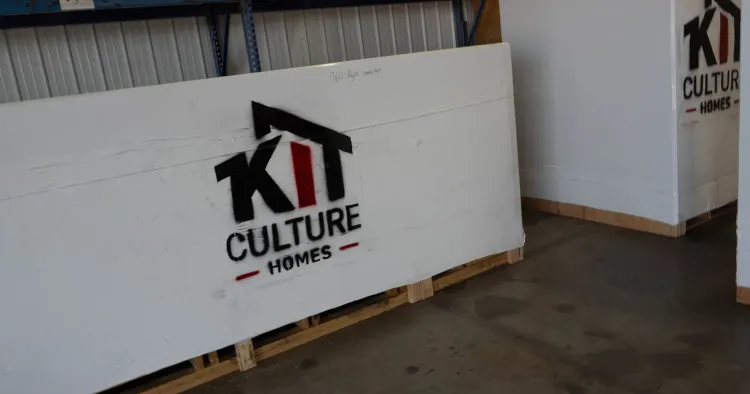
With a kit, the package covers the shell and the parts that need engineering: framing, trusses, sheathing, windows, exterior doors, and the stamped drawings your building department wants to see. Kit Culture packages include Milgard Low-E windows and insulation matched to local code, so the envelope isn’t where corners get cut.
What isn’t in the box is the part people miss. Your land, site work, foundation, utility connections, permits, and labor all sit outside the kit price. So do most interior finish decisions. That gap is normal, but it’s the reason two quotes can look wildly different while describing the same house.
What prefab homes cost
There’s no single number, and anyone who gives you one without seeing your lot is guessing. The kit itself is a fairly predictable line item because it’s a defined list of parts. Everything around it varies: a flat, serviced lot in a Post Falls subdivision costs a fraction of what a sloped, off-grid parcel does to prepare.
The biggest swing factors are site work, foundation type, how far utilities have to run, and local labor rates. Our article on what prefab home kit prices do and don’t cover breaks the package number down line by line, which is the right place to start before you compare bids.
How the build runs, start to finish
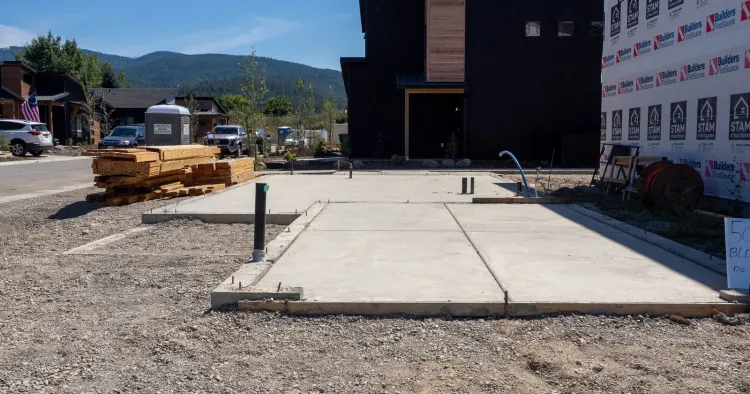
The sequence isn’t exotic. You secure the lot and financing, finalize a plan, and submit for permits. While that’s in review, site work and the foundation go in. The kit gets manufactured and delivered on a flatbed, usually in labeled, weatherproofed bundles. Then a crew frames it, dries it in, and moves through mechanical, electrical, plumbing, insulation, drywall, and finish.
The time you save is mostly in framing and in the decisions you’re not making one at a time. The permitting, the foundation, and the finish work all run on normal construction timelines. Getting the pad right matters more than most people expect, so it’s worth reading our notes on kit home foundations and site prep before you order anything.
Prefab homes in Idaho and Washington
Both states permit a kit build like any other stick-framed house, through your city or county building department. The differences show up in energy code and local zoning. Washington’s energy code is stricter, which is why ductless heat pumps show up in so many builds over there. Idaho’s rules vary quite a bit between Boise, Coeur d’Alene, Post Falls, and unincorporated county land.
If you’re building in one of those markets, start with the state-level detail in our guides to building a prefab home in Idaho and prefab homes in Washington State. For a sense of how efficient a well-built envelope can be, the Department of Energy’s Energy Saver resources are a good neutral reference.
Common questions
Do prefab homes hold their value?
A kit or modular home on a permanent foundation appreciates like any other house in its neighborhood, because that’s what it is in the eyes of an appraiser. Manufactured homes on a chassis are the exception and often behave more like a vehicle.
Can you get a normal mortgage?
Yes, for a foundation-built home. Most people use a construction loan that converts to a permanent mortgage once the house is finished. Lenders care about the foundation and the code path, not the word “prefab.”
Are prefab homes cheaper than stick-built?
Sometimes, and rarely by as much as the marketing suggests. The savings are real in the shell and in reduced waste and delays. They don’t extend to your land, foundation, utilities, or finish work, which is where a lot of the budget lives.
The bottom line
Prefab homes aren’t one thing. If what you want is a permanent house on your own land that finances and appraises normally, you’re looking at a kit or modular build, not a chassis-based product. Get clear on which one a seller is offering before you compare a single number.
If you’re weighing a build in Idaho or eastern Washington and want a straight answer about what your lot would take, give us a call.