If you’re weighing rental unit options for your Idaho property, you’ve got more choices than you might think, and they don’t cost, permit, or rent the same way. The honest answer: for most owners who want steady long-term rent and lasting value, a detached ADU on a foundation is the strongest option. It’s also not the cheapest way in.
Here’s how the main options compare, what Idaho owners should check before building, and how to tell whether the rent will cover the cost.
Rental unit options for your Idaho property, compared
|
Option |
Upside |
Watch out for |
|---|---|---|
|
Basement or interior conversion |
Lowest build cost if the space already exists |
Egress windows, fire separation, shared walls, and less privacy for both households |
|
Garage conversion |
Uses a structure you already have |
You lose parking, the slab and walls may need work to become living space, and some cities have parking rules |
|
Detached ADU |
The most privacy, the strongest rent, and the most added property value |
The highest build cost, plus utility runs and setbacks |
|
RV or unit on wheels |
Fast to place |
Often not allowed as a permanent rental dwelling |
|
Live in an ADU, rent the main house |
The bigger house brings in the bigger rent |
Owner-occupancy rules, and you’re the one downsizing |
If you’re tempted by a unit on wheels, our guide to tiny home kits explains why many of them can’t be full-time homes.
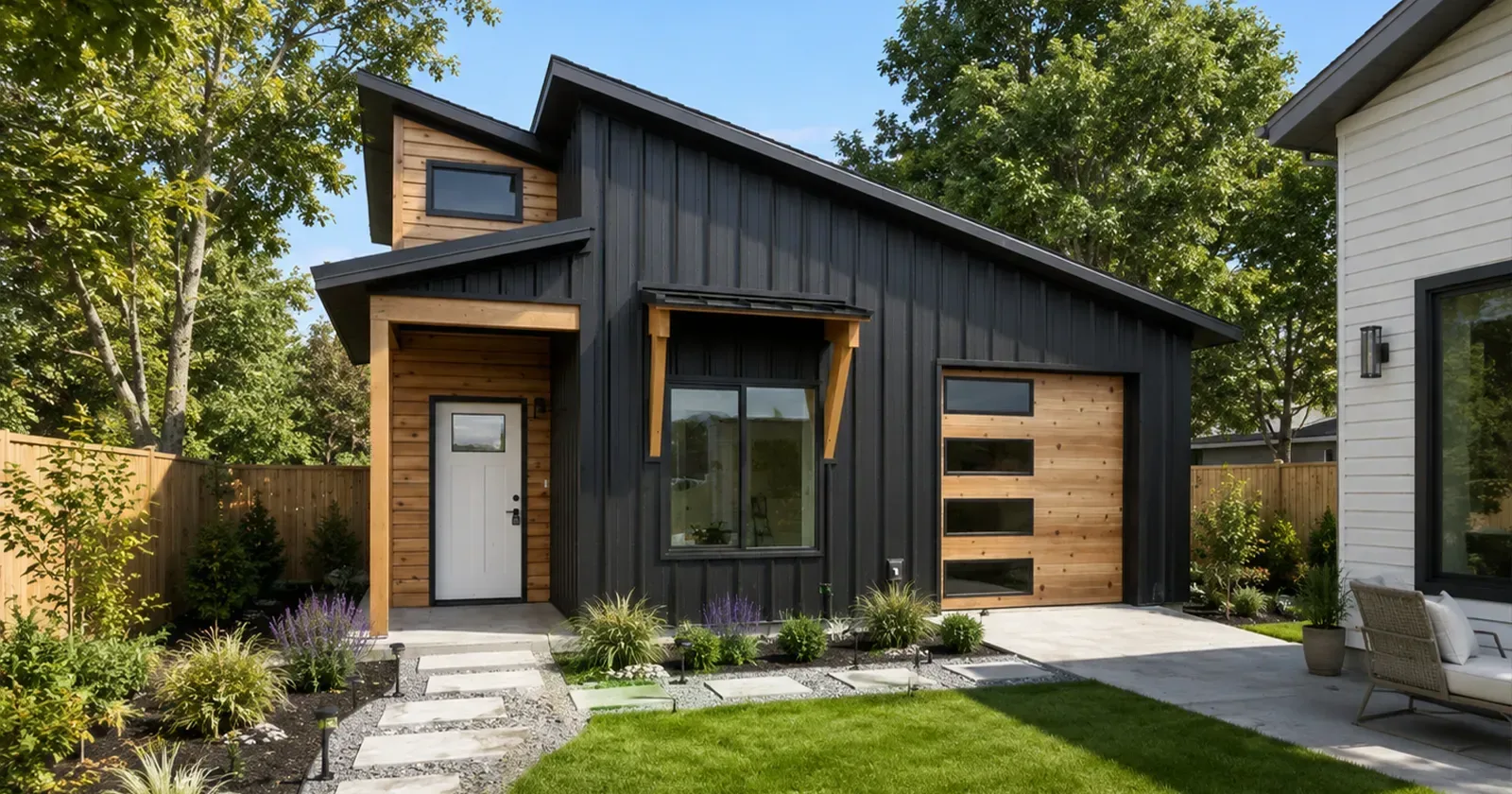
A detached ADU as your rental unit
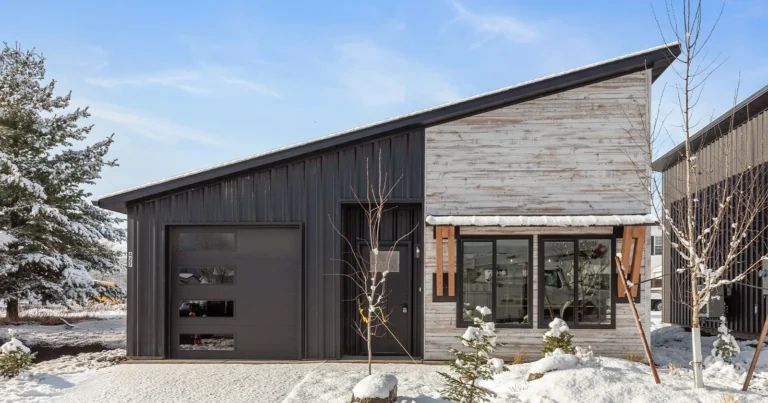
A detached unit gives a tenant their own front door, their own yard space, and no shared walls with you. That usually means better rent and fewer headaches. Kit Culture’s 799 sq ft Cottage has 2 bedrooms and 1 bath. The kit is $99,500, and with optional builder labor from our partner Directional Homes it’s $199,500 installed on a prepared lot. Your foundation, utilities, and permits come on top.
Idaho rules to check before you build
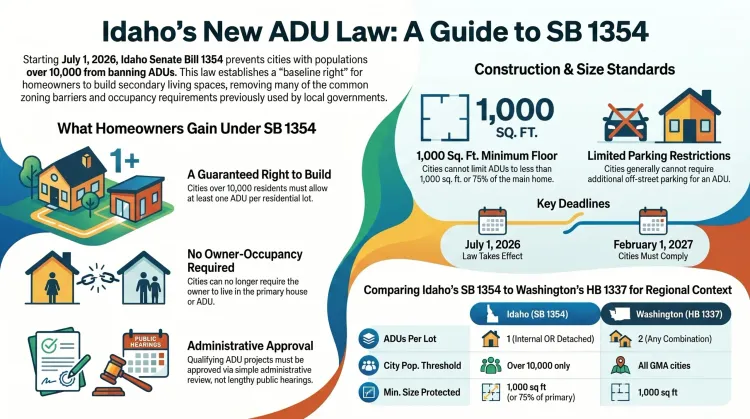
Start with Idaho’s ADU law, SB 1354, then our statewide guide to whether you can build an ADU in Idaho. Your city sets the details, so ask these questions before you commit:
-
Is an ADU allowed on your lot, and how large can it be?
-
Do you have to live on the property, in either the main house or the ADU?
-
Are short-term rentals allowed, or long-term only?
-
What parking does a second unit need?
-
Does the ADU need its own utility meters or connection fees?
We’ve covered the local rules for ADUs in Boise and ADUs in Coeur d’Alene. On a rural lot, ask your county too, since septic capacity and well access can decide whether a second home works at all.
Will the rent cover the cost?
Estimate rent from current local listings and check it against HUD Fair Market Rents for your county. Use the lower number. Then subtract the loan payment, higher property taxes, landlord insurance, vacancy, and maintenance. Our guide to ADU rental income walks through the payback math step by step.
Rent is taxable, and many rental costs are deductible. The IRS covers the basics in Topic 414, Rental Income and Expenses, and your tax preparer can fill in the rest.
Idaho rental unit FAQ
What’s the cheapest rental unit option for an Idaho property?
Converting space you already have, like a basement, is usually the lowest build cost. It also brings the most shared walls and the least privacy, which can show up in the rent.
Does adding a rental unit raise my property taxes?
Usually, yes. A second dwelling adds assessed value to your lot, so build that into your numbers.
Can I rent my ADU short-term in Idaho?
It depends on your city’s rules. Ask before you plan around nightly stays, because it changes the whole spreadsheet.
The bottom line
Rental unit options for your Idaho property run from a basement conversion to a detached ADU. Conversions cost less to build, and a detached unit on a foundation usually rents better and adds more value. Check your city’s rules first, run the rent math at a cautious number, and if you’d like help pricing the build side on your lot, give us a call.