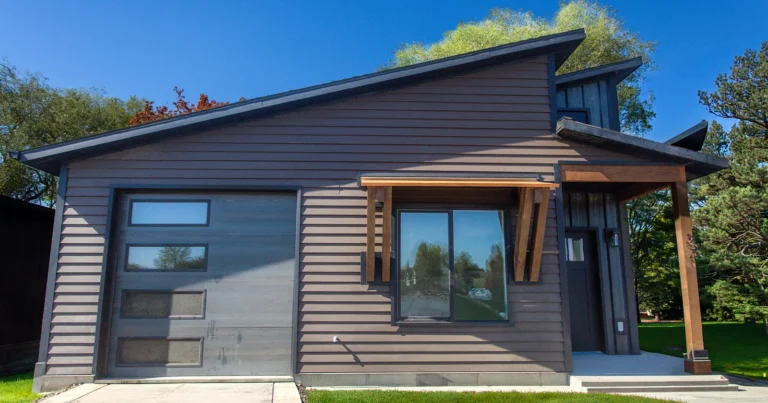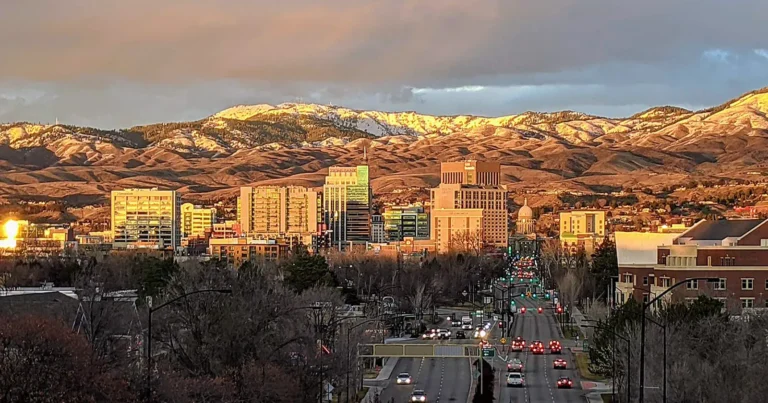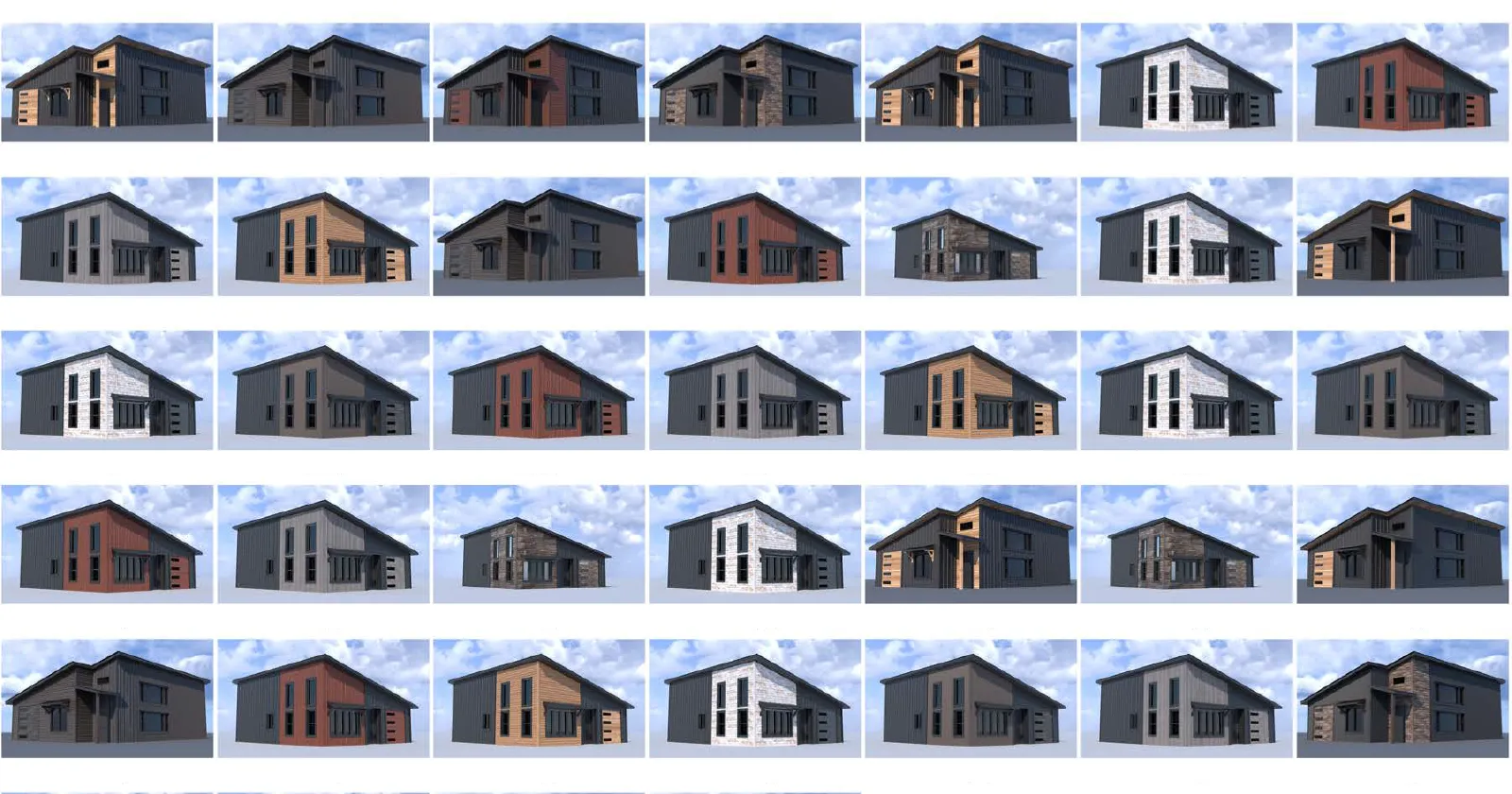
Yes, you can build an ADU in Coeur d’Alene, and the rules just changed in your favor. The city has allowed accessory dwelling units on residential lots since 2007, and Idaho’s SB 1354 took effect July 1, 2026, expanding what CDA homeowners can build. If you’ve been thinking about a backyard cottage, an in-law suite, or a rental unit on your property, this is a genuinely good time to move forward.
This guide covers Coeur d’Alene’s ADU rules as they stand now that Idaho’s SB 1354 is in effect, whether your property qualifies, and what the permit process looks like. The city has until February 1, 2027 to rewrite its local code, so we’re in a transition window. Always verify current requirements with the CDA Planning Department at (208) 769-2274 before you apply.
Does Coeur d’Alene Allow Detached ADUs?
Yes. CDA has allowed detached ADUs for years: a completely separate structure in your backyard, as long as there’s one single-family home on the property and the project meets size, setback, height, and lot coverage requirements. Permits go through a by-right administrative process, so there’s no public hearing and no discretionary review.
The city also offers free pre-approved ADU plan sets, developed through the Housing Solutions Partnership and reviewed by local building officials, available to any property owner in Kootenai County through cdaid.org. They can save real design fees and speed plan review, though note they’re all 800 sq ft and under, which is below the size the state law now protects.

CDA’s ADU Rules in the SB 1354 Transition
Here’s where the city’s pre-2026 code stands against the new state law, which took effect July 1, 2026 and overrides conflicting local rules:
| Requirement | CDA’s Pre-2026 Rule | Now That SB 1354 Is in Effect |
|---|---|---|
| Maximum size | 800 sq ft or 75% of primary home (lesser) | Protected minimum is 1,000 sq ft, or 75% of the primary home if larger; the 800 cap can’t be enforced |
| Side setback | 5 ft from side lot lines | Can’t be more restrictive than single-family standards in the zone |
| Height | 18 ft (1-story); 24 ft above garage with step-back | Can’t be more restrictive than single-family standards in the zone |
| Parking | 3 paved stalls total (2 primary + 1 ADU) | Parking mandates restricted in most situations |
| Lot coverage | 30% of lot must remain pervious | No direct change |
| Owner occupancy | Required if either unit is a short-term rental | Can’t be required for long-term rentals; STR rules remain local |
| Placement | Rear yard for detached units | No change; rear yard is in the state law too |
Size is the biggest practical change. CDA’s 800 sq ft cap sat below the state’s new 1,000 sq ft floor, so it can no longer be enforced. If your primary home is, say, 1,600 sq ft, your protected minimum is actually 1,200 sq ft (75% of 1,600).
Owner-occupancy is off for long-term rentals. You can now rent your ADU long-term without living on the property. Short-term rentals (under 30 days) still fall under CDA’s local STR ordinance, which requires a majority owner to occupy one of the units.
Parking is likely to ease. The three-stall requirement is exactly the kind of mandate SB 1354 restricts. How CDA writes its updated code will settle the details. The city has until February 1, 2027, and city officials haven’t hidden their frustration with the law. Until the new local code lands, confirm what’s being enforced before you design around it.
Does Your Property Qualify?
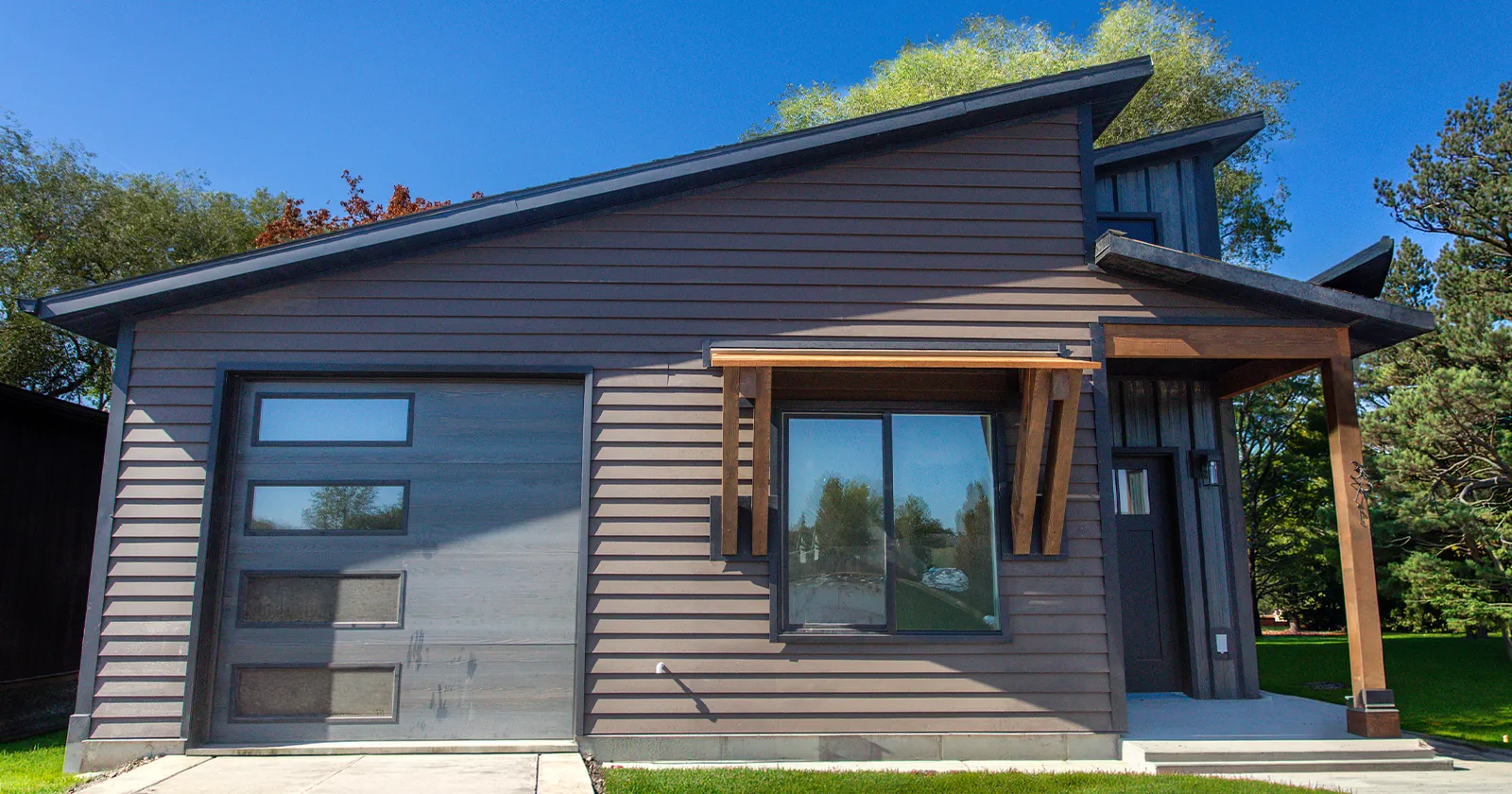
Are you inside city limits? CDA’s rules and SB 1354 apply to property within Coeur d’Alene city limits. Some parcels have CDA mailing addresses but sit in unincorporated Kootenai County, where county rules govern instead. Check your parcel at the Kootenai County assessor’s site or call Planning.
Is your lot single-family? The ADU framework applies to single-family residential lots with one detached home. If your situation’s anything else, check with Planning first.
Is there room in the rear yard? Detached ADUs go in the rear yard. Pull out your survey and confirm the geometry works: side clearances, the rear setback for your zone, and the 30% pervious surface rule.
Historic designation? Properties in designated historic districts (Idaho Code 67-4607 and 67-4614) are exempt from SB 1354’s protections. Confirm your situation with Planning if you’re on a register.
How to Get an ADU Permit in Coeur d’Alene
Permits run through Building Services (208-769-2267) and the Planning Department (208-769-2274). The process: schedule a free pre-development meeting (it’s genuinely useful, since staff will flag site-specific issues and confirm what applies during the transition); choose plans (free pre-approved sets, or custom design if you want to build to the sizes the state law now protects); assemble the application, which includes the building application, ADU form with owner affidavit, scaled site plan with setbacks and parking, lot coverage and pervious calculations, structural details, HVAC information, and stamped engineering for custom designs; then submit for administrative review. After the build, CDA requires recording a document with the Kootenai County Recorder identifying the ADU, and it runs with the land.
If you’re comparing cities, our statewide guide to building an ADU in Idaho covers how CDA compares to Post Falls and Boise.
What Kind of ADU Makes Sense in Coeur d’Alene?
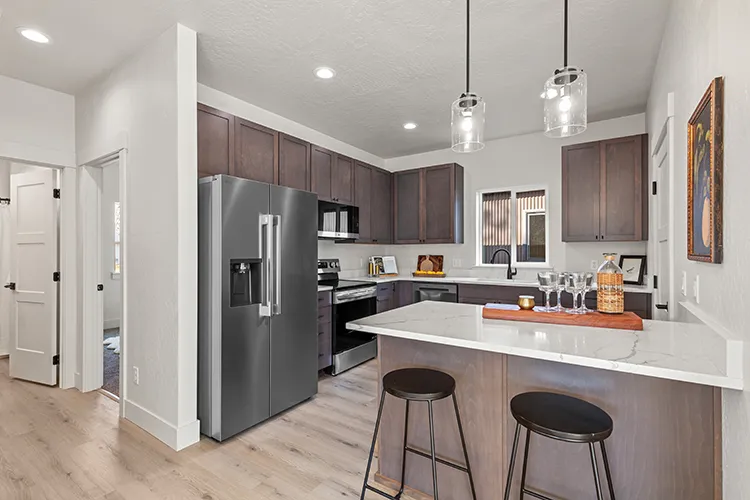
Coeur d’Alene’s lot sizes vary significantly by neighborhood. Older neighborhoods closer to downtown tend to have smaller lots where fitting a detached structure and meeting the parking and pervious surface requirements takes more careful planning. Newer subdivisions on the north side of the city often have more room to work with.
The most common configurations CDA homeowners are building or considering:
Standalone Backyard Cottage
A completely separate structure with its own entrance, kitchen, bathroom, and bedroom. Works well on lots with enough rear yard space to meet setbacks and leave room for parking. Currently capped at 800 sq ft; rising to a minimum of 1,000 sq ft under SB 1354 after July 1.
ADU Above a Detached Garage
One of the most efficient configurations for smaller lots: you use the garage footprint for living space above while keeping the car storage below. CDA specifically updated its code in 2019 to allow this configuration. The second-story step-back requirement applies, so factor that into your design.
Converted Existing Garage or Shed
CDA allows existing detached garages and sheds to be converted to an ADU, provided the structure can meet current building codes. This is often the most cost-effective path if you already have a structure with the right footprint. The converted structure still needs to meet size, setback, and height requirements, and needs to comply with building, plumbing, electrical, and mechanical codes.
Building Your ADU: Where Kit Culture Fits In

If you’re a CDA homeowner who’s ready to move forward on a backyard ADU, Kit Culture is worth a look. We’re an Idaho-made kit home company built on the same manufacturing platform as Metal America, and we’re developing ADU-specific models designed for exactly this use case.
Every Kit Culture home ships permit-ready on a single truck. Pre-cut framing components, engineered drawings stamped for Idaho, and a complete package of premium finishes are all included: LG appliances, quartz countertops, Milgard windows, a multi-zone ductless heat pump, LVP flooring, and a 40-year metal roof and siding system. There are no material sourcing surprises and no builder allowance games.
The price point is genuinely different from anything else available in this market. A traditional custom-built detached ADU in the Coeur d’Alene area typically costs $180,000 to $300,000 or more. Kit Culture ADU models come in at roughly half that, without cutting corners on the finish level. That pricing difference is possible because manufacturing components at scale in a controlled facility is a fundamentally more efficient process than coordinating a custom build from scratch on your property.
Build time is also dramatically faster. Most Kit Culture homes are weather-tight within days of delivery and fully move-in ready in under 90 days.
| Kit Culture ADU Models Coming in 2026
We’re developing three ADU-specific models designed for detached backyard placement, priced between $69,000 and $75,000 depending on size and options. Made in Idaho, shipped permit-ready, and backed by a strong warranty. |
Kit Culture sells direct to homeowners. If you’d rather have a licensed general contractor manage the build, our contractor pricing program gives local GCs trade pricing so they can make money on the project while you still pay well under a custom build. Your contractor handles the site prep and local permitting. Kit Culture handles everything that arrives on the truck.
| Want to See What’s Possible on Your CDA Property?
Our team is based right here in North Idaho and knows the local market well. If you’re ready to explore your ADU options in Coeur d’Alene, we’d love to talk. Give us a call. We can walk you through the models, the process, and what it would realistically look like on your lot. |
Frequently Asked Questions
Are ADUs allowed in Coeur d’Alene?
Yes, and they have been since 2007, through a by-right administrative permit process. And since July 1, 2026, Idaho’s SB 1354 protects your right to build a detached ADU of at least 1,000 sq ft on a single-family lot.
How big can my CDA ADU be now?
The state-protected minimum is 1,000 sq ft, or 75% of your primary home’s square footage if that’s larger. CDA’s old 800 sq ft cap can’t be enforced anymore. The city’s rewritten code is due by February 1, 2027, so verify current practice with Planning when you apply.
Do I still need three parking stalls?
SB 1354 restricts ADU parking mandates in most situations, so CDA’s three-stall rule is likely to change. During the transition, confirm with the Planning Department what’s being enforced before you design your site plan around parking.
Can I rent out my Coeur d’Alene ADU?
Long-term: yes, and the city can no longer require you to live on the property. Short-term (under 30 days): CDA’s local ordinance still applies, including the owner-occupancy requirement.
What about the free pre-approved ADU plans?
Four pre-approved plan sets are free to use anywhere in Kootenai County and speed up plan review. They’re all 800 sq ft and under, though. If you want the larger footprint the state law now protects, you’ll need custom or manufacturer plans. Find them via the Planning Department or cdaid.org.
My property has a CDA address but might be county land. Do these rules apply?
Not necessarily. Mailing address and zoning jurisdiction are different things. If your parcel’s in unincorporated Kootenai County, county rules apply instead. Check with Kootenai County Planning and Zoning.
How much does an ADU cost to build in Coeur d’Alene?
Custom builds typically run $180,000 to $300,000+. A kit-based ADU from Kit Culture comes in at roughly half that all-in, with kits from $69,000 to $99,500 depending on size, plus site work and assembly.
The Bottom Line
Coeur d’Alene allows ADUs, the state law now guarantees you more size and more flexibility than the city’s old code did, and the transition window is the main thing to navigate. One pre-development meeting with Planning sorts out most of it. Our team’s based right up the road in Post Falls and knows this market well. If you’re ready to explore what would fit your CDA lot, give us a call.