Panelized home kits build a house from factory-made sections: the walls and roof arrive as ready-made panels that a crew stands up and joins on your foundation. If you’re researching panelized home kits, it helps to know they’re one branch of a bigger family of prefab building methods, and they’re not the only way to get factory speed and precision. Kit Culture doesn’t sell panelized kits. We build precut kit homes, where every part shows up cut to size and labeled, and you put it together by following step-by-step, Lego-like instructions. Here’s how panelized works, and where a precut kit is the simpler path.
What panelized home kits are
With a panelized kit, a shop frames and sheathes flat wall and roof panels, then ships them to your site where a crew lifts them into place and connects them. It sits between two other approaches. A precut kit gives you the individual parts and you assemble them on site. A modular home arrives as finished box sections you join together. Panelized is the middle option: bigger prebuilt pieces than a precut kit, but not whole rooms. If the whole category is new to you, our explainer on what a kit home is and our guide to prefabricated house kits map out how the methods relate.
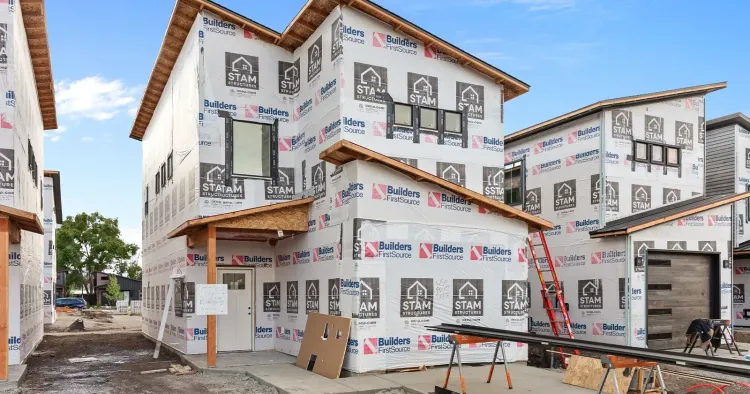
How a precut kit home is different, and simpler
A precut kit skips the panel step. Instead of setting large prebuilt sections, you get every piece cut to length and labeled to a stamped plan, and you assemble them in order. Think of it like a Lego set for a house: the parts are numbered, the instructions go step by step, and everything is made to fit before it reaches your lot. That keeps the build approachable for a local crew or a hands-on owner, and it’s a big part of what makes a kit home easier to build than a traditional house. If you want to see how much of it you can take on yourself, our look at DIY home kits walks through the parts that are genuinely doable.
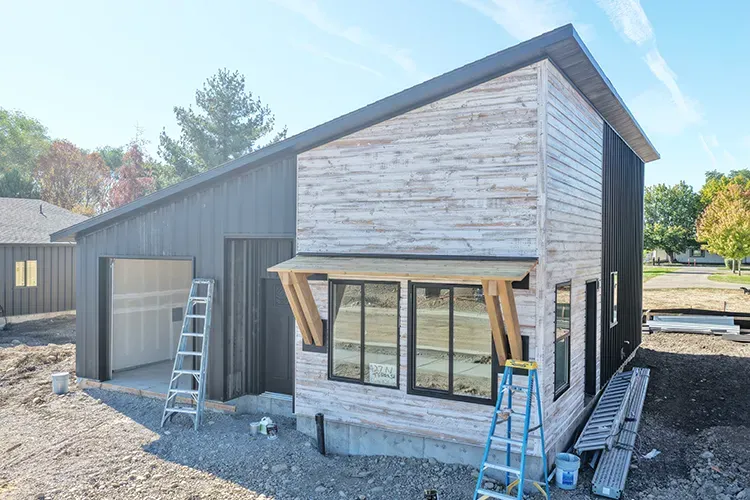
Panelized vs a precut kit: which should you choose?
Both start in a factory and both beat framing a house from raw lumber on an open site. The trade-off is in how the pieces arrive. Panelized sections go up fast but are large and heavy, so setting them usually calls for a crane or a bigger crew and the equipment to match. A precut kit trades that for a larger number of lighter parts you assemble by hand, following the plan. Either way the parts show up labeled and protected, which you can see in our walkthrough of how kit homes are packed and delivered, and either way the finished home is permitted and inspected to your local building code, the standard the International Code Council maintains nationwide. For small footprints in particular, like our micro home kits, the precut approach keeps the whole thing light, simple, and quick.
Panelized home kits FAQ
Does Kit Culture sell panelized home kits?
No. We build precut kit homes. Every part arrives cut to size and labeled, and you assemble it by following step-by-step instructions, so you get factory precision without the heavy panel-setting.
What’s the difference between panelized and precut kits?
Panelized kits ship as large prebuilt wall and roof panels that a crew stands up on site. Precut kits ship as individual, numbered parts you put together in order, more like a Lego set.
Do I need a crane for a precut kit home?
Usually not for the parts themselves, since they’re sized to handle by hand or with light equipment. Your foundation and site work still follow the same steps as any build.
The bottom line
Panelized home kits are a solid factory-built method, but they’re not the only one, and they’re not what we do. Kit Culture builds precut kit homes you assemble like a Lego set, which keeps the build lighter and simpler for most lots and crews. If you’re comparing your options and want to know how a precut kit would work for your project, give us a call.