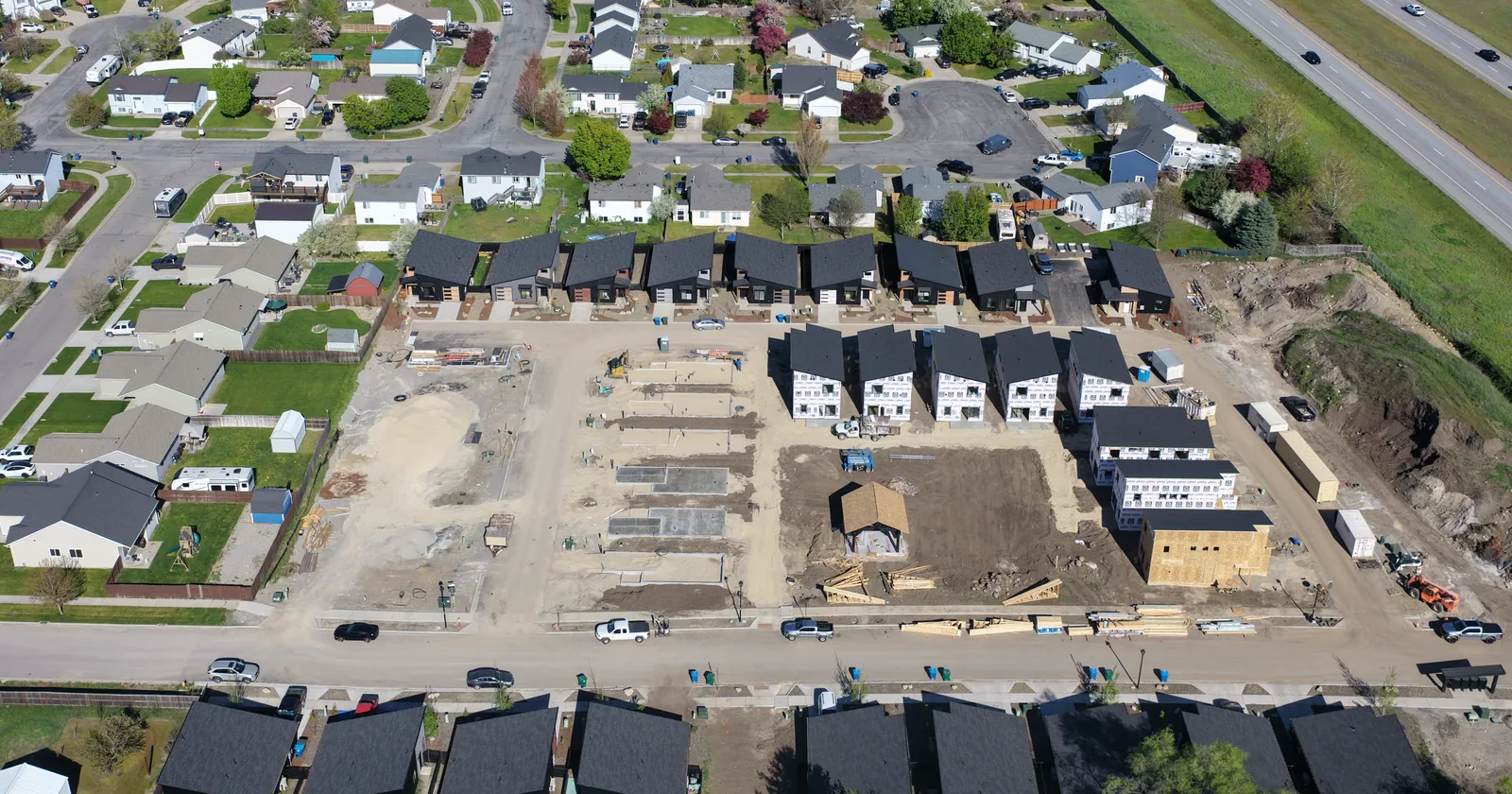
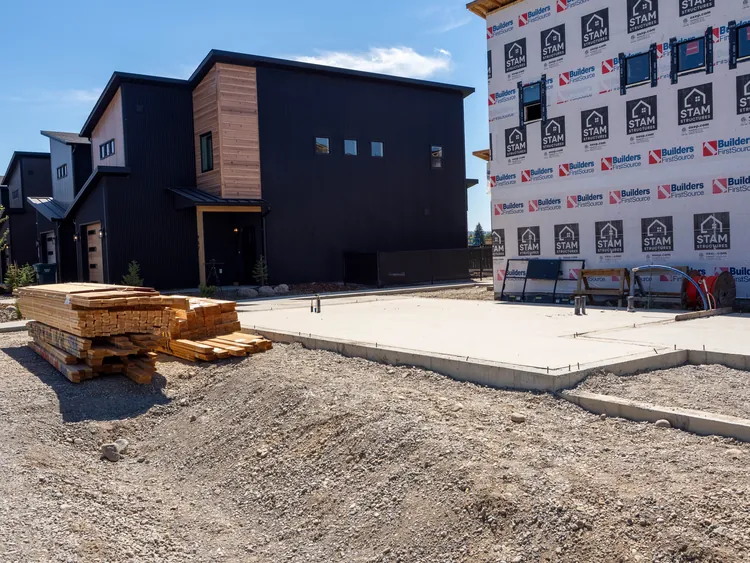
Kit homes aren’t just a fit for one-off buyers on rural lots. For developers and builders, they’re a fast, cost-predictable way to fill an entire subdivision. We’ve watched it happen firsthand, an Idaho neighborhood built almost entirely from kit homes, and the advantages at scale are hard to ignore. Here’s why kit homes work for developments, from a builder’s point of view.
Predictable cost, multiplied
When you’re building one home, a fixed shell price is nice. When you’re building twenty, it’s a game-changer. Kit pricing is locked before materials ship, so your hard costs per unit are known up front instead of drifting with the lumber market mid-project. That predictability is what makes a multi-lot pro forma actually hold together.
Speed across every lot
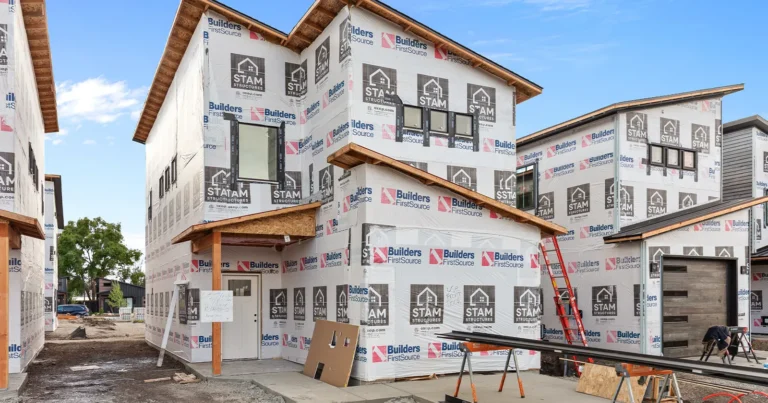
Precut, labeled kits go up faster than stick framing, and that speed compounds across a development. Crews get into a rhythm, same models, same sequence, same labeled boxes, and each home comes together on a shorter timeline. Faster builds mean less carrying cost and quicker sales or lease-up. Our look at kit home build time covers the per-home side of that.
Consistent quality and design
Building from a set of engineered models means every home meets the same spec. The framing is factory-cut, the insulation and windows are matched to local code, and the finishes are consistent lot to lot. For a development, that consistency is a selling point, buyers get a modern, well-built home, and you get fewer surprises during construction. Our page on construction quality digs into how it’s specified.
Modern designs that sell
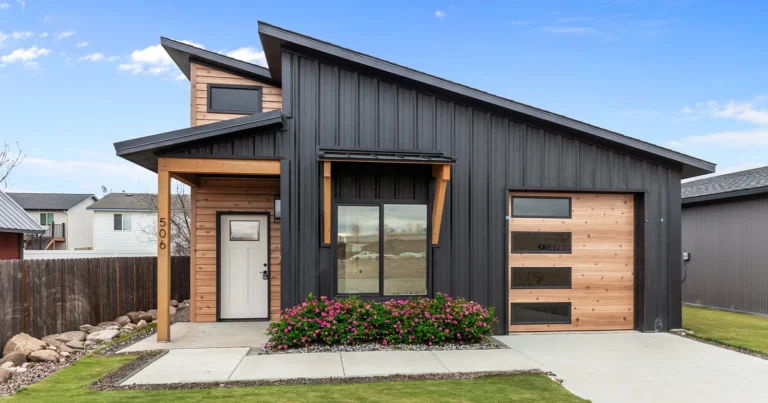
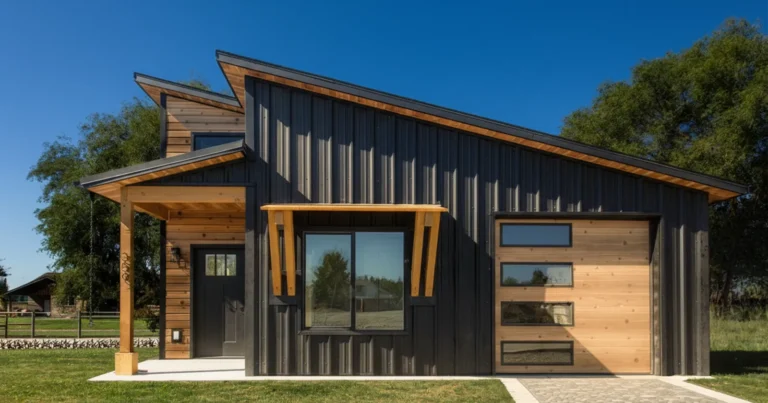
Kit doesn’t mean cookie-cutter or cheap-looking. The models are genuinely modern, black metal and wood siding, mono-pitch rooflines, big windows, the kind of design that photographs well and moves fast on the market. A street of them reads as an intentional, contemporary community, not a tract of look-alikes. See the range in our modern house kits guide.
A mix of footprints
With a cottage, a mid-size modern, and a family-size two-story available, a developer can vary the streetscape and hit different price points within the same build system. That flexibility lets you match unit mix to your market without switching builders or systems.
Built for Idaho growth
Idaho’s housing demand and rising build costs are exactly the conditions where a kit-based development pencils out. Lower per-unit cost, faster delivery, and consistent quality are a strong combination in a tight market. If you’re a builder or developer weighing kit homes for a project, our kit homes in Idaho overview is a good starting point, and we’re happy to talk volume. Give us a call to run the numbers on your site.
Frequently asked questions
Can you build a whole subdivision with kit homes?
Yes. Kit homes are well suited to developments because pricing is fixed per unit, builds are faster, and quality stays consistent across every lot. Idaho already has neighborhoods built almost entirely from kit homes.
Do kit homes work for builders and developers, not just individual buyers?
They do. The cost predictability and build speed that help a single buyer scale up nicely across multiple lots, which is why developers use them to fill subdivisions.